Updated: 2026 Engineering Standard · By Sailwin Technical Team
Industrial Chiller Maintenance: Preventing Scaling, Refrigerant Leaks & Mold Condensation
In continuous packaging manufacturing, your process chiller is directly tied to line speed. When chiller efficiency degrades by 20%, molding cycle times immediately stretch by 20%—slashing daily container output and inflating per-unit production costs.
In humid tropical climates, running process water below the ambient dew point causes mold cavities to sweat heavily with condensation. Water droplets trapped inside cavities cause milky streaks, distorted container logos, and severe mold platen rust.
This preventive maintenance guide examines evaporator descaling procedures, refrigerant leak detection, and dew-point dehumidification controls to protect your Sailwin blow molding and injection molding machinery.
Key Engineering Takeaways
- Scale Multiplies Electrical Bills: A microscopic 0.5mm mineral scale layer inside shell-and-tube or brazed plate evaporators degrades thermal transfer by 30%, forcing chiller compressors to consume 20% more electricity.
- Mold Sweating Root Cause: Condensation occurs whenever mold surface temperature drops below ambient factory air dew point. The cure is not raising water temperature—it is installing a dry-air mold dehumidifier enclosure.
- Closed-Loop Glycol Treatment: Utilizing 20%–25% inhibited propylene glycol prevents bacterial bio-fouling, stops internal pipe oxidation, and allows sub-zero operation without freezing evaporator bundles.
Having Chiller High-Pressure Alarms or Mold Sweating?
Contact Sailwin process engineers for customized descaling protocols, water glycol blending ratios, and dehumidifier sizing.
1. Master Chiller Maintenance Schedule: Daily, Monthly & Annual
Chiller Maintenance Rule: Clean condenser coils monthly; check refrigerant sight glass bubbles weekly; descale water heat exchangers annually.
Follow the structured maintenance calendar below to prevent compressor lockups:
| Maintenance Interval | Component / System | Service & Inspection Procedure | Target Specification |
|---|---|---|---|
| Daily (Start of Shift) | Refrigerant Pressures | Log suction pressure (low-side) and discharge pressure (high-side). | R410A / R407C operating in normal envelope. |
| Daily (Every 8h) | Water In/Out Temperature Delta | Verify temperature differential across evaporator. | Target ΔT between 3.5°C and 5.0°C. |
| Monthly (Every 250h) | Air-Cooled Condenser Fins | Blow out dust, lint, and debris from condenser aluminum fins with 6-bar air. | Clean unobstructed airflow across fans. |
| Quarterly (1,000h) | Water Filter Strainers | Isolate valves and remove stainless wire mesh Y-strainers to flush debris. | Zero pressure drop across water strainers. |
| Annually (4,000h) | Evaporator Descaling | Circulate 5% dilute citric acid wash through evaporator bundle for 3 hours. | Restore original design heat transfer coefficient. |
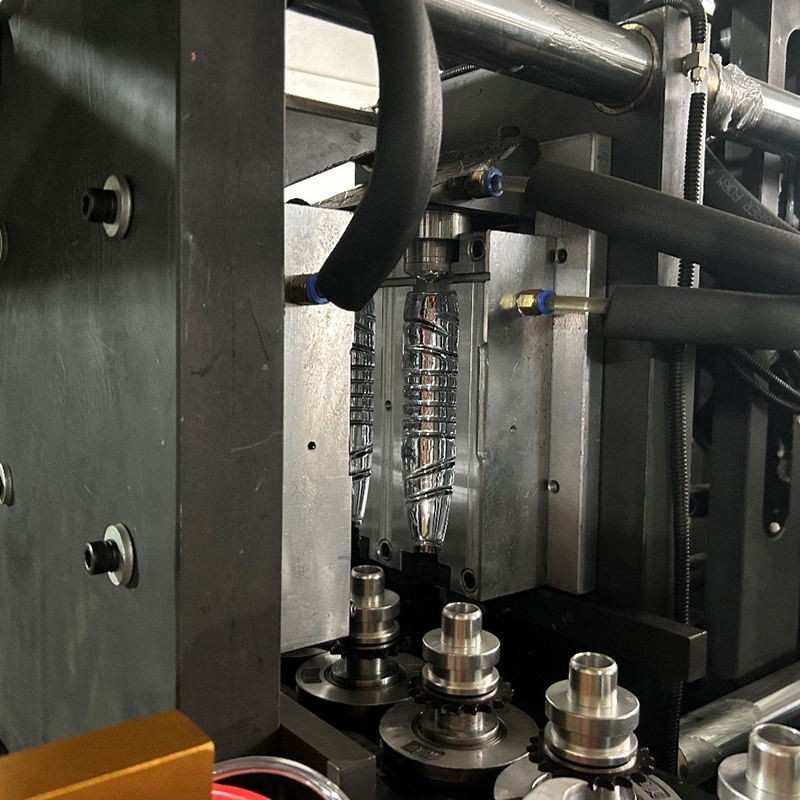
Sailwin Customer Case Study: Bottling Plant Eliminates Summer Mold Sweating and Rust with Sailwin Dehumidifier
How a commercial PET water packaging factory in coastal Vietnam stopped mold condensation and surface rust by installing Sailwin mold-sweat protection.
- Summer humidity reached 88% with ambient factory temperatures at 36°C (dew point 33.5°C).
- Chilled water (10°C) caused mold cavities to sweat profusely, leaving water droplet stains on bottles.
- Cavity parting faces rusted after 3 weeks, requiring expensive mold re-polishing.
- Enclosed the machine platen clamping area with clear polycarbonate curtains.
- Installed Sailwin honeycomb rotor mold dehumidifier delivering 800 m³/h dry air (dew point -5°C).
- Flushed chiller water loops with inhibited glycol to prevent biological scaling.
- Mold sweating completely stopped within 5 minutes of starting dehumidified airflow.
- Chilled water temperature was safely lowered to 8°C, cutting bottle cycle time by 14%.
- Tooling surface rust completely eliminated across 18 months of tropical operation.
Data source: Sailwin Technical Service Audit & Client Production Log #SW-VN-2026, 2026.
Frequently Asked Questions
SAILWIN MACHINERY · FACTORY-DIRECT PACKAGING SYSTEMS
Maintain Peak Chilling Efficiency with Sailwin
Sailwin supplies industrial process chillers and mold dehumidification systems with comprehensive global spare parts support. Request consultation today.
Explore Integrated Packaging Machinery on Sailwin:
• PET Preform Injection Molding Machine – High-speed 140T to 550T systems for multi-cavity bottle preform lines.
• PET Water Bottle Blowing Machine – Linear automatic servo stretch blow molding equipment.
• Liquid Filling Machine & Bottling Line – 3-in-1 rotary monoblocs for drinking water and beverage factories.
• HDPE Extrusion Blow Molding Machine – Industrial continuous blow molding systems for jerrycans and drums.
• Need technical plant advice? Contact our engineering team for free turnkey consultation.