Updated: 2026 Machinery Guide · By Sailwin Engineering Team
4-Cavity Automatic PET Blow Molding Machine: 4,000-6,000 BPH Sizing & Setup
For the vast majority of commercial water, carbonated soft drink, and condiment bottlers around the globe, the 4-cavity linear platform is the indisputable workhorse of plastic packaging. Striking the ideal equilibrium between capital investment, footprint compactness, and high-speed throughput, an industrial 4-cavity automatic bottle making machine delivers 4,000 to 6,000 bottles per hour with unmanned operation. However, achieving sustained 99%+ line efficiency requires mastering servo stretching kinematics, infrared quartz oven temperature profiling, and mold water chiller integration.
Sailwin has manufactured over 800 four-cavity automatic blowing machines running on factory floors in more than 40 countries. Our SW-4A series incorporates dual-servo motor control for synchronized preform stretching and mold clamping, delivering precision wall thickness repeatability and up to 35% lower energy consumption compared to legacy pneumatic toggle machines.
This technical commissioning manual covers machine mechanical specifications, air compressor pairing formulas, mold changeover SOPs, and real-world bottle manufacturing economics.
Key Takeaways
- 4,000-6,000 BPH Proven Throughput: Produces 4 bottles per 2.6-second cycle, perfectly synchronized with standard 40-50 bpm filling monoblocks.
- Dual-Servo Energy Savings: Replacing pneumatic stretch cylinders and hydraulic clamping with digital AC servo motors cuts electricity consumption from 55kW down to 36kW.
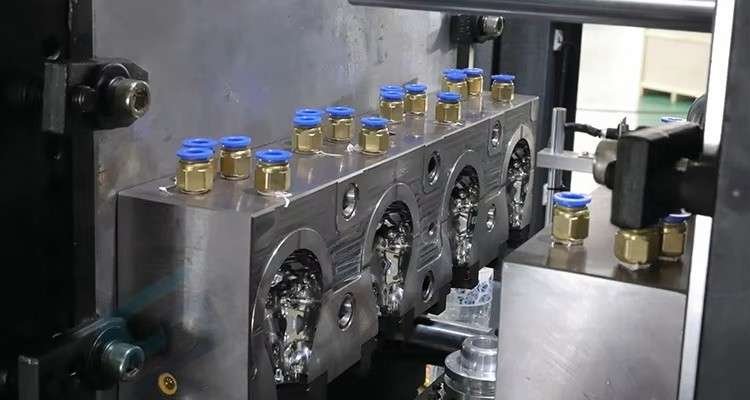
- 35-Minute Fast Mold Changeover: Lightweight aluminum 7075 mold blocks with quick-disconnect water lines minimize changeover downtime between 500ml and 1.5L bottle SKUs.
Interested in sizing a 4-cavity automatic bottle blower for your line?
Send your bottle drawings for a complimentary preform weight analysis and plant layout proposal.
1. Technical Specifications: Sailwin SW-4A Workhorse Platform
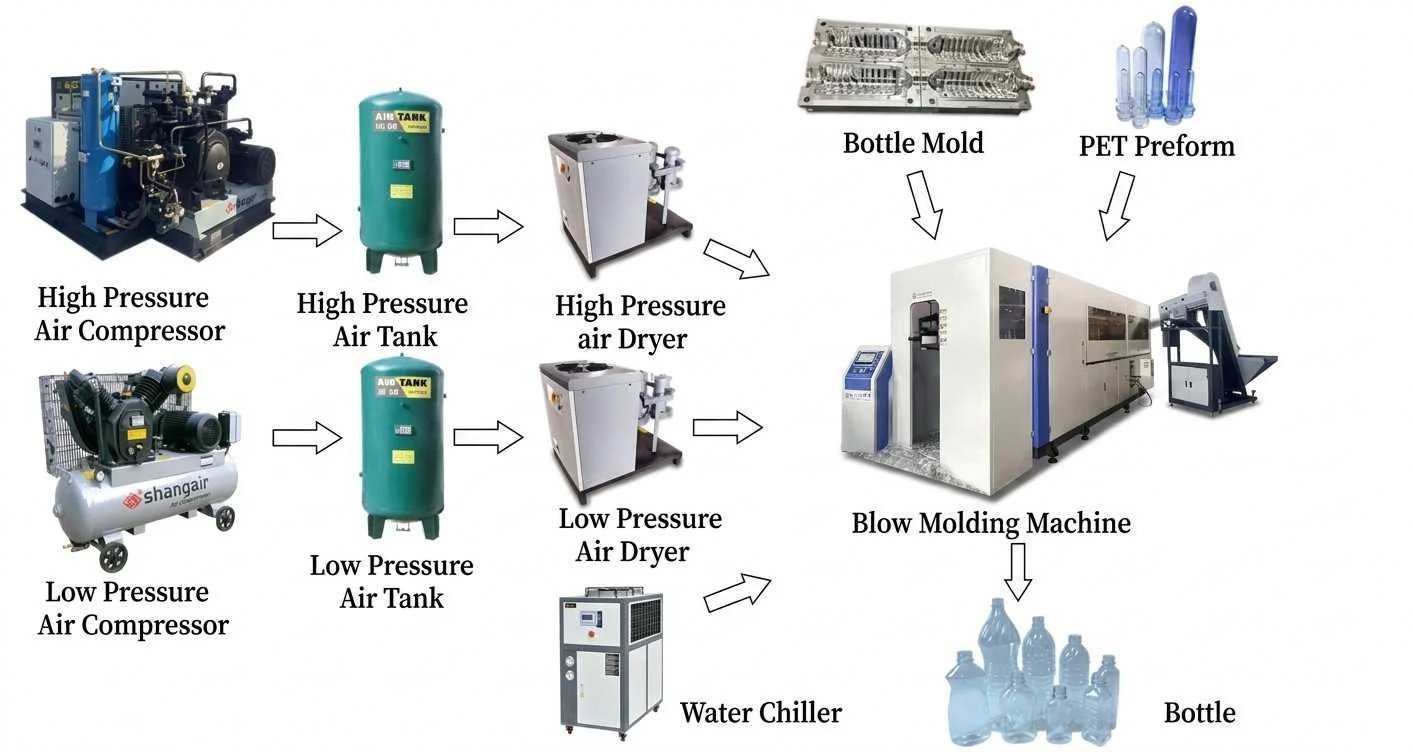
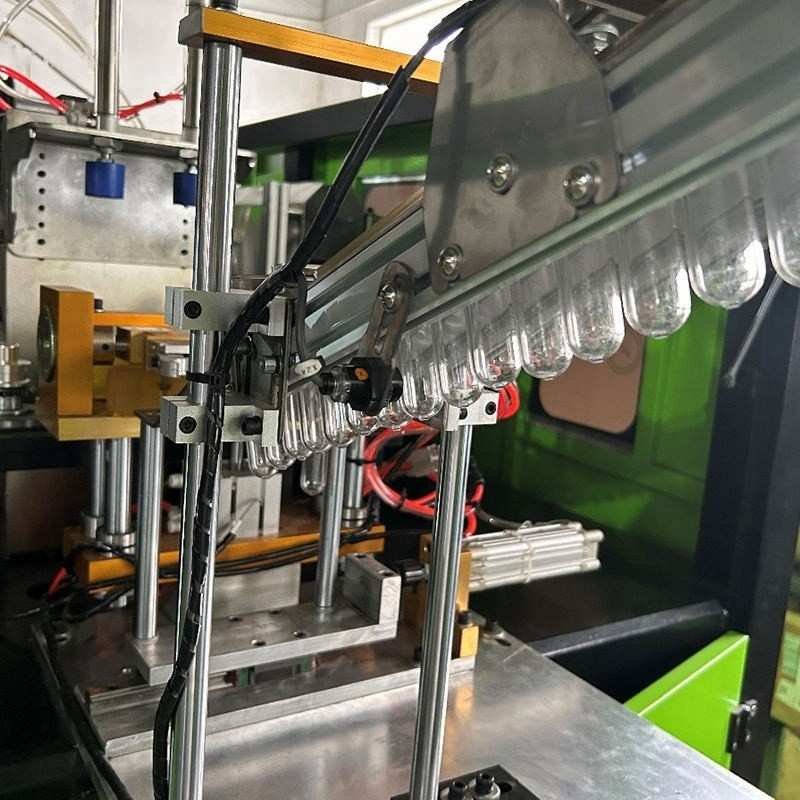
The 4-cavity linear automatic architecture combines an auto-loading preform elevator, 8-zone infrared quartz heating tunnel, servo stretch carriage, and pneumatic air discharge into a rugged, space-saving frame.
| Technical Specification | Sailwin SW-4A Standard | Sailwin SW-4AS High-Speed Servo |
|---|---|---|
| Nominal Output Capacity | 4,000 – 4,500 BPH (500ml) | 5,500 – 6,000 BPH (500ml) |
| Container Volume Range | 200ml to 2,000ml | 200ml to 2,000ml |
| Stretching Drive Mechanism | Pneumatic Cylinder Stretch | Synchronized Digital AC Servo Motor |
| Clamping System | Hydraulic Toggle Boost Clamping | All-Electric Servo Mechanical Toggle |
| High-Pressure Air Demand | 2.2 m³/min @ 30 bar | 1.8 m³/min @ 30 bar (Air Recovery) |
Check out our complete machine specs on our PET blow molding machine catalog, or explore full budget models in our blow molding machine pricing guide.
Need custom 4-cavity molds with bottle engraving?
Sailwin delivers CNC-machined aircraft 7075 aluminum bottle molds with quick-release clamping blocks.
2. Sailwin Case Study: Water Plant Upgrades to 4-Cavity Servo Line
A regional bottled water producer in Ghana installed a Sailwin SW-4A 4-cavity automatic blowing machine, increasing daily production from 18,000 to 52,000 bottles while cutting electricity consumption by 28%.
- Client: Bottling plant producing 500ml and 750ml still spring water bottles for retail distribution.
- Problem: Ran three 2-cavity semi-automatic machines; high defect rate (4.8%) caused frequent filler line jams.
- Electricity Penalty: Old pneumatic compressors drew 85kW continuously, causing massive power utility surcharges.
- Turnkey Equipment: Installed Sailwin SW-4AS 4-cavity all-electric servo stretch blow molder (6,000 BPH).
- Air Recovery: Integrated 30-bar exhaust air recycling system redirecting exhaust air into low-pressure circuits.
- Automated Infeed: Connected air conveyors directly from blower output into monoblock filler.
- Production Expansion: Output jumped from 2,200 BPH to 5,800 BPH with zero manual bottle handling.
- Energy Reduction: Operating power dropped from 85kW to 42kW (50.5% electrical power savings).
- Scrap Elimination: Bottle reject rate dropped to 0.14%, saving $1,200 in preform resin per month.
Data source: Sailwin Customer Field Report #GHA-2025-05. Equipment: SW-4AS All-Electric 4-Cavity Linear Blower.
Planning to upgrade your factory with a 4-cavity automatic blower?
Our engineers will design a custom CAD line layout and compute your monthly operating cost savings.
3. Frequently Asked Questions: 4-Cavity Automatic Blow Molding Machines
Have questions on preform weight or mold design for your bottle?
Chat directly with Sailwin’s technical tooling engineers on WhatsApp for instant 3D drawing reviews.
4. Summary: The Golden Standard for Commercial Bottling
The 4-cavity automatic PET bottle blowing machine represents the single most profitable equipment investment for regional water and beverage bottling plants, combining high output with low energy overhead.
- Choose 4-cavity servo models for the highest energy efficiency and lowest scrap rates.
- Pair with an integrated air recovery system to cut electrical compressor bills by up to 30%.
- Partner with Sailwin for turnkey bottle blowing machines, custom mold design, and complete packaging engineering.
SAILWIN MACHINERY · 4-CAVITY PACKAGING EXCELLENCE
Ready to Upgrade Your Bottle Making Production Line?
Send us your target bottle designs and desired hourly production targets. Our engineers will configure a complete 4-cavity automated blowing system proposal with pricing within 24 hours.
Explore Complete PET Packaging Solutions:
• PET blow molding machine – Comprehensive catalogue of linear and rotary stretch blowers.
• pet blow molding machine cost guide – Complete 2026 pricing and auxiliary breakdown.
• linear vs rotary blow molding machine – Output capacity and changeover comparison.
• contact our engineering team – Request customized machinery blueprints and quotations.
• Need dedicated technical advice? Contact our machinery specialists for a 1-on-1 equipment evaluation.