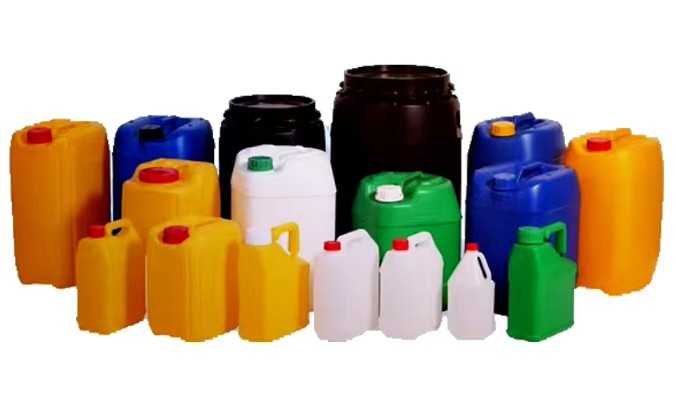
When industrial packaging manufacturers scale beyond 20-liter containers to produce 30L jerrycans, 60L chemical carboys, 220L (55-gallon) L-Ring shipping drums, or 1,000-liter IBC inner bottles, the laws of plastic rheology change fundamentally. Attempting to manufacture a 10kg molten plastic container on a standard continuous extrusion blow molder results in immediate structural failure: the immense gravitational weight of the hanging tube causes severe parison sag (drawdown), stretching the upper neck paper-thin while the bottom gathers into an excessively thick, cool mass. Furthermore, the slow extrusion rate cools the outer parison skin before mold closure, resulting in brittle bottom pinch-off welds that rupture during certified drop testing.
To eliminate parison drawdown, thermal degradation, and structural wall inconsistency in large-format plastic molding, the packaging industry relies on the accumulator head blow molding machine. By melting and accumulating high-molecular-weight polyethylene (HMW-HDPE) inside an internal heated cylinder and shooting the parison downward in under 2.5 seconds, accumulator technology enables structural container production up to 1,000 liters with uniform wall distribution. This engineering buyer’s guide details how accumulator die heads work, sizing formulas for 30L to 100L chemical drums, multi-layer co-extrusion for barrier tanks, and essential factory acceptance criteria for achieving UN hazmat container certification.
| Container Class & Volume | Typical Shot Weight | Recommended Accumulator Capacity | Clamping Tonnage & Cycle Time |
| Medium Chemical Jugs (25L – 30L) | 1,100g – 1,600g | FIFO 3.0L – 5.0L Head | 250 – 350 kN (35 – 45s cycle) |
| Open-Top Carboys (50L – 60L) | 2,400g – 3,500g | FIFO 6.0L – 10.0L Head | 450 – 650 kN (50 – 65s cycle) |
| Industrial Drums (100L – 120L) | 4,500g – 6,000g | FIFO 12.0L – 16.0L Head | 800 – 1,100 kN (65 – 80s cycle) |
| L-Ring Chemical Drums (200L – 220L) | 8,500g – 10,500g | Heavy FIFO 20.0L – 25.0L Head | 1,200 – 1,600 kN (90 – 115s cycle) |
| IBC Tank Inner Bottle (1,000L) | 15.0kg – 18.5kg | Heavy Industrial 40L – 60L Head | 2,500 – 3,500 kN (120 – 150s cycle) |
What Is an Accumulator Head and Why Does It Matter for Large Parts?
In standard continuous extrusion, an extruder screw continuously pushes molten plastic downward through a die tool. While effective for small bottles (under 5 liters) where parisons are lightweight, this continuous method fails when manufacturing heavy hollow containers. If an extrusion screw requires 45 seconds to plasticize an 8-kilogram parison, the top of the molten tube hangs exposed to ambient air for 45 seconds while the bottom section is just exiting the die. The upper portion stretches violently under gravity, becoming razor-thin and cooling down before the mold can clamp shut.
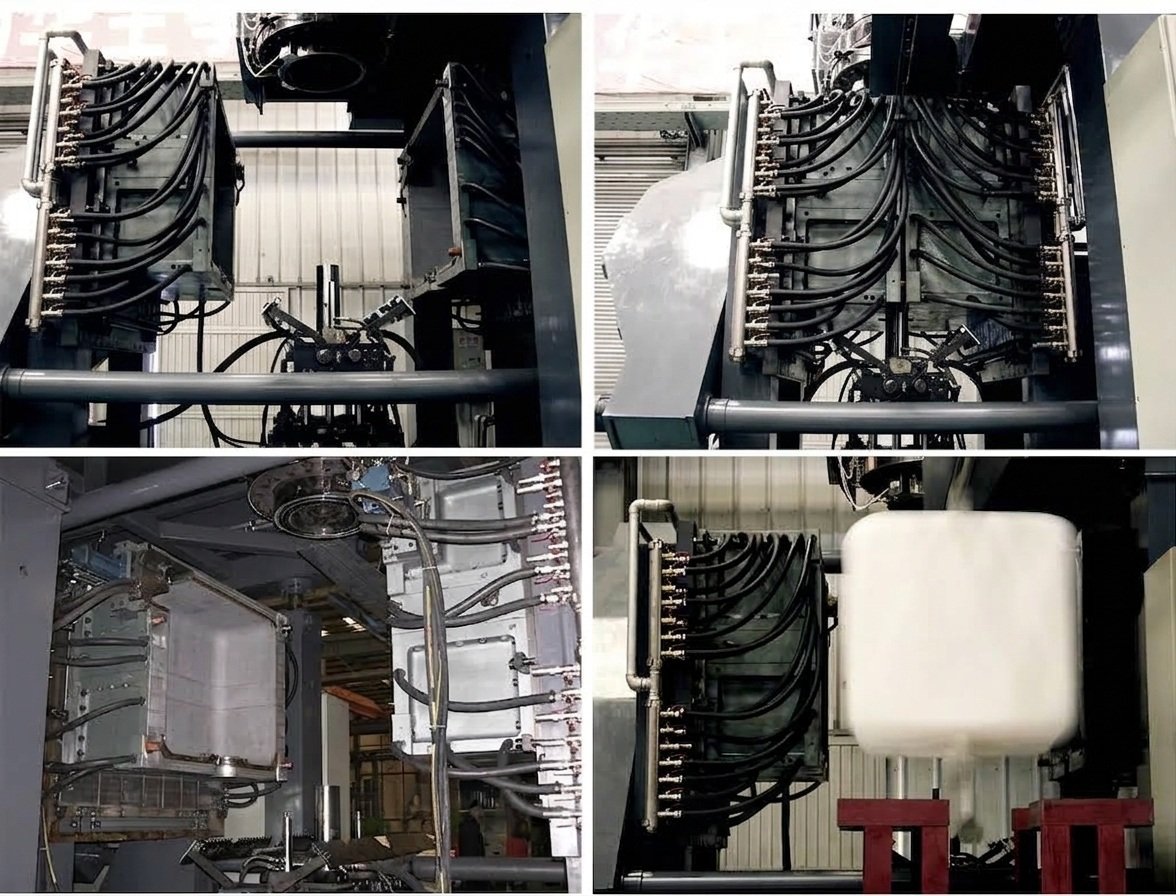
The Operating Sequence of an Accumulator Die Head
An accumulator head decouples plasticization from parison formation through a four-phase mechanical sequence:
- Continuous Melting & Pooling: The extruder screw rotates continuously at a steady, optimized rate, feeding melted HMW-HDPE polymer into the annular chamber of the accumulator head. As resin accumulates, an internal hydraulic piston pushes upward against controlled backpressure.
- Mold Opening & Part Ejection: Meanwhile, the mold clamping unit opens, and an automated pneumatic or robotic manipulator strips the previous container off the blow pin and unloads it onto a discharge conveyor.
- High-Speed Hydraulic Parison Shot: When the mold area is clear, heavy-duty hydraulic proportional cylinders drive the accumulator ram downward with massive force, shooting the entire 8kg to 15kg parison downward between the open mold platens in just 1.5 to 2.5 seconds.
- Instant Clamping & Parison Blowing: Because the parison exits in fractions of a second, zero gravitational sagging occurs. The mold platens clamp shut instantly onto hot, thermally uniform plastic, and bottom blowing needles expand the container against chilled mold cavity walls.
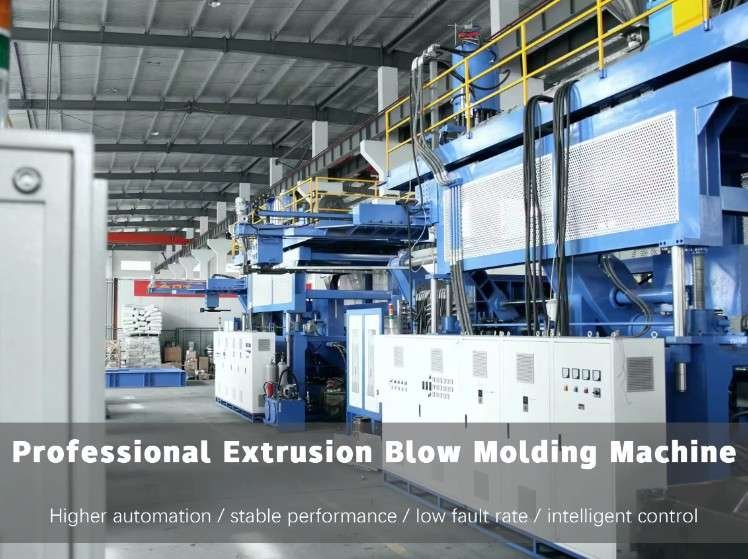
FIFO (First-In, First-Out) vs Conventional Accumulator Designs
Older generation accumulator heads utilized “push-out” designs where resin that entered the chamber first lingered along outer cylinder walls, resulting in uneven residence times and polymer thermal degradation. Sailwin’s large extrusion blow molding machine line utilizes FIFO (First-In, First-Out) spiral mandrel flow channels. Resin enters and purges in strict chronological order, eliminating dead zones, enabling rapid color changes, and preventing black-speck carbonization in high-molecular-weight resins.
Sizing the Accumulator Head: Shot Weight & Extrusion Capacity Formulas
Selecting an undersized accumulator head forces the machine to operate at 100% stroke capacity, causing uneven shot pressure and density variations. Conversely, an oversized accumulator head results in excessive polymer residence time inside the heated barrel, causing molecular chain scission in HMW-HDPE resins.
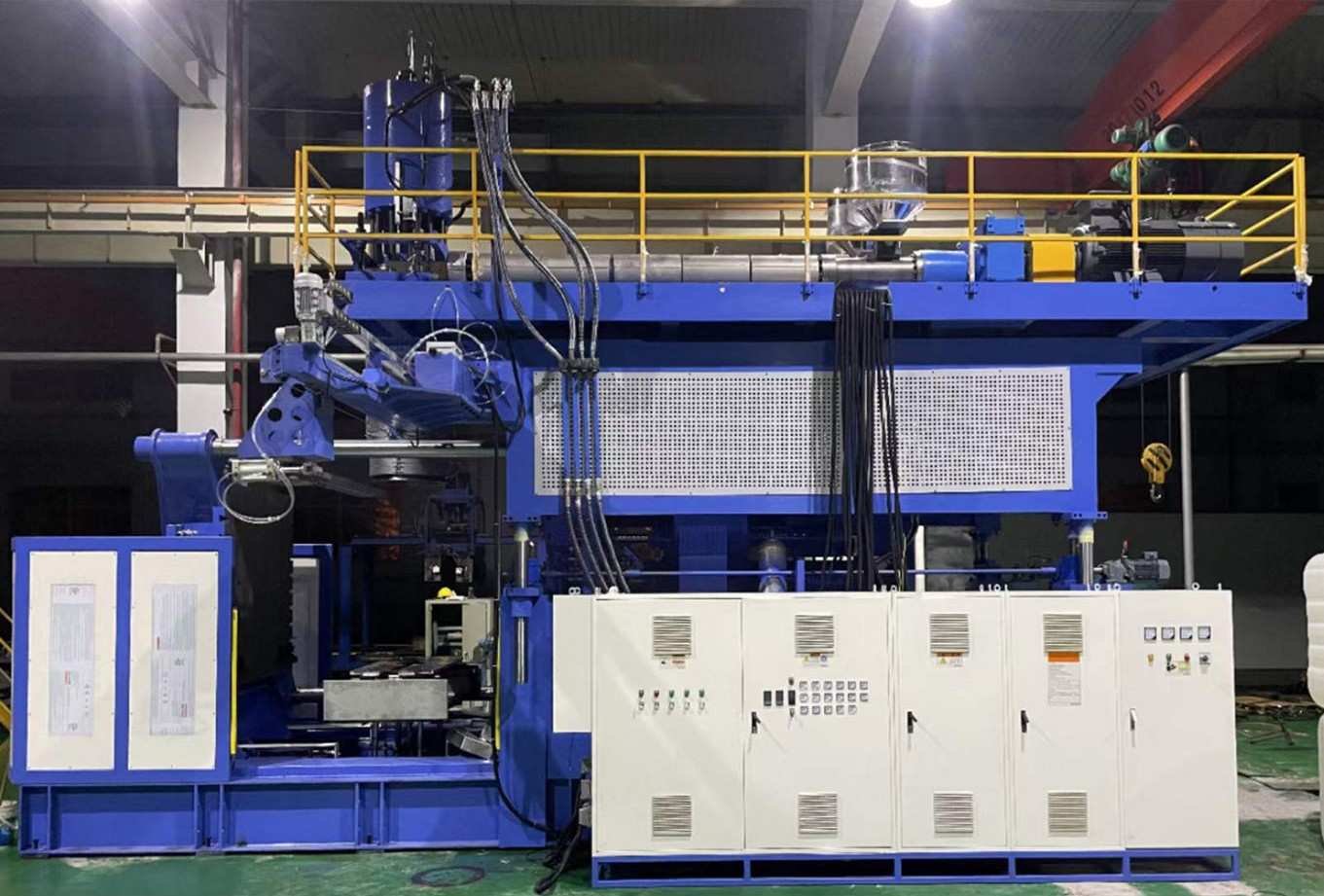
1. Accumulator Shot Volume Calculation
To determine the required accumulator chamber capacity, use the following engineering formula:
Note: At typical processing temperatures (190°C – 210°C), molten HDPE has a melt density of approximately 0.76 to 0.78 kg/L (significantly lower than room-temperature solid density of 0.95 kg/L).
For example, producing a 60-liter chemical drum weighing 3,000 grams with 800 grams of top and bottom pinch-off flash requires a total melt weight of 3.8 kg. Dividing 3.8 kg by 0.77 kg/L melt density and applying an 0.85 stroke safety factor yields an optimal accumulator capacity of 5.8 Liters (specifying a 6L to 8L FIFO accumulator head).
2. Extruder Plasticizing Rate Sizing
The extruder screw diameter must be sized so that it can plasticize the required shot weight during the container’s cooling and demolding time. If container cycle time is 60 seconds and total shot weight is 4.0 kg, the extruder must plasticize at least 240 kg/hour of HMW-HDPE resin. Sizing an 85mm or 90mm barrier screw ensures steady plasticization without requiring excessive screw RPM that shears polymer chains.
Sizing Machinery for 30L, 60L or 200L Industrial Chemical Containers?
Send us your drum drawing, resin technical data sheet, and hourly output target. Our extrusion engineering specialists calculate the exact FIFO head volume, screw plasticizing rate, and hydraulic clamp tonnage needed for certified UN compliance.
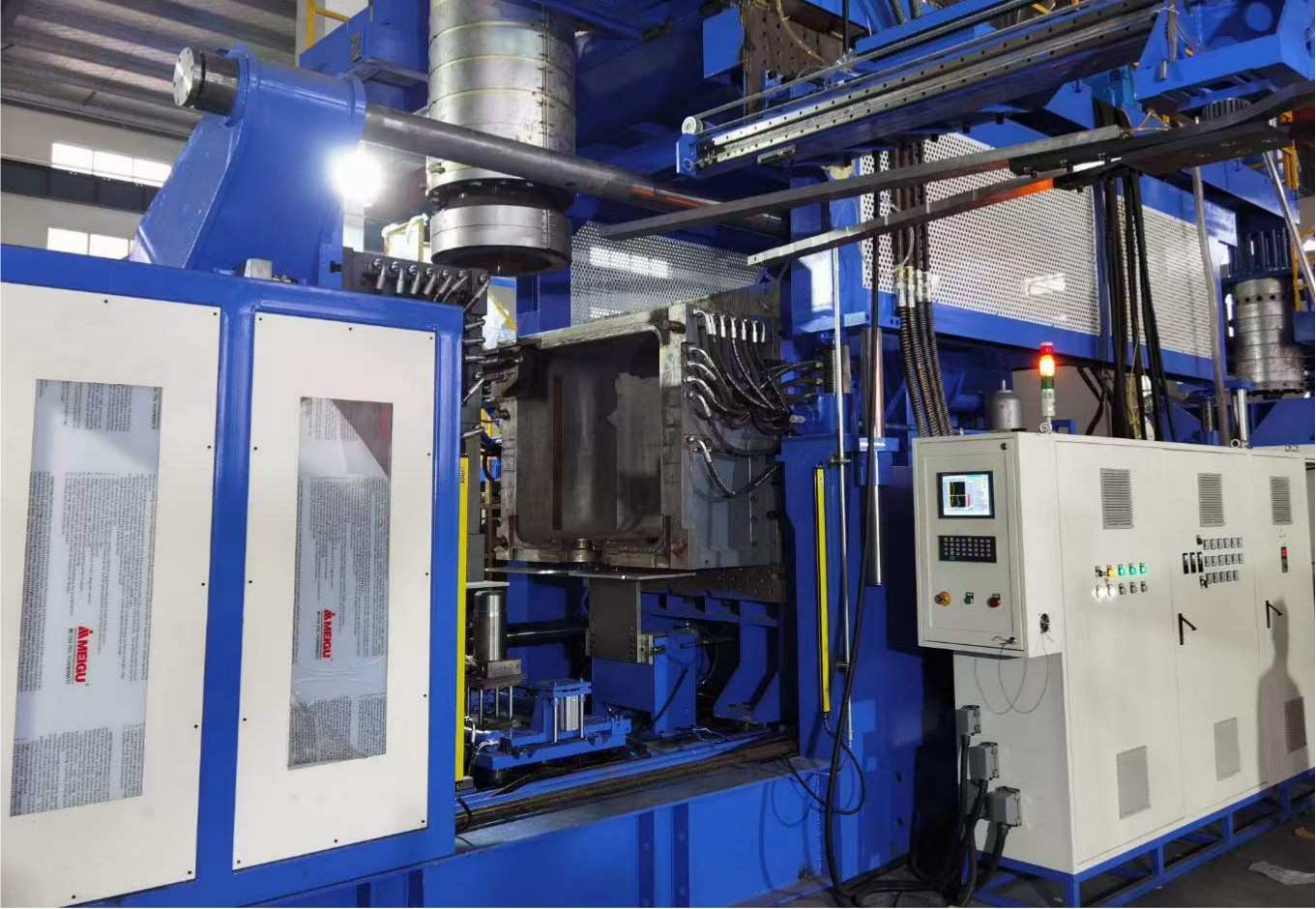
Hydraulic Clamping Unit & Platen Architecture for Heavy Tooling
Large drum molds manufactured from forged steel or high-conductivity aviation aluminum weigh between 2,500 kg and 8,000 kg. Moving and locking molds of this magnitude under 6 to 10 bar internal blowing pressure requires exceptional mechanical rigidity:
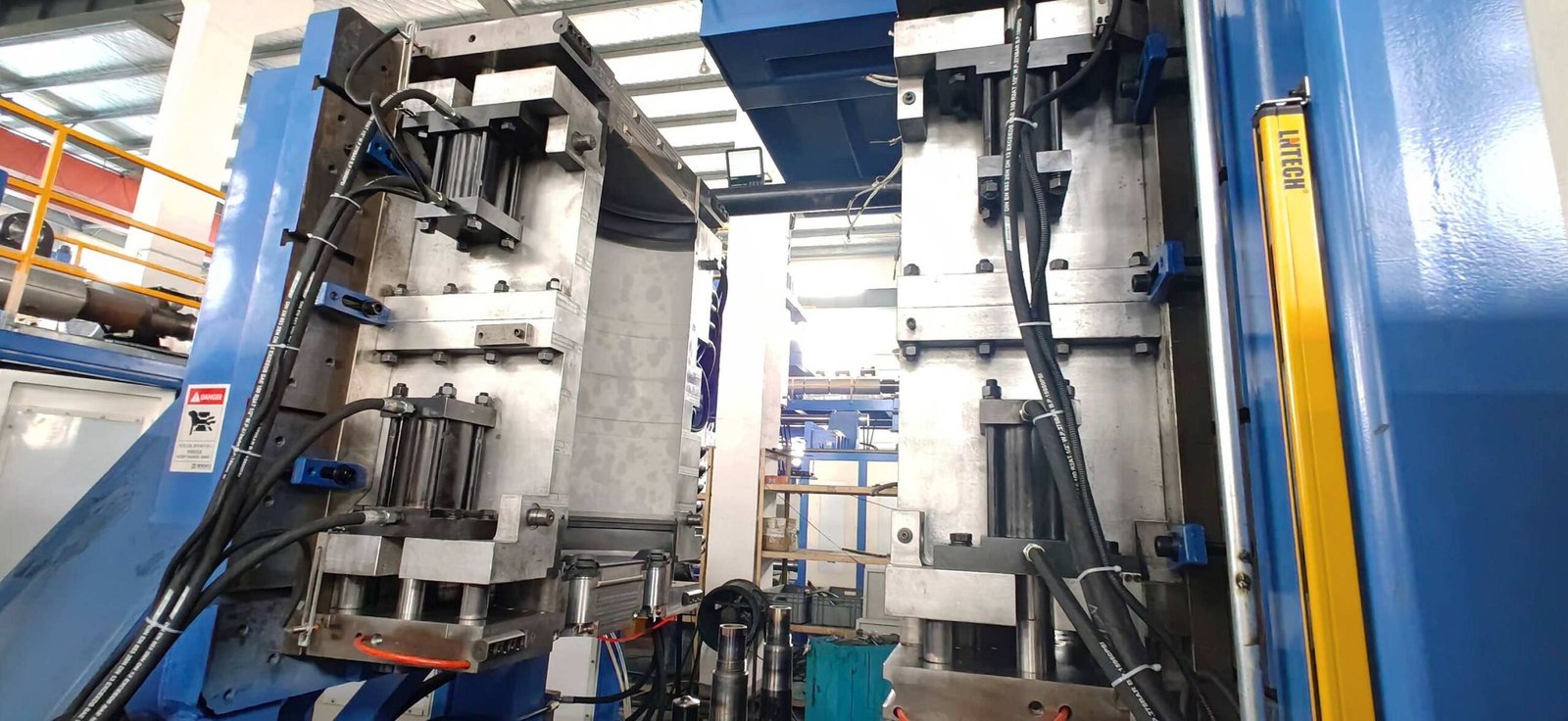
Structural Rigidity: Massive Platen Daylight for Multi-Cavity Tooling
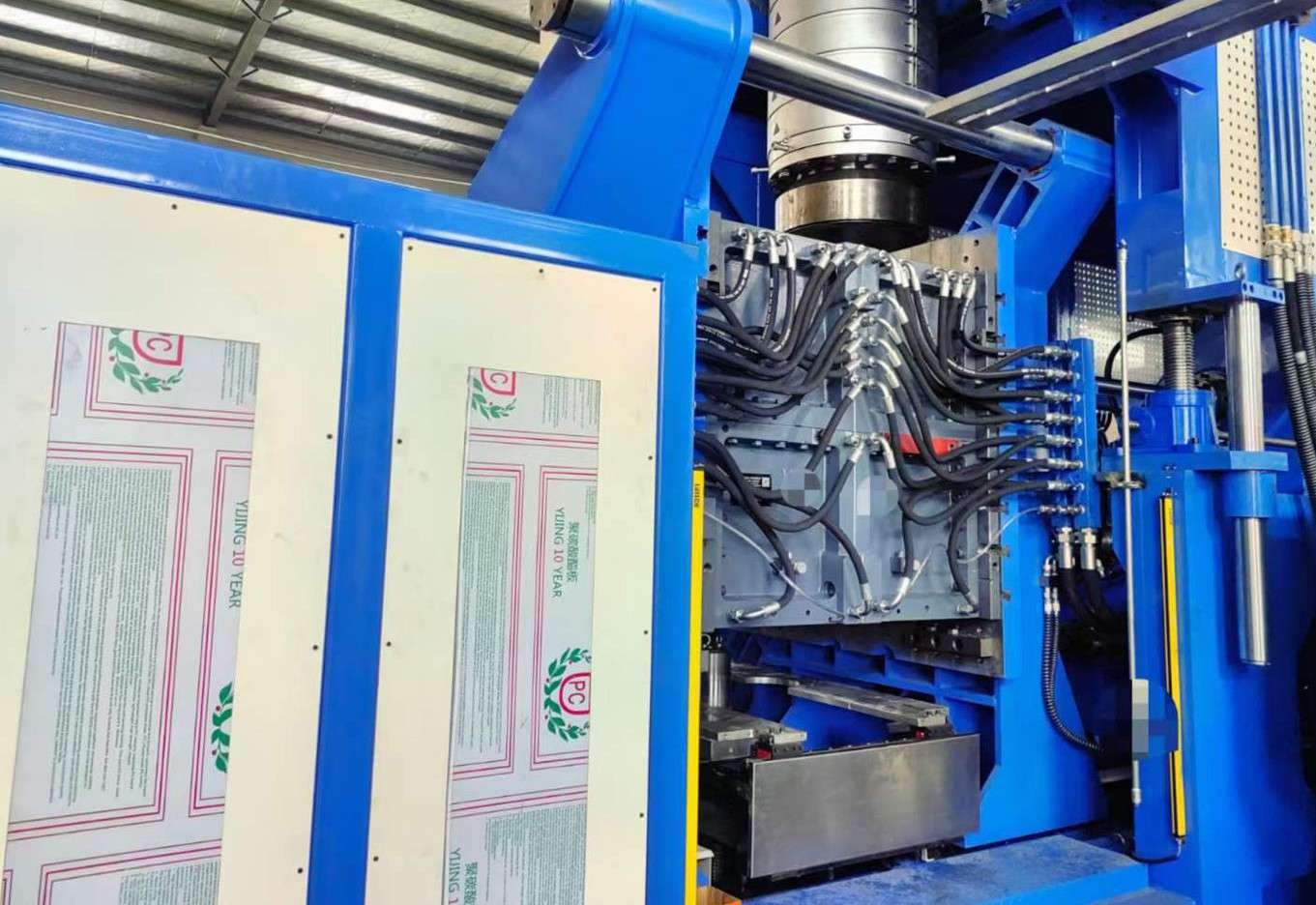
Locking Force: Multi-Cylinder Synchronized Clamping Platen
Key structural engineering features in Sailwin’s large clamping systems include:
- Diagonal Tie-Bar / Tie-Barless Platen Guidance: Heavy chrome-plated guide columns ground to micron tolerances eliminate platen canting under off-center container loading.
- Finite Element Analyzed (FEA) Nodular Cast Platens: Spheroidal graphite iron platens feature ribbed box-section geometry that limits platen deflection to less than 0.05mm across the entire mold face under 1,500 kN locking force.
- High-Flow Proportional Hydraulic Manifolds: Dual high-capacity accumulator bottles supply instant hydraulic volume for platen acceleration and deceleration, cushioning platen closure to prevent shock damage to delicate mold pinch-off edges.
Multi-Layer Co-Extrusion Accumulator Technology for Chemical Barrier Tanks
When packaging volatile agrochemicals, aromatic solvents, or automotive fuels, standard monolayer HDPE allows volatile hydrocarbons to permeate through the container walls. To achieve zero-permeation and meet strict environmental packaging standards, accumulator heads are engineered with concentric multi-layer spiral annular channels:
| Multi-Layer Architecture | Layer Composition & Thickness Ratio | Functional Packaging Purpose |
| Outer Layer (Skin) | Virgin HDPE + Carbon Black / Color (15% – 20%) | UV stabilization, weather resistance, and electrostatic grounding |
| Middle Layer (Core) | In-House Regrind Scrap / Post-Consumer Resin (50% – 65%) | Structural mechanical strength; slashes virgin polymer expenditure |
| Tie Layer (Adhesive) | Maleic Anhydride Grafted Polyethylene (2% – 3%) | Chemically bonds non-polar HDPE to highly polar barrier EVOH |
| Barrier Layer | Ethylene Vinyl Alcohol (EVOH) / Polyamide (3% – 5%) | Blocks oxygen ingress and prevents hydrocarbon fuel permeation |
| Inner Layer (Contact) | 100% Pure Virgin Chemical-Grade HDPE (15% – 20%) | Maximum chemical compatibility; prevents active chemical contamination |
Demolding, Automated Part Handling & Leak Testing Integration
Demolding a molten, flexible 60L container or 200L drum manually is physically impossible and presents severe operator safety hazards. Modern accumulator blow molding cells integrate fully automated demolding and part-takeout robotics:
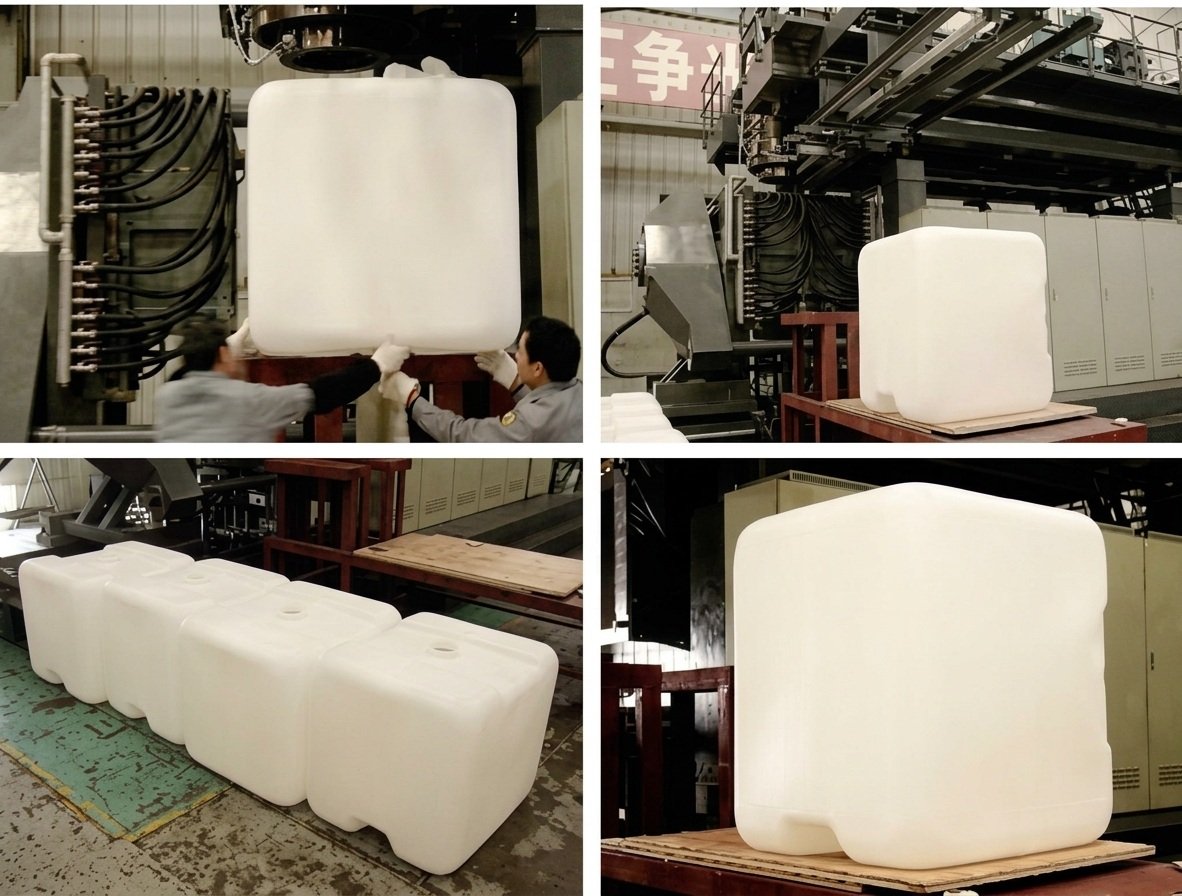
When blowing and internal in-mold cooling complete, bottom blow pins retract, top pneumatic grippers expand inside the container mouth, and an overhead servo gantry arm lifts the container cleanly out of the mold cavity. The part is transferred directly to an automated post-cooling station equipped with hydraulic flash punching knives that remove top handle and bottom pinch-off flash in a single automated stroke.
Industrial Bulk Containers: The 1,000-Liter IBC Manufacturing Frontier
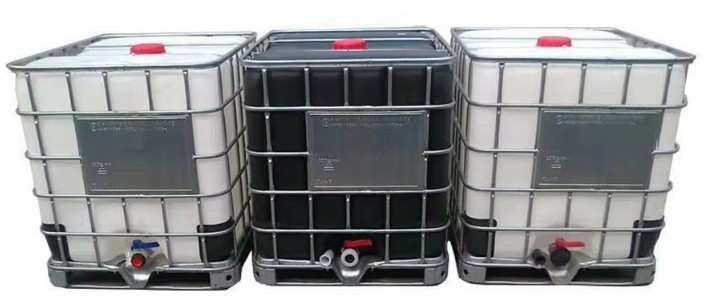
The pinnacle of industrial accumulator blow molding technology is the manufacturing of 1,000-liter Intermediate Bulk Container (IBC) inner bottles. A single 1,000L container inner bottle weighs between 15.5 kg and 18.0 kg, requiring an immense accumulator shot capacity of 40 to 60 liters and clamping forces exceeding 2,500 kN.
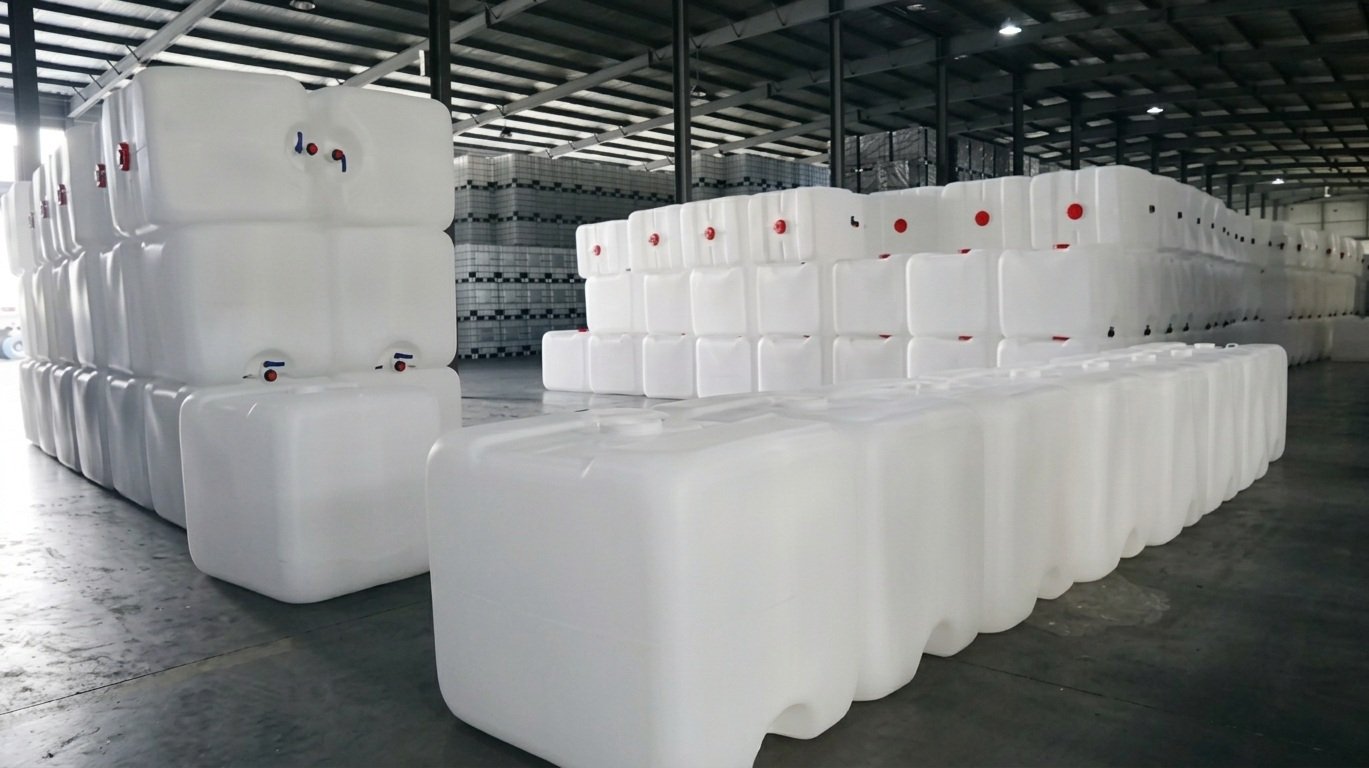
Producing IBC containers demands continuous wall thickness precision. Sailwin’s heavy IBC blow molding platform integrates high-rigidity parison tooling with 128-point parison wall thickness programming, ensuring that container corner radii achieve minimum 2.5mm wall thickness to survive standard UN 1.9-meter cold drop impact testing without cracking.
Case Study: Chemical Drum Molder Cuts Scrap Rate by 92% and Reclaims UN 1H1 Certification
Client Profile: A major petrochemical container manufacturer in the Gulf region produced 60-liter and 100-liter open-head chemical barrels using an aging push-out accumulator blow molder.
The Production Dilemma: The client suffered from chronic parison weight drift (+/- 8.5% shot variation) caused by internal valve leakage. During international qualification testing, barrels failed UN 1.8-meter drop tests due to severe bottom pinch-off weld brittleness. Machine scrap rates averaged an unsustainable 7.8%.
Sailwin Turnkey Solution:
- Supplied a Sailwin SW-100L heavy accumulator blow molding system with a 15-liter FIFO spiral mandrel die head.
- Configured an advanced MOOG 100-point axial parison programmer paired with bottom beryllium-copper mold pinch-off inserts with 35° relief angles.
- Integrated automated top and bottom hydraulic deflashing stations and inline multi-station helium leak detectors.
Verified Production Results:
| Performance Metric | Legacy Push-Out Machine | Sailwin SW-100L FIFO Accumulator System | Operational Benefit |
| Shot Weight Repeatability | ± 8.5% (Severe parison drift) | ± 0.4% High Precision Shot | Eliminated over-weight resin giveaway |
| Total Factory Scrap Rate | 7.8% (Pinch-off leaks) | 0.6% Overall Scrap | 92.3% reduction in plant scrap |
| Cycle Time (60L Drum) | 78 Seconds | 56 Seconds | +39.2% increase in hourly output |
| UN 1.8m Cold Drop Pass Rate | 74% (Frequent weld seam split) | 100% Certified Pass | Achieved certified UN 1H1 chemical packaging approval |
Planning to Manufacture Industrial Chemical Drums, Tanks, or IBC Totes?
Contact Sailwin’s large container engineering division today. We deliver turnkey accumulator blow molding systems including custom molds, multi-layer barrier heads, automated deflashing, and factory FAT certifications.
Frequently Asked Questions: Accumulator Head Blow Molding
What is the minimum container size that justifies an accumulator head machine?
Generally, containers of 20 to 25 liters (such as 5-gallon jerrycans and chemical carboys) represent the technical crossover point where accumulator heads become highly advantageous. For containers under 15 liters, continuous extrusion shuttle machines are generally more economical due to lower initial capital costs and faster cycling. Above 30 liters, accumulator heads are mandatory.
How does an accumulator die head handle different resin melt index (MFI) values?
Large containers require High-Molecular-Weight HDPE (HMW-HDPE) with very low Melt Flow Index values (typically MFI 0.05 to 0.15 g/10 min at 190°C/2.16kg, or High Load MFI 2.0 to 5.0 g/10 min at 21.6kg). Sailwin’s accumulator heads feature wide internal flow passages and gradual compression spirals engineered specifically for fractional-melt polymers, preventing melt fracture and surface orange peel defects.
Why is First-In, First-Out (FIFO) flow geometry critical for accumulator heads?
In non-FIFO accumulator heads, molten plastic accumulates along the outer perimeter walls, remaining stagnant while fresh resin flows through the center. Over time, this stagnant plastic degrades thermally, creating black carbon flecks and weak weld seams in containers. FIFO design ensures that the plastic entering the chamber first is shot out first, maintaining 100% polymer thermal stability.
Can an accumulator head blow molding machine mold parts with internal baffles or inserts?
Yes. Automotive fuel tanks, marine water tanks, and industrial containers often require internal slosh baffles or metal threaded inserts. Sailwin accumulator machines can be integrated with multi-axis robotic pre-placement arms that load inserts into mold cavities prior to clamping, as well as needle blow pins for localized internal baffle welding.
What type of mold material is recommended for 30L to 100L chemical drums?
For high-volume chemical drum production (exceeding 200,000 units annually), precision forged P20 tool steel or pre-hardened 7075-T6 aviation aluminum with beryllium copper (Be-Cu) pinch-off inserts is strongly recommended. Beryllium copper along bottom pinch-off weld lines draws heat away from thick molten plastic seams rapidly, accelerating cycle times and preventing post-mold shrinkage deformation.
Does Sailwin perform factory acceptance testing (FAT) before export shipment?
Yes. Every Sailwin accumulator blow molding machine undergoes a rigorous 72-hour continuous factory acceptance trial using the customer’s actual resin, masterbatch colorant, and mold tooling. Parison weight repeatability, container ultrasonic wall thickness mapping, and certified 1.8-meter cold drop test compliance are certified under ISO 9001 certified manufacturing quality standards prior to container packing.
Summary & Related Heavy Packaging Machinery Guides
Operating an accumulator head blow molding machine is the indispensable engineering solution for large hollow container production between 30 liters and 1,000 liters. Sizing the proper FIFO accumulator shot volume, integrating 100-point parison wall thickness control, choosing high-rigidity hydraulic clamping platens, and specifying automated demolding ensures high structural container integrity, low resin consumption, and verified UN hazmat compliance.
To further explore heavy-duty packaging machinery and material selection, explore our technical library:
- Accumulator Head Blow Molding Machine Series Catalog — Browse complete specifications for heavy container models.
- Large Extrusion Blow Molding Machine Specifications — Sizing machinery for 200L drums and IBC bulk tanks.
- HDPE Blow Molding Machine Container Sizing Guide — Technical comparison of container sizes from 1L to 1000L.
- Jerrycan Blow Molding Machine Systems — Dedicated platforms for 15L to 30L stackable chemical containers.
Ready to Engineer Your Large Container Blow Molding Line?
Speak with Sailwin’s large container engineering specialists today for turnkey machinery proposals, FIFO die head specifications, custom drum mold tooling, and plant layout designs.