Updated: 2026 Engineering Guide · By Sailwin Auxiliary Division
High-Pressure Air Compressor Sizing for PET Blow Molding (30 Bar vs 40 Bar)
In stretch blow molding, the high-pressure compressed air system is the heartbeat of your packaging operation. While the blow molder performs mechanical stretching and mold clamping, it is the pneumatic air volume that actually shapes the bottle. Sizing an undersized air compressor for blow molding machine installations causes catastrophic pressure drops during peak blow cycles, resulting in half-formed bottle feet, blurry logo engravings, and rocker bottoms; conversely, purchasing an oversized compressor wastes tens of thousands of dollars in unneeded electrical demand surcharges.
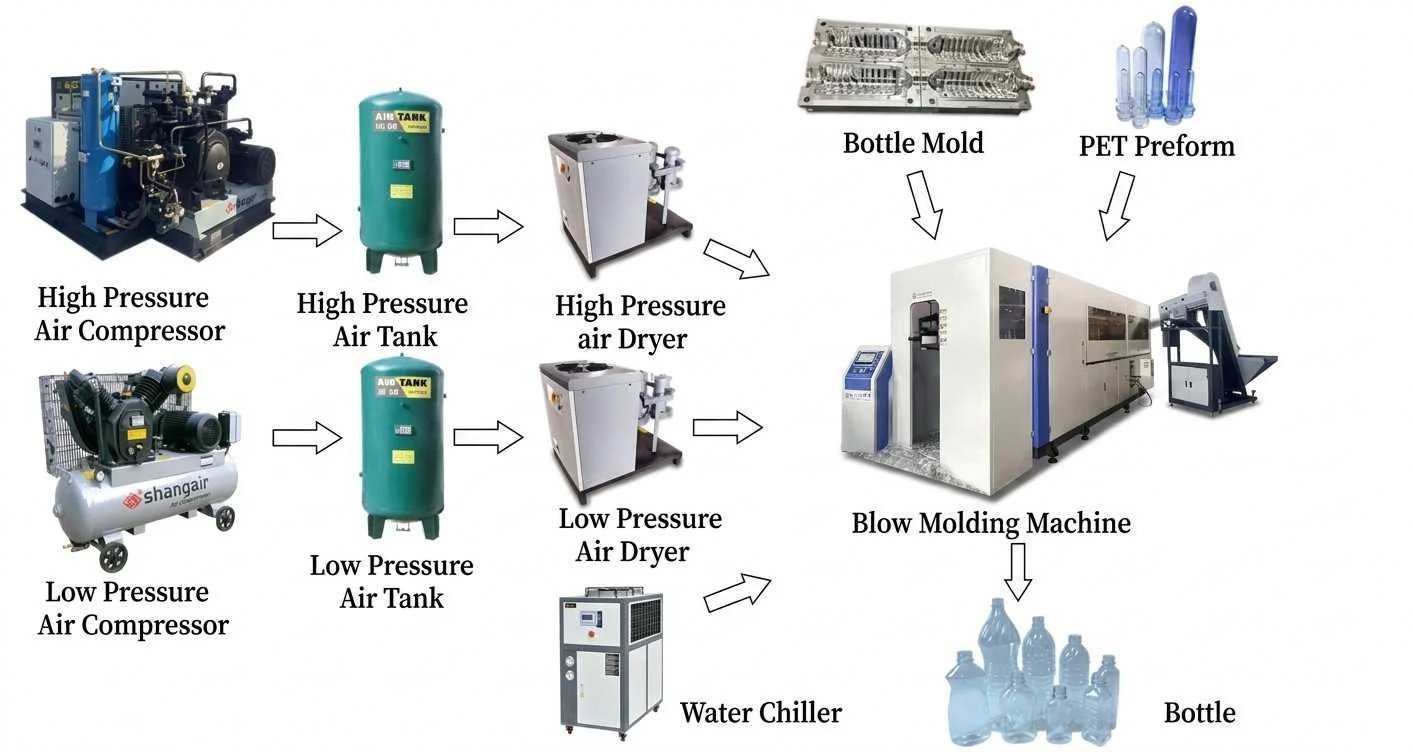
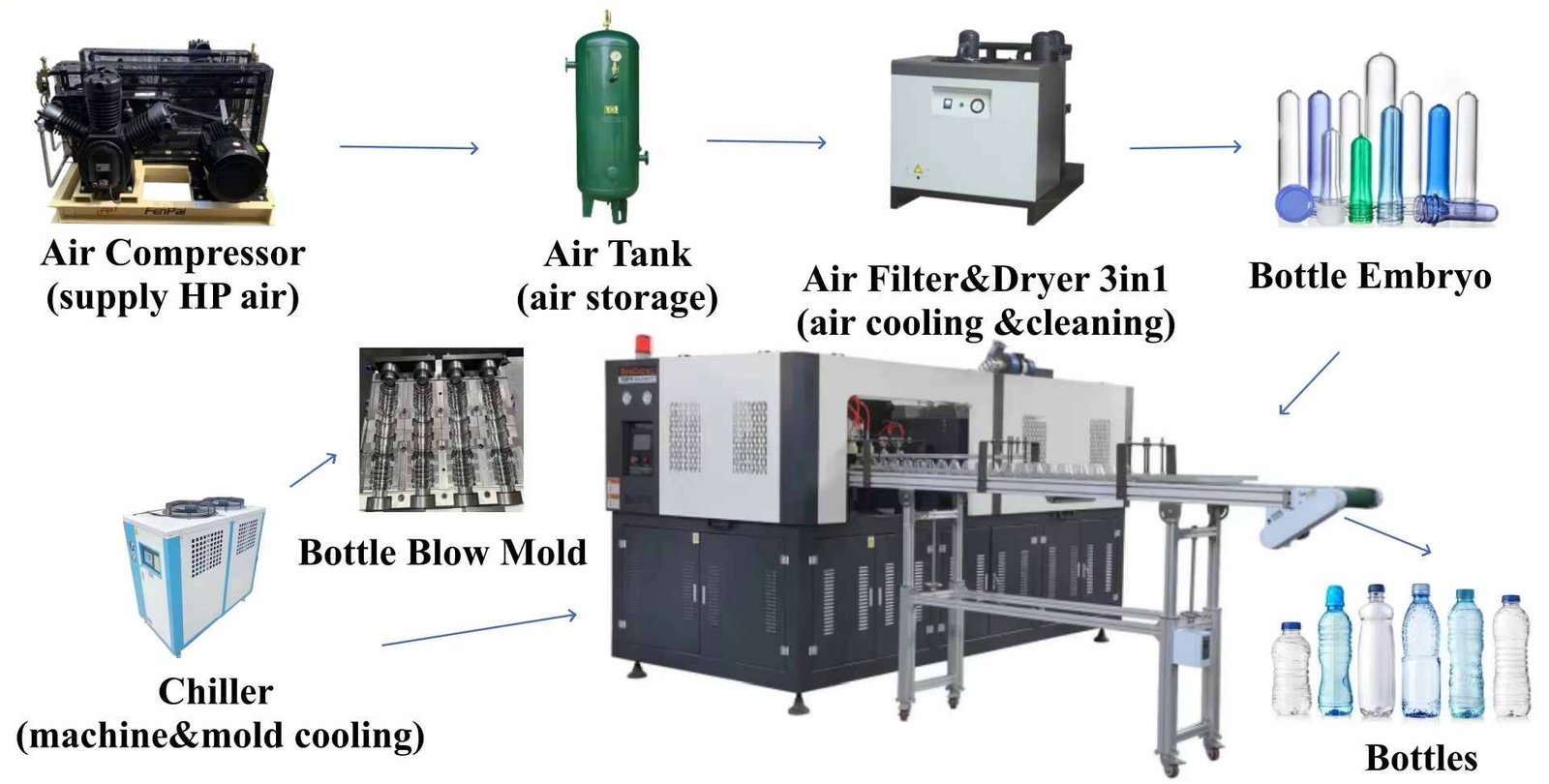
Sailwin engineers complete turnkey bottle packaging systems, matching our linear and rotary blowers with perfectly balanced high-pressure screw-and-booster compressor systems. We help plant managers calculate exact flow rates (m³/min and CFM), select optimal pressure dew points, and integrate air recovery valves that slash operating electricity costs.
This technical sizing manual details mathematical air consumption calculations, compares 30-bar vs. 40-bar system configurations, and outlines multi-stage filtration protocols for 100% food-grade compliance.
Key Takeaways
- Pressure Sizing by Product Type: Still water bottles require 25 to 30 bar (360-435 psi); carbonated beverage bottles with petaloid bases and heavy containers require 35 to 40 bar (500-580 psi).
- Screw + Booster vs. Integrated Piston: Combining a low-pressure screw compressor with a high-pressure booster pump cuts electricity draw by 22% compared to massive all-piston compressors.
- Air Recovery Recycles 30% Energy: Routing 30-bar bottle exhaust air back into low-pressure pneumatic toggle circuits eliminates the need for a separate shop air compressor.
Need an exact air compressor sizing calculation for your line?
Send us your bottle volumes and target BPH for a free pneumatic demand calculation and equipment quote.
1. Mathematical Air Demand Formula: Sizing m³/min and CFM
Never guess compressor capacity. Sizing high-pressure air requires calculating volumetric bottle expansion at operating pressure, cycle frequency, and pneumatic manifold purge losses.
| Line Output (BPH) | Bottle Size | Required Pressure | Recommended Air Flow | Compressor Motor Power |
|---|---|---|---|---|
| 2,000 BPH (2-Cavity) | 500ml Water | 30 Bar | 1.0 – 1.2 m³/min (42 CFM) | 11 kW – 15 kW |
| 4,000 – 5,000 BPH (4-Cavity) | 500ml Water | 30 – 35 Bar | 2.0 – 2.4 m³/min (85 CFM) | 22 kW – 30 kW |
| 6,000 BPH (4/6-Cavity) | 500ml CSD (Carbonated) | 35 – 38 Bar | 3.0 – 3.5 m³/min (124 CFM) | 37 kW – 45 kW |
| 8,000 – 10,000 BPH (6/8-Cavity) | 500ml Water / Juice | 30 – 35 Bar | 4.2 – 5.0 m³/min (176 CFM) | 45 kW – 55 kW |
Check out our complete line of automatic blowers on our PET blow molding machine catalog, or explore auxiliary budgeting in our blow molding machine cost guide.
Need an auxiliary equipment quote including dryer and air tank?
Sailwin delivers integrated screw-booster air packages with certified CE and ASME pressure vessels.
2. Sailwin Case Study: Beverage Bottler Cuts Compressor Power by 26%
A water bottling plant in Uzbekistan upgraded from an aging 30-bar multi-stage piston compressor to a Sailwin integrated screw-booster system with air recovery, saving $16,800 in annual electricity.
- Client: Commercial water bottler running a 6,000 BPH 4-cavity linear stretch blow molding line.
- Problem: Older 45kW piston compressor vibrated excessively, leaked lubricating oil into air lines, and drew high peak currents.
- Quality Defect: Oil vapor contamination in blow air caused cloudy bottle bottoms and customer odor rejections.
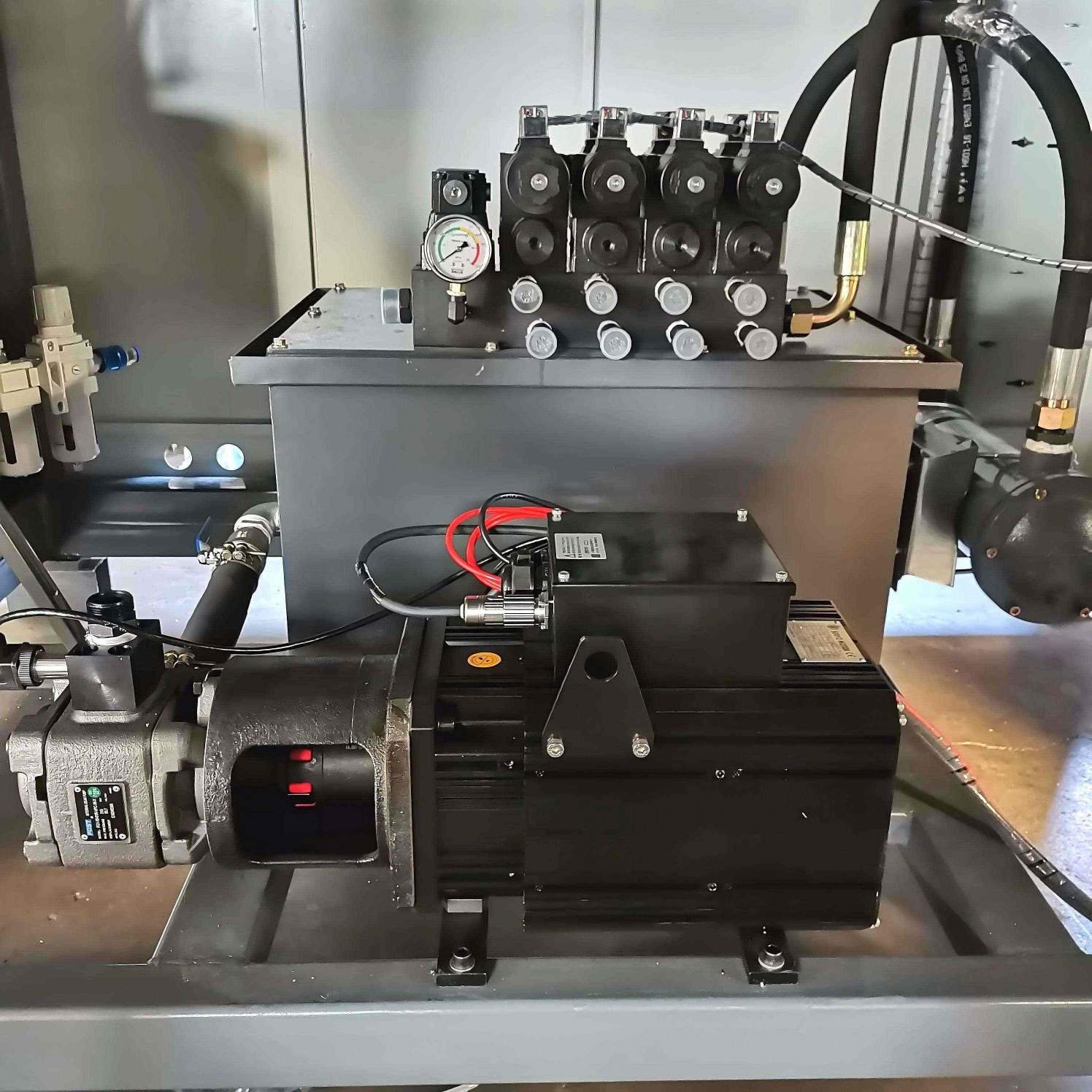
- Equipment Overhaul: Installed Sailwin integrated 30-bar screw + booster compressor package (2.5 m³/min).
- Air Purification: Added multi-stage coalescing oil filters and activated carbon adsorption towers (oil < 0.003 mg/m³).
- Air Recovery: Integrated 30-bar exhaust air recycling directly into low-pressure pneumatic mold cylinders.
- Power Savings: Compressor connected load reduced from 45kW to 33kW (26.6% continuous power reduction).
- Purity Certified: Delivered 100% oil-free, ISO 8573-1 Class 1 food-grade compressed air with zero odor complaints.
- Maintenance Reliability: Oil service intervals extended from 1,000 hours to 4,000 hours, eliminating monthly rebuilds.
Data source: Sailwin Engineering Field Log #UZB-2025-07. Equipment: SW-AC-30 Integrated High-Pressure Air Station.
Experiencing pressure drops or oil contamination in your blow air?
Chat directly with Sailwin’s auxiliary air engineers on WhatsApp for instant troubleshooting advice.
3. Frequently Asked Questions: High-Pressure Air Compressors
Need custom sizing for an air compressor package?
Connect directly with Sailwin’s auxiliary air engineers on WhatsApp for instant equipment quotes.
4. Summary: The Backbone of Bottle Blowing Productivity
Selecting the correct high-pressure air compressor package ensures uninterrupted bottling production, sharp bottle petaloid formation, and minimal electricity consumption. Sailwin provides matched turnkey compressor packages designed specifically for blow molding operations.
- Size air flow capacity with at least a 20% safety margin above calculated peak bottle consumption.
- Insist on multi-stage oil filtration and refrigerated drying to guarantee ISO Class 1 food-grade air.
- Partner with Sailwin for turnkey bottle blow molders, compressors, chillers, and complete packaging engineering.
SAILWIN AUXILIARY · COMPRESSED AIR EXCELLENCE
Ready to Size Your High-Pressure Air Compressor System?
Send us your bottle blower specifications and daily production hours. Our pneumatic engineering team will calculate exact flow rates and configure a high-efficiency compressor proposal within 24 hours.
Explore Complete PET Packaging Solutions:
• PET blow molding machine – Comprehensive catalogue of linear and rotary stretch blowers.
• pet blow molding machine cost guide – Complete 2026 pricing and auxiliary breakdown.
• contact our engineering team – Request customized machinery blueprints and quotations.
• Need dedicated technical advice? Contact our machinery specialists for a 1-on-1 equipment evaluation.