Updated: 2026 Engineering Guide · By Sailwin Technical Team
Linear vs. Rotary PET Blow Molding Machine: Capacity, Footprint & ROI Comparison
Selecting between a linear stretch blow molder and a high-speed continuous rotary blow molding machine is one of the most critical capital expenditure decisions for water and beverage packaging plants. Investing in an oversized rotary system too early saddles a business with crushing equipment debt, massive tooling changeover costs, and idle capacity; conversely, relying on undersized linear machines on a high-speed packaging line creates painful output bottlenecks and inflated labor overhead.
Sailwin engineers and builds both high-output linear automatic blowers (up to 12,000 BPH) and rotary packaging systems worldwide. We provide objective, data-backed guidance to help packaging converters match kinematic machine architectures to their actual sales volume, container variety, and floor space constraints.
This technical evaluation breaks down the mechanical kinematics, mold tooling costs, energy consumption, and maintenance complexity of linear versus rotary stretch blow molding systems.
Key Takeaways
- Capacity Crossover Point (12,000 BPH): For production speeds under 10,000-12,000 bottles per hour, modern multi-cavity servo linear blowers provide the best capital ROI; above 14,000 BPH, continuous rotary machines become essential.
- Tooling Flexibility & Changeover: Linear machines switch bottle shapes in 30 to 45 minutes with mold sets costing $3,500-$6,000; rotary carousels require 10 to 24 mold shell sets ($25,000-$60,000) and 2 to 4 hours of downtime.
- Container Size Versatility: Linear blowers easily accommodate large formats (3L, 5L, and 5-gallon drums); rotary machines are largely confined to standard 0.2L to 2.0L beverage bottles.
Unsure whether your factory needs a linear or rotary blower?
Send us your target bottle sizes, daily shifts, and line speeds for a complete capacity analysis.
1. Kinematic Mechanics: Intermittent Shuttle vs. Continuous Carousel
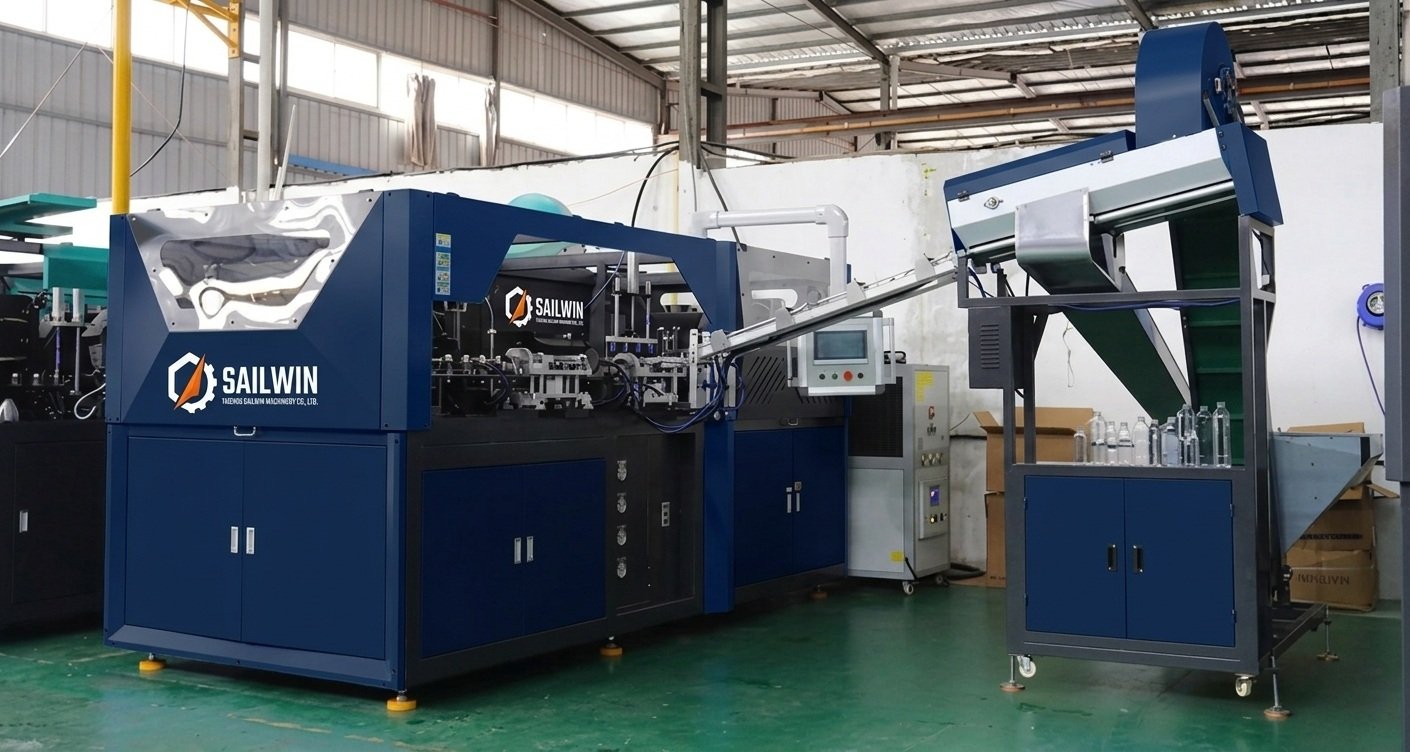
The fundamental distinction between linear and rotary blow molding lies in the handling of kinetic motion: linear blowers index preforms in batches, while rotary blowers process bottles continuously along a revolving pitch circle.
| Comparison Parameter | Linear Automatic Blower | Continuous Rotary Blower |
|---|---|---|
| Output Range (BPH) | 2,000 – 12,000 BPH | 12,000 – 48,000+ BPH |
| Equipment Capital Cost | $28,000 – $95,000 (Low-Moderate) | $180,000 – $450,000+ (High) |
| Mold Set Cost (Per Bottle) | $3,500 – $6,500 (1 block set) | $25,000 – $60,000 (12-24 shell sets) |
| Mold Changeover Time | 30 – 45 Minutes | 2.5 – 4.5 Hours |
| Container Size Range | 200ml to 20L (Very Versatile) | 200ml to 2.5L (Restricted to small formats) |
| Maintenance Complexity | Standard Pneumatics & Servos | Complex Rotary Unions & Cam Tracks |
When managing multiple bottle SKUs (e.g., 330ml, 500ml, 1.5L water and 5L edible oil), linear machines built by Sailwin provide extreme agility. For total cost comparisons, refer to our comprehensive PET blow molding machine cost guide.
Need custom bottle designs and fast mold changeover?
Explore Sailwin’s linear automatic machines with quick-clamp pneumatic mold positioning.
2. Footprint, Energy Efficiency & Factory Integration
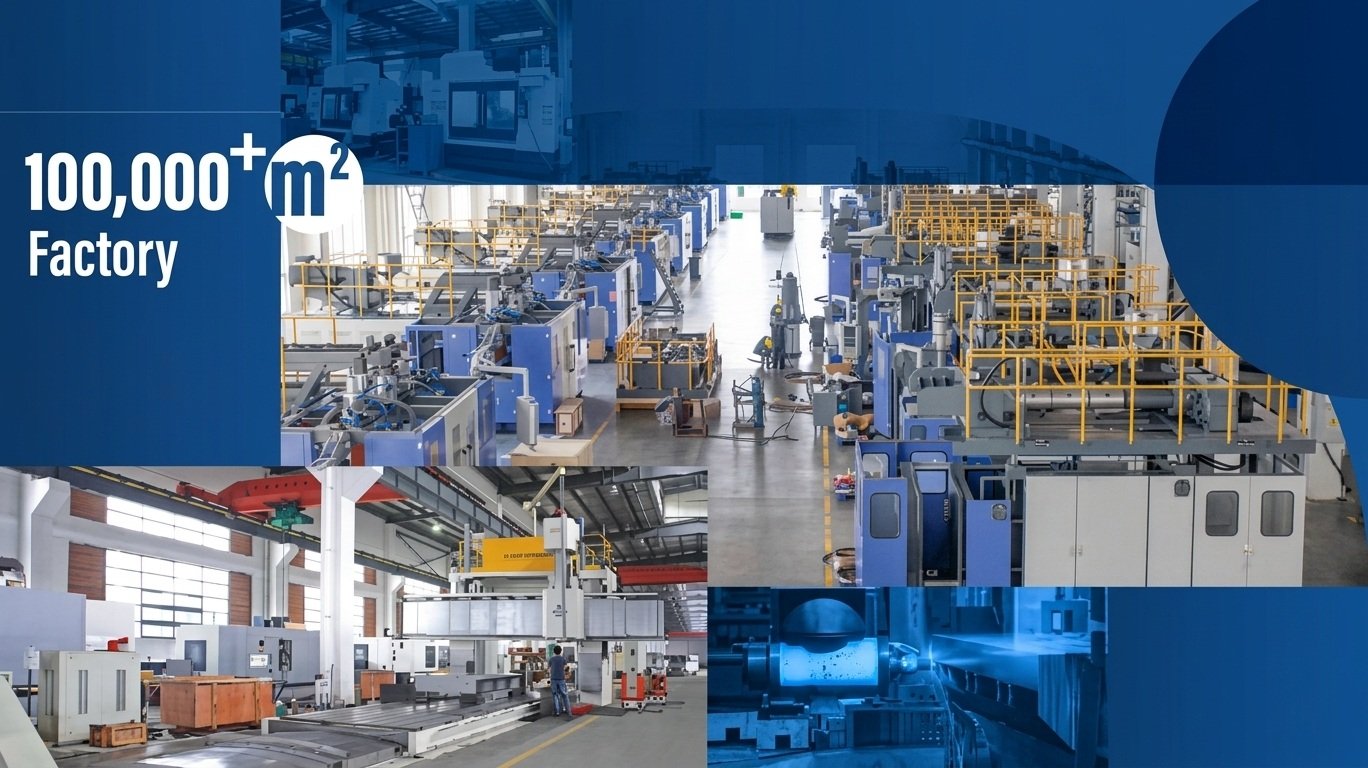
High-speed rotary blowers require large circular clear-zones and specialized cleanroom HVAC ducting. Linear blowers fit efficiently into standard industrial factory layouts alongside air conveyors.
For facilities with ceiling height restrictions or narrower floor layouts, Sailwin’s modular linear blowers feature an integrated overhead preform elevator and compact footprint. Connected directly to automated air conveyors, our linear systems transfer blown bottles directly into high-speed monoblock fillers with zero human contact.
3. Sailwin Case Study: Beverage Bottler Doubles Speed Without Rotary Complexity
A juice and water co-packer in Thailand evaluated an expensive 12-cavity rotary blower vs. two synchronized Sailwin 6-cavity linear servo machines, saving $140,000 in upfront tooling and capital.
- Client: Contract packaging facility bottling 350ml tea and 500ml water across 8 different custom bottle shapes.
- Problem: Evaluated a single 12-station rotary blower quoted at $240,000; tooling 8 mold sets would cost an additional $220,000.
- Operational Risk: A rotary breakdown would halt 100% of plant production; mold changeovers would take 4 hours per SKU.
- Turnkey Solution: Installed two Sailwin SW-6A 6-cavity linear servo blowers (6,000 BPH each, 12,000 BPH combined).
- Tooling Efficiency: Sourced 8 modular aluminum 7075 mold block sets at $4,500 each ($36,000 total tooling investment).
- Redundancy Advantage: Configured lines to run independently, allowing one machine to change molds while the other ran.
- Capital Savings: Saved $184,000 in combined equipment and tooling capitalization.
- Changeover Agility: Mold changes reduced from 4 hours down to 35 minutes per machine.
- Line Availability: Maintained 99.2% plant uptime across 18 months of intensive multi-SKU co-packing.
Data source: Sailwin Project File #TH-2025-03. Equipment: Dual SW-6A Linear All-Electric Servo Blowers.
Evaluating equipment options for your bottling expansion?
Our senior mechanical engineers will build a custom comparative payback spreadsheet for your project.
4. Frequently Asked Questions: Linear vs. Rotary Blow Molding
Need expert advice on plant layout and machine integration?
Connect directly with Sailwin’s engineering specialists on WhatsApp for instant 3D layout recommendations.
5. Summary: Choosing the Right Blow Molding Platform
For the vast majority of packaging converters producing between 2,000 and 12,000 BPH across multiple bottle formats, high-speed linear automatic stretch blowers provide superior operational flexibility, lower tooling overhead, and rapid capital payback.
- Choose linear blowers for agile multi-SKU production, fast mold changes, and container sizes up to 20L.
- Choose continuous rotary carousels when dedicated single-SKU beverage lines exceed 15,000 BPH.
- Partner with Sailwin Machinery for turnkey bottle blowing machines, custom mold design, and complete packaging engineering.
SAILWIN MACHINERY · BLOW MOLDING EXCELLENCE
Ready to Optimize Your Bottle Blowing Production Line?
Upload your container drawings and production targets. Our technical team will engineer a tailored linear or rotary machine proposal with layout drawings and financial payback within 24 hours.
Explore Complete PET Packaging Solutions:
• PET blow molding machine – Comprehensive catalogue of linear and rotary stretch blowers.
• pet blow molding machine cost guide – Complete 2026 pricing and auxiliary breakdown.
• contact our engineering team – Request customized machinery blueprints and quotations.
• Need dedicated technical advice? Contact our machinery specialists for a 1-on-1 equipment evaluation.