Updated: 2026 Engineering Standard · By Sailwin Technical Team
Preform Concentricity and Neck Deformation: How Mold Precision Dictates Cap Sealing
In modern high-speed bottling, nothing damages a beverage brand faster than a leaking bottle cap. When filled containers leak in store cartons or lose carbonation over warehouse storage, factory managers frequently blame the capping chucks or cap liners. Yet in over 70% of sealing leak investigations, the root failure is not the cap—it is preform neck finish ovalization or preform wall thickness eccentricity born during the injection molding process.
If an injection mold core is deflected by even 0.08mm, or if preform neck rings are overheated during stretch blow molding, the finished bottle neck becomes ovalized, preventing hermetic 360-degree seal contact on rotary liquid filling and capping machines.
This engineering quality guide examines dimensional concentricity tolerances, neck shield water-cooling parameters, and optical gauging standards on Sailwin preform injection and blow molding equipment.
Key Engineering Takeaways
- Concentricity Tolerance Limit: Preform total indicated runout (TIR) wall thickness eccentricity must be held below ±0.05mm. Greater variation causes the thin side to stretch hot and blowout during blowing.
- Neck Ovalization Standards: Bottle thread finish outside diameter (T-dimension) and inside diameter (E-dimension) must not deviate by more than 0.15mm from true circularity to ensure tamper-evident cap sealing.
- Oven Neck Shielding: Water-cooled neck protection masks inside infrared blow molder ovens must maintain neck finish temperatures below 55°C to prevent thermal thread shrinkage.
Having Carbonation Loss or Cap Sealing Leaks?
Submit preform samples or container thread drawings for optical comparator CMM dimensional measurement and mold alignment audits.
1. Critical Preform Neck Finish Dimensions and Tolerances (PCO 1881 / 29/25)
Sealing Precision Law: A bottle cap seals on two contact surfaces: the top sealing land and the internal bore plug. Neck ovalization beyond 0.2mm causes instantaneous pressure leaks.
Review the standard dimensional quality control parameters for beverage preforms:
| Dimension Parameter | Design Target | Allowable Tolerance | Failure Symptom if Out-of-Spec |
|---|---|---|---|
| T-Dimension (Thread Major OD) | 27.40 mm | ± 0.12 mm | Oversized causes high capping torque; undersized causes cap spin-off. |
| E-Dimension (Thread Minor ID) | 24.94 mm | ± 0.10 mm | Governs cap thread engagement and tamper band break. |
| I-Dimension (Bore Inner Diameter) | 21.74 mm | ± 0.10 mm | Controls cap inner seal plug fit; leaks if ovalized. |
| Wall Thickness Eccentricity | < 0.05 mm | Max 0.08 mm | Causes uneven bottle sidewall stretch and blowout. |
| Neck Perpendicularity | 90° to Body Axis | Max 0.25° Tilt | Causes crooked capping and damaged capping chuck jaws. |
Sailwin Customer Case Study: Beverage Brand Eliminates Carbonation Leakage in 2 Million Export Cases
How a commercial carbonated soft drink bottler in Southeast Asia identified preform eccentricity as the root cause of bottle flatness.
- CSD bottles lost 35% of carbonation volume after 45 days in transit, resulting in container rejections.
- Capping machine torque was increased to maximum, stripping plastic neck threads.
- Optical measurement revealed bottle neck openings were ovalized by up to 0.38mm.
- Replaced worn preform mold core bushings with Sailwin imported S136 self-locking taper tooling.
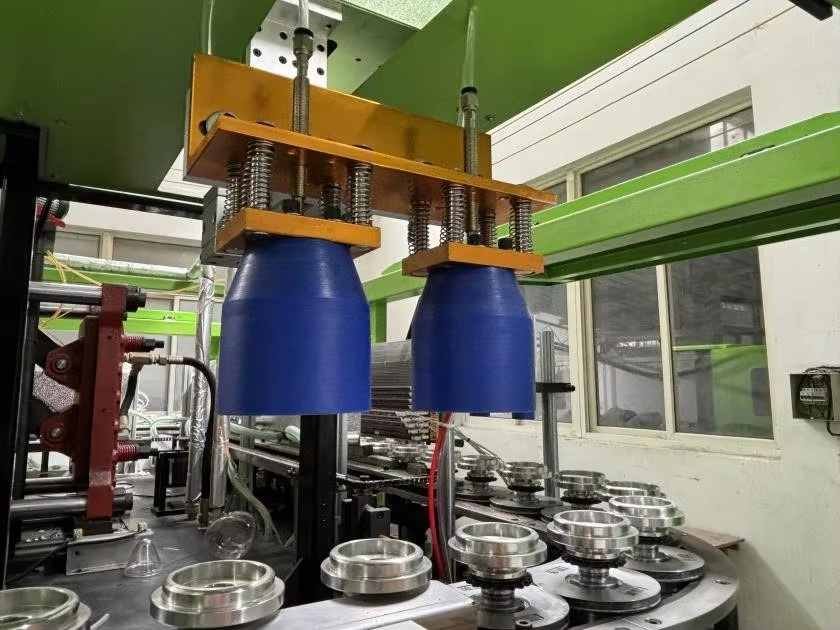
- Installed chilled-water neck protection plates on stretch blow molder oven tunnels.
- Standardized preform wall thickness TIR below 0.04mm on Sailwin SW-P series presses.
- Neck ovalization brought within strict 0.08mm circularity limit.
- Bottle carbonation retention reached 99.2% over 6 months of ambient storage.
- Zero customer flat-beverage warranty claims across 2 million exported cases.
Data source: Sailwin Quality Engineering Audit & Gas Retention Pressure Test Log, 2026.
Frequently Asked Questions
SAILWIN MACHINERY · FACTORY-DIRECT PACKAGING SYSTEMS
Ensure 100% Hermetic Cap Sealing with Sailwin Precision Machinery
Sailwin preform injection molds feature self-locking alignment cores with sub-0.03mm concentricity. Request quality consultation today.
Explore Integrated Packaging Machinery on Sailwin:
• PET Preform Injection Molding Machine – High-speed 140T to 550T systems for multi-cavity bottle preform lines.
• PET Water Bottle Blowing Machine – Linear automatic servo stretch blow molding equipment.
• Liquid Filling Machine & Bottling Line – 3-in-1 rotary monoblocs for drinking water and beverage factories.
• HDPE Extrusion Blow Molding Machine – Industrial continuous blow molding systems for jerrycans and drums.
• Need technical plant advice? Contact our engineering team for free turnkey consultation.