In commercial plastic packaging, one of the most critical — and expensive — capital procurement decisions is determining whether your production line requires a dedicated narrow-neck bottle machine, a specialized wide-mouth jar system, or a versatile multi-format platform. A packaging manufacturer attempting to produce 89mm wide-neck peanut butter jars on a standard 28mm mineral water bottle machine will encounter immediate mechanical failure: preform grippers cannot seat the large neck finish, infrared heating tunnels overheat the exposed body, and mold platen opening strokes lack the clearance required to clear wide-diameter mold cavities.
Conversely, running small 28mm or 3025 beverage bottles on an oversized wide neck PET blow molding machine introduces severe energy and capital penalties. Oversized platen mass slows down dry cycle times, larger pneumatic valves consume excessive high-pressure air, and the machine’s output per hour drops by 30% to 50% compared to high-speed dedicated narrow-neck equipment. This engineering guide delivers an exhaustive technical breakdown of neck diameter thresholds, thermodynamic heating variances, mechanical gripper tooling, mold platen kinematics, and multi-format line total cost of ownership (TCO) calculations.
| Engineering Dimension | Narrow-Neck Bottle Machine | Wide-Neck Jar Blow Molder | Hybrid Multi-Format Platform |
| Standard Neck Range | 18mm – 38mm (PCO 1881, 3025, 38mm) | 50mm – 120mm (53mm, 63mm, 89mm, 100mm) | 28mm – 70mm (Interchangeable Tooling) |
| Target Product Formats | Water, CSD, juice, beer, edible oil | Food jars, candy, cosmetics, protein powder | Contract packaging & diverse product runs |
| Stretch Rod Diameter & Force | 12mm – 16mm / High-speed pneumatic | 20mm – 32mm / Heavy servo electric | Quick-change servo stretch assembly |
| Heating Pitch & Spindle Layout | Compact pitch (38mm – 50mm centers) | Wide pitch (76mm – 120mm centers) | Modular adjustable spindle track |
| Mold Clamping Stroke | Standard stroke (180mm – 240mm) | Extended stroke (280mm – 380mm) | Dual-position programmable servo clamp |
| Downstream Ejection Method | Neck-suspension air conveyor (High speed) | Upright bottom belt conveyor with vacuum | Hybrid dual-discharge conveyor track |
The Technical Difference: What “Neck Diameter” Really Dictates
To non-engineers, the difference between a narrow-neck bottle and a wide-mouth jar appears to be merely aesthetic. In reality, the preform neck diameter fundamentally governs every mechanical, pneumatic, and thermal subsystem within the blow molding machine.
In two-stage stretch blow molding, the preform neck finish is already precision-molded during injection molding and is not modified or expanded during the blowing cycle. The body of the preform hangs below the neck support ring and is expanded bi-axially. As neck diameter increases from 28mm to 89mm, the ratio between the neck diameter and the final container body diameter shrinks from 3.5:1 down to nearly 1:1. This geometric shift alters machine design across five core mechanical assemblies:
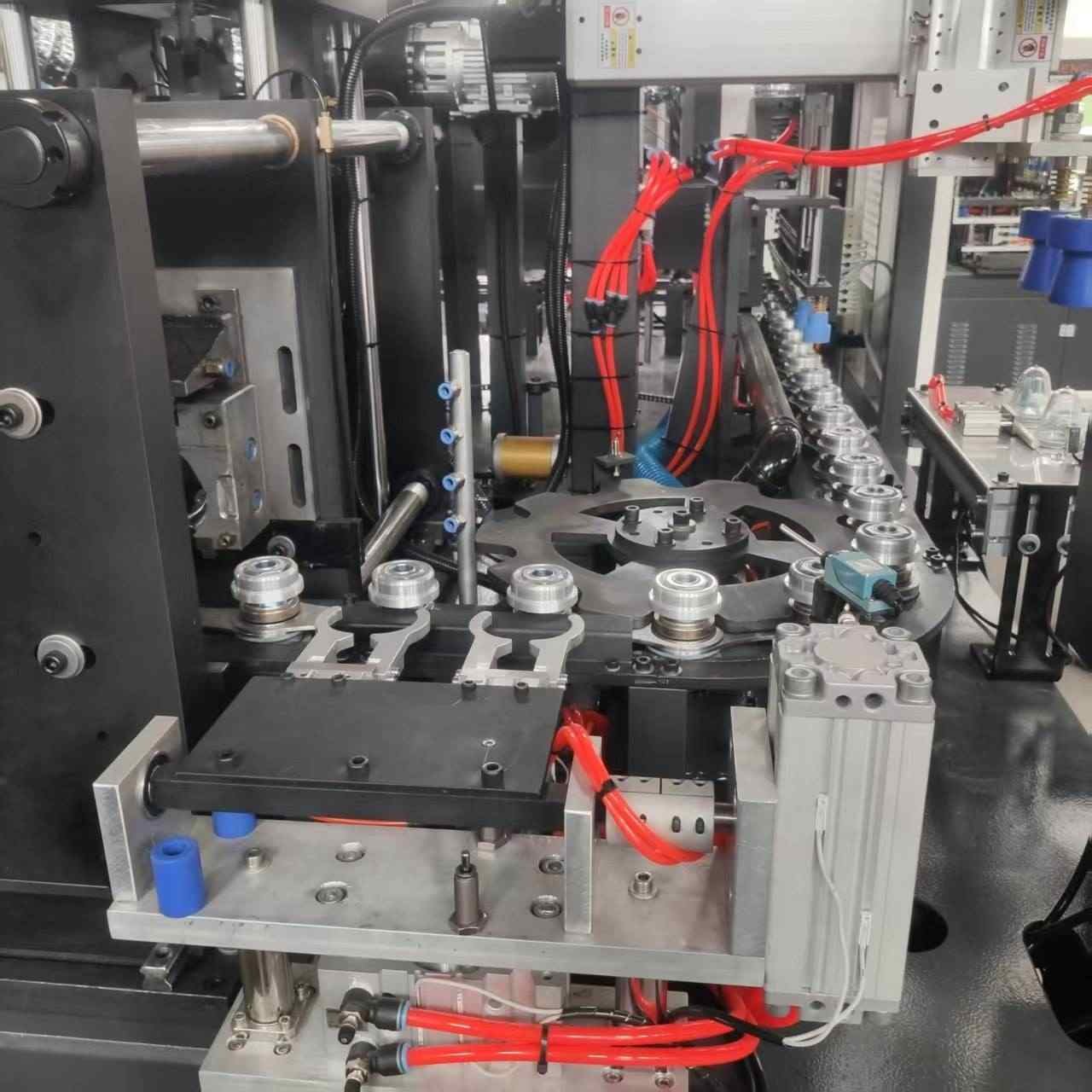
1. Preform Gripper Mandrels and Rotary Spindle Tooling
In narrow-neck machines, preforms are transported through the heating tunnel inverted on narrow mandrels or captured by internal expanding collets. A 28mm preform weighs between 12g and 35g, requiring minimal gripping torque. In contrast, wide-neck preforms (53mm to 100mm) weigh between 45g and 140g. Holding a wide-mouth preform securely without deforming the precision thread geometry requires heavy-duty external neck clamp grippers or large-diameter internal expansion chucks with custom elastomer seals.
2. Heating Tunnel Pitch & Thermal Profile Geometry
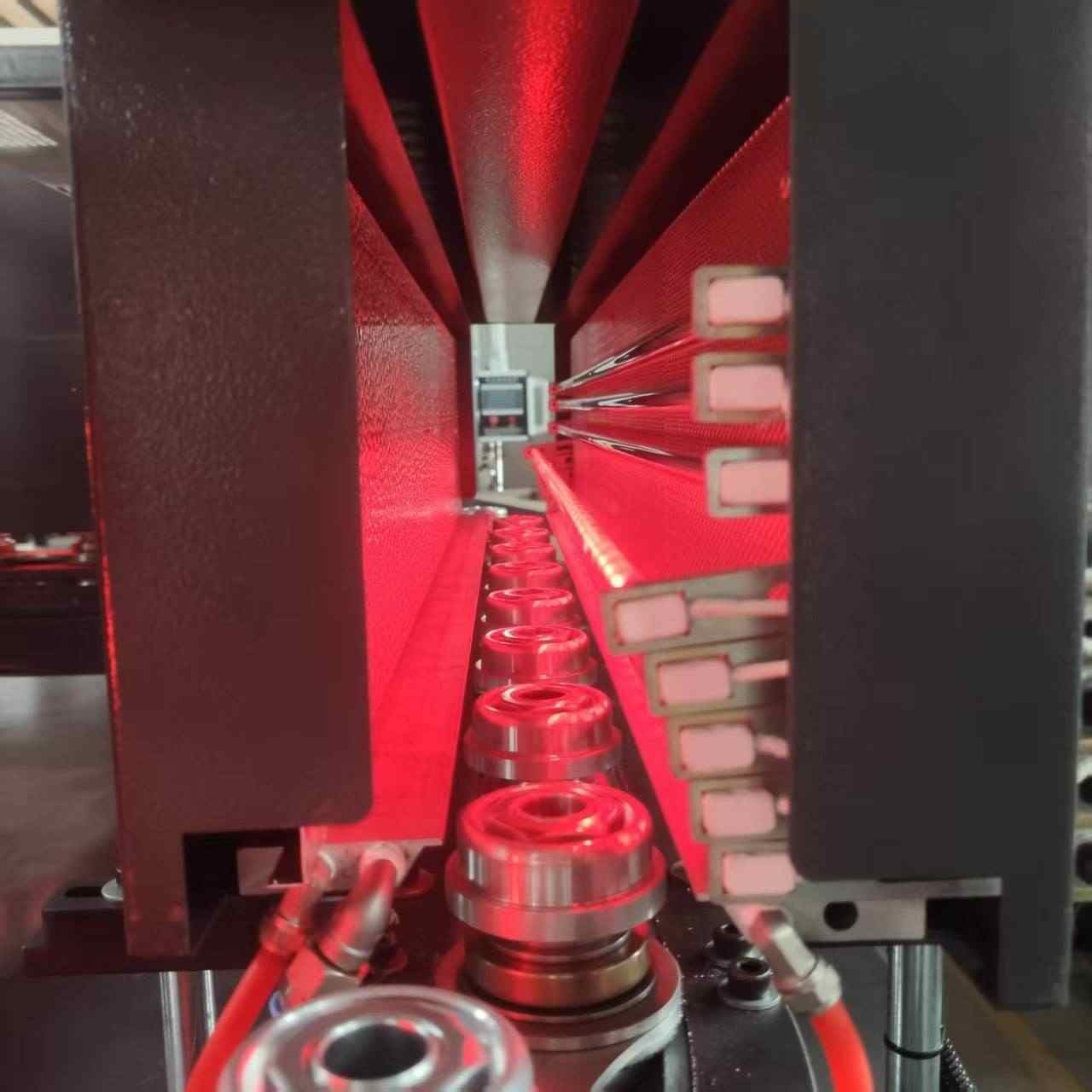
Narrow-neck preforms travel through heating ovens on tight center-to-center pitches (typically 38mm or 50mm). This tight spacing maximizes infrared lamp optical exposure and conserves electrical energy. A wide-mouth preform with a 90mm neck flange requires a minimum spindle center-to-center pitch of 100mm to 120mm to prevent preforms from contacting each other during continuous rotation.
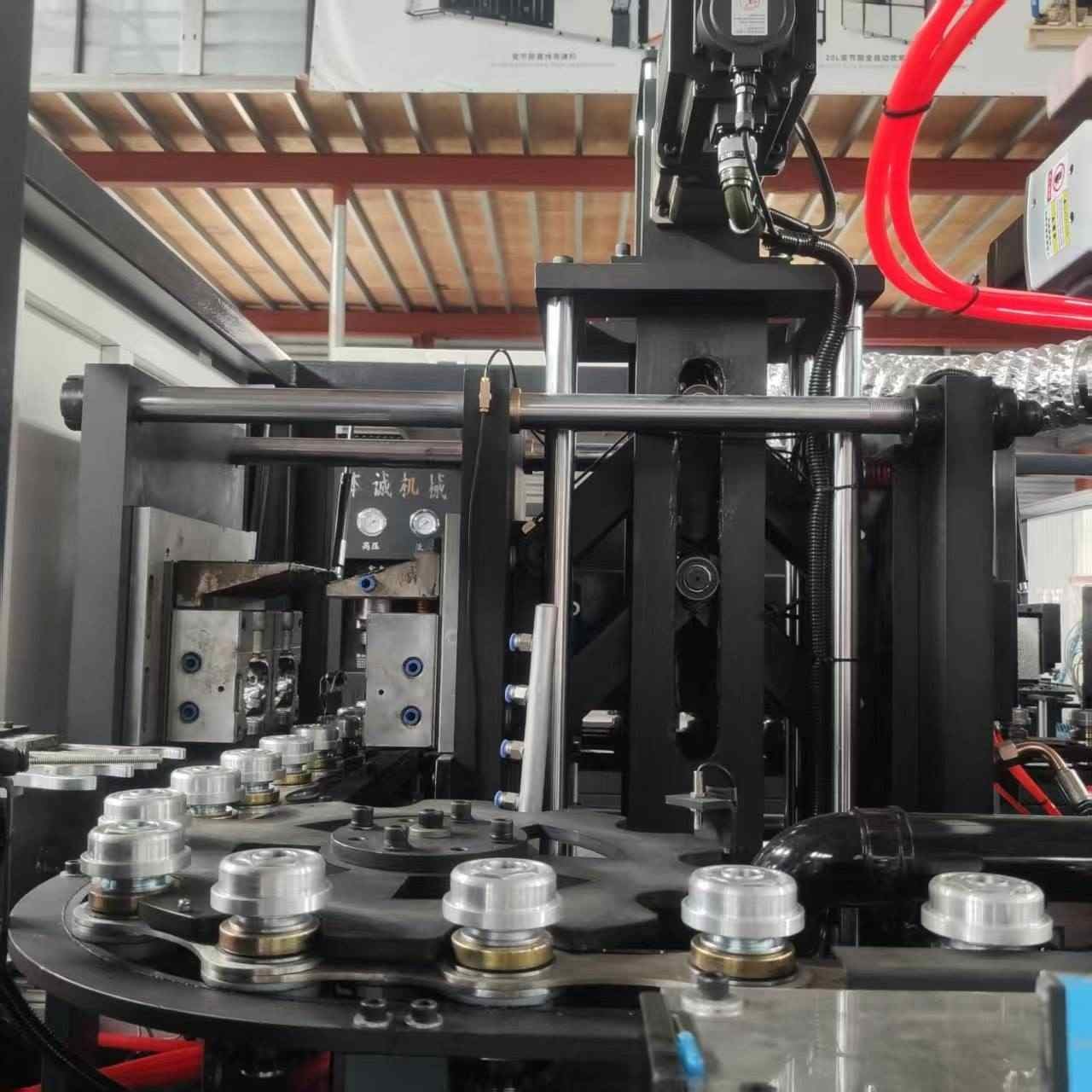
Furthermore, wide-neck preforms possess very short, squat bodies with thick sidewalls. Heating these preforms requires focused short-wave infrared lamps positioned horizontally close to the preform, paired with high-capacity neck finish cooling shields. If the neck finish absorbs radiant heat above 65°C, the thread dimensions distort, causing container cap leakage.
3. Stretch Rod Diameter & Axial Kinetic Stability
In narrow-neck bottles, the stretch rod enters through a 21mm inner neck aperture. A 12mm to 14mm solid stainless steel rod is sufficient to guide the axial elongation of the bottle base. In wide-mouth jars (e.g., 89mm neck), a narrow 14mm stretch rod is unstable: high-pressure blow air will deflect the slender rod, pushing the gate off-center. Dedicated wide neck PET jar blow molding machine systems employ heavy-gauge 25mm to 32mm hollow stretch rods or multi-finger expanding stretch mechanisms that maintain rigid axial alignment against 30-bar blow pressures.
Unsure Whether Your Container Requires a Dedicated or Hybrid System?
Send our container engineering department your preform drawings and finished bottle CAD files. We analyze stretch ratios, heating tunnel clearance, and clamping stroke to recommend the optimal machine configuration.
Application Sectors: Wide-Neck Jars vs Narrow-Neck Bottles
Each neck architecture serves distinct packaging, logistical, and consumer end-markets with specific barrier, optical, and filling line requirements:
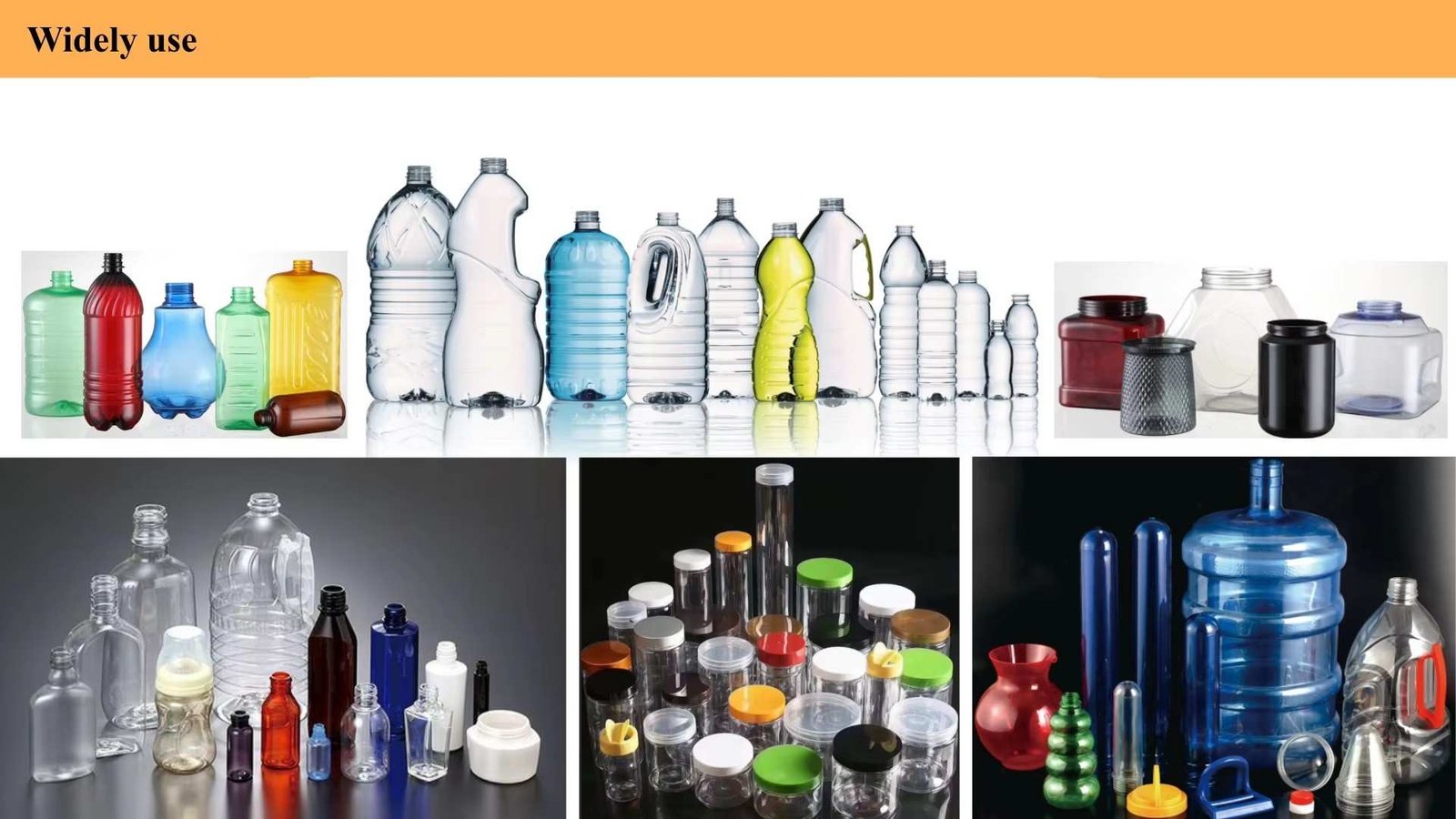
Wide-Neck Jars (50mm to 120mm): Food, Nutrition & Personal Care
- Dry Food & Confectionery: Peanut butter, honey, confectionery, bulk spices, and powdered seasonings requiring large spoon or scoop accessibility.
- Nutraceuticals & Sports Supplements: Protein powders, creatine, and dietary tablets utilizing 70mm to 100mm neck finishes paired with induction-sealed barrier foils.
- Cosmetics & Personal Care: Body scrubs, hair pomades, and facial creams where glass-like crystal PET clarity replaces fragile, heavy glass containers.
Narrow-Neck Bottles (18mm to 38mm): Beverages & Liquid Chemicals
- Packaged Drinking Water: Ultra-lightweight 28mm/3025 neck standards running at 1,500 to 2,000 BPH per cavity on high speed PET blow molding machine lines.
- Carbonated Soft Drinks (CSD): PCO 1881 neck finishes withstanding internal pressures up to 6.0 bar.
- Edible Oil & Condiments: 36mm and 38mm neck standards fitted with drip-free pour spouts and tamper-evident flip-top closures.
- Household & Automotive Liquids: Detergents, engine additives, and agrochemicals requiring specialized leak-proof screw caps.
Downstream Handling: Air Conveyors vs Upright Belt Discharges
An overlooked constraint when deciding between wide-neck and narrow-neck equipment is downstream container handling. High-speed narrow-neck beverage bottles feature a pronounced neck support ring that allows the bottles to be conveyed suspended in high-velocity stainless steel air conveyor tracks. This completely eliminates conveyor jams and permits instantaneous buffer accumulation feeding high-speed rotary fillers.
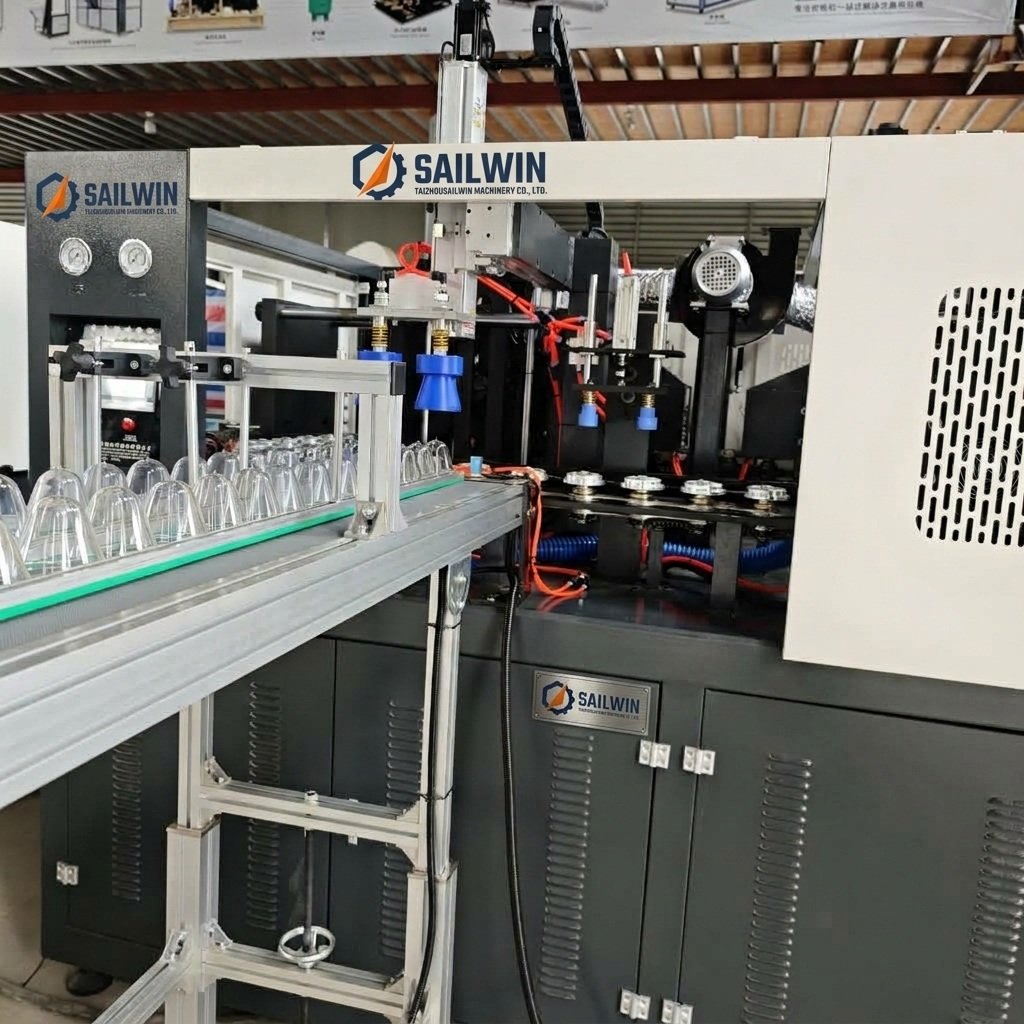
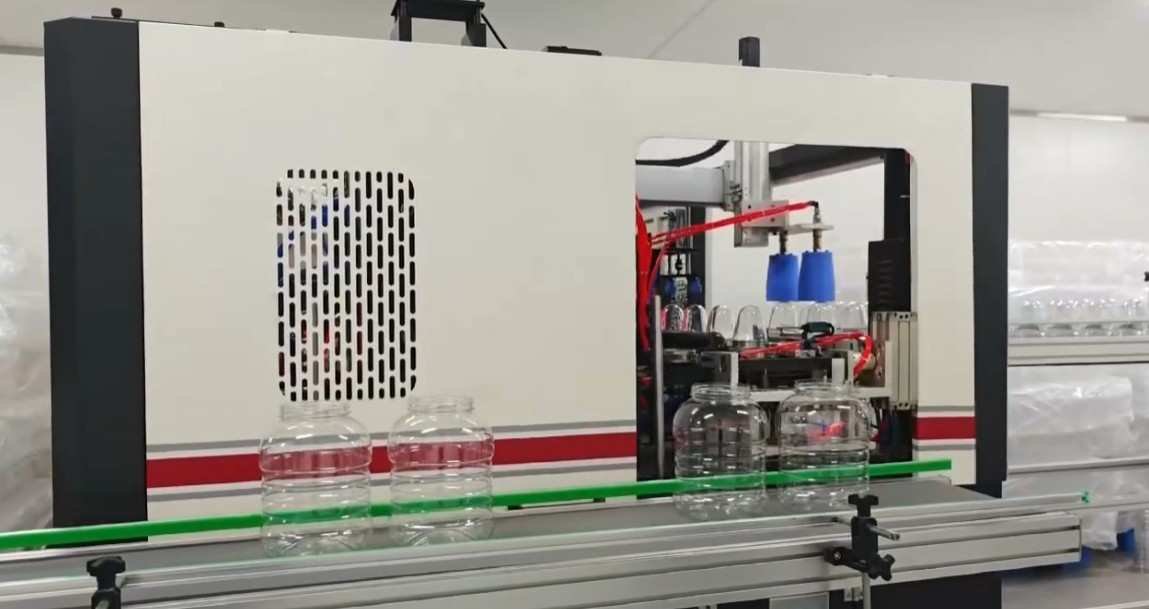
Wide-mouth jars lack an extended neck support ring and have a low center of gravity. Consequently, wide-mouth containers cannot run on air conveyor systems. Instead, wide-neck blow molders discharge upright containers onto wide flat-top belt conveyors equipped with bottom vacuum hold-down channels, transferring jars safely to inline labeling and capping lines.
Can One Machine Run Both? The Reality of Multi-Format Lines
Contract packaging manufacturers and startup bottling plants frequently ask: “Can we purchase a single blow molding machine to produce both 28mm water bottles and 89mm peanut butter jars?”
The short answer is yes, but with substantial engineering trade-offs. A true hybrid multi-format machine is an oversized linear platform engineered with wide spindle centers and extended platen strokes. When switching from wide-neck jars to narrow-neck bottles, the operator must execute a complete tooling changeover:
| Subsystem Component | Changeover Procedure Required | Estimated Changeover Time |
| Preform Feeder Chute & Unscrambler | Adjust roller spacing, neck slide rails, and drop-chute angle. | 30 – 45 Minutes |
| Oven Mandrels / Spindles | Replace large-diameter jar mandrels with 28mm internal expansion chucks. | 45 – 60 Minutes |
| Stretch Rod Assembly | Swap heavy 25mm jar stretch rods for 14mm slender bottle rods. | 20 – 30 Minutes |
| Blow Mold Cavities & Base Plates | Swap mold blocks, connect cooling water lines, adjust platen opening limit. | 40 – 60 Minutes |
| Discharge Conveyor System | Switch from flat belt vacuum discharge to air conveyor capture guide rails. | 30 – 40 Minutes |
| Total Line Changeover Time | Full mechanical, pneumatic, and recipe parameter changeover. | 2.5 to 3.5 Hours |
The Economic Rule of Thumb: If your production schedule changes formats once every two weeks or once a month, a hybrid multi-format machine is a highly capital-efficient investment. However, if your business requires daily or alternate-day shifts between jars and bottles, the lost production time (3+ hours per shift) and lower narrow-neck hourly output will quickly outweigh the cost of purchasing two dedicated machines.
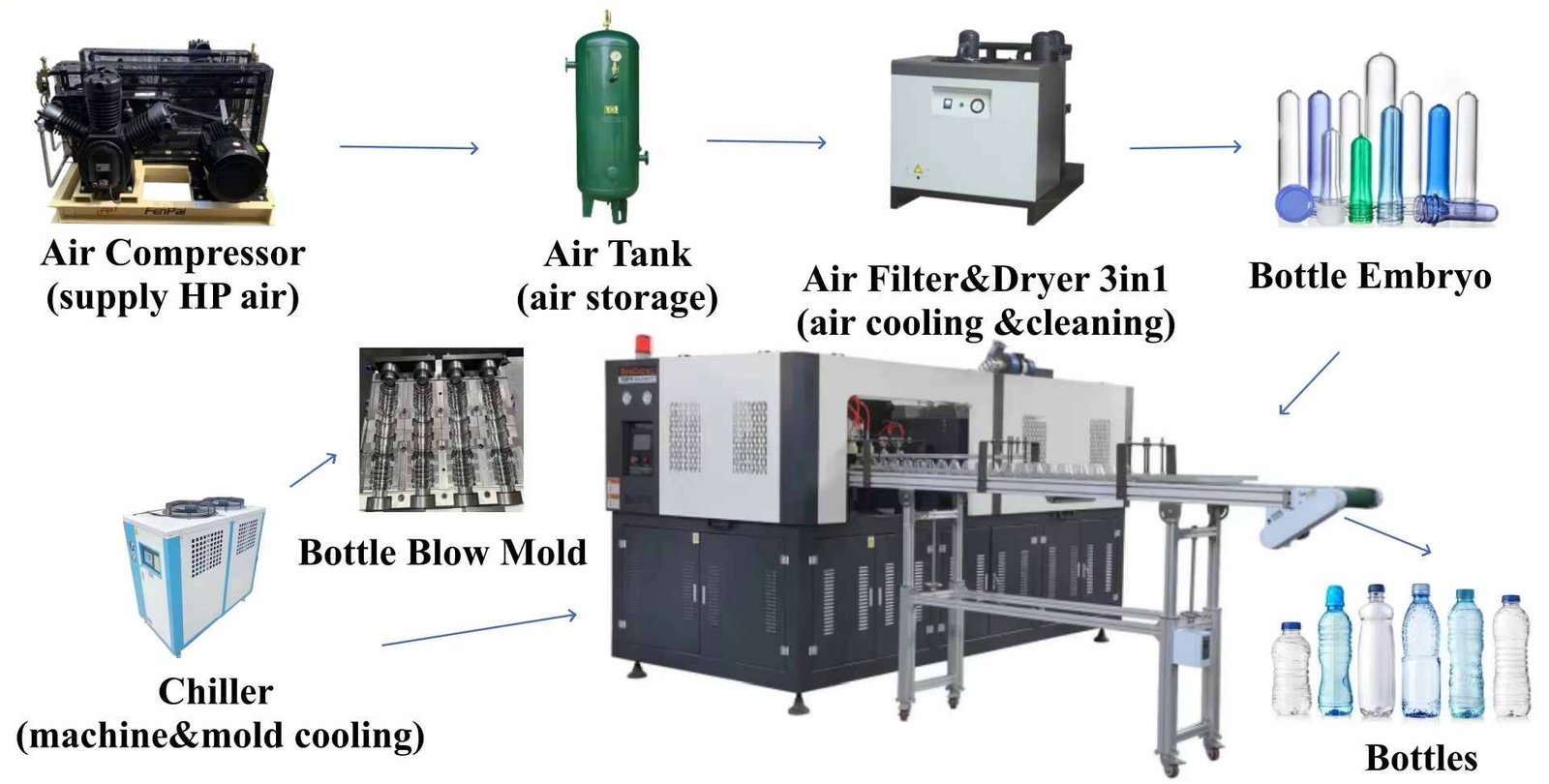
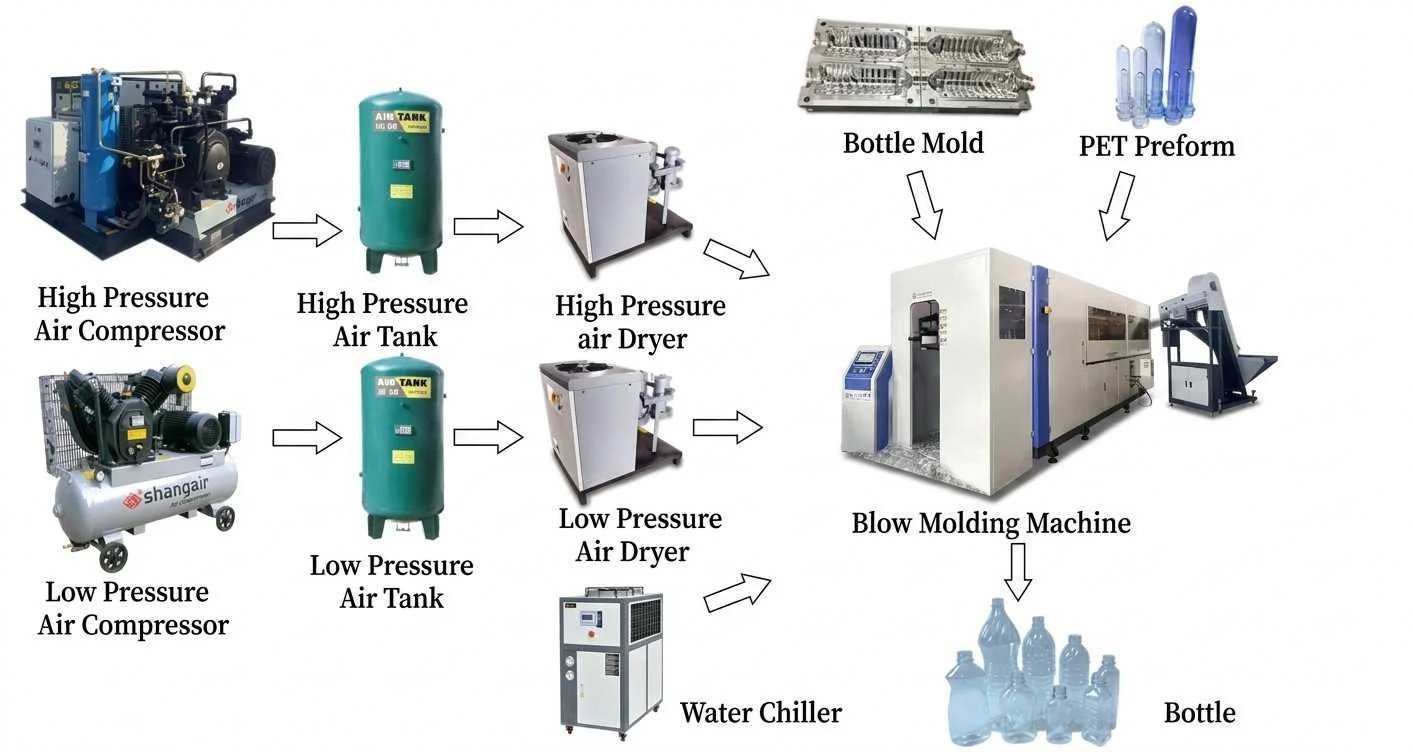
Auxiliary Equipment Sizing: Compressors, Chillers & Air Tanks
Whether producing wide-neck jars or narrow-neck bottles, blow molding performance depends on a balanced auxiliary utility network. Inadequate cooling water temperature causes container haze, while pressure drops during high blow cycles cause wall thickness thinning:
- High-Pressure Air Compressor: Standard narrow-neck bottles require 28 to 32 bar blowing pressure. Large wide-neck jars (over 1.5L) feature large surface areas and sharp base shoulder radii, requiring a stable 32 to 35 bar compressor system paired with an oversized air storage receiver to prevent line pulsation.
- Industrial Chiller System: Aluminum jar molds require chilled water supplied at 6°C to 10°C at a continuous flow rate of 40 to 80 L/min to rapidly freeze thick PET sidewalls and prevent post-ejection thermal shrinkage.
- Low-Pressure Pneumatic Air: A dedicated 8 to 10 bar compressed air supply drives mechanical toggle locks, preform feeder cylinders, and stretch rod actuation loops.
Need a Complete Auxiliary Sizing Specification for Your Factory?
Our system engineers furnish turnkey utility schematics specifying exact compressor CFM, chiller tonnage, and electrical switchgear ratings based on your target container lineup.
Case Study: Food Packaging Converter Adds $380,000 Annual Revenue with Hybrid Jar Line
Customer Profile: A contract packaging supplier in Eastern Europe operated three high-speed 4-cavity narrow-neck blow molders producing 28mm mineral water and CSD bottles. Facing severe margin commoditization on small beverage bottles, the client identified a lucrative regional shortage of 63mm and 89mm wide-mouth PET food jars for honey and pickled vegetables.
Engineering Challenge: The plant floor was constrained, and funding two separate automated production lines was financially unfeasible. The client needed a single high-output machine capable of producing 5,000 BPH of 500ml beverage bottles during peak summer demand, while easily converting to produce 2,400 BPH of 1000ml (89mm neck) peanut butter jars during autumn food packing seasons.
Sailwin Turnkey Solution:
- Supplied a Sailwin SW-W-4 multi-format linear servo blow molding machine engineered with wide platen daylight and adjustable heating spindle tracks.
- Engineered two interchangeable tooling packages: a 4-cavity 28mm beverage mold setup and a 2-cavity 89mm heavy-duty jar mold kit.
- Integrated dual-mode preform slide chutes and quick-disconnect air/water manifolds, reducing full changeover time to 2 hours.
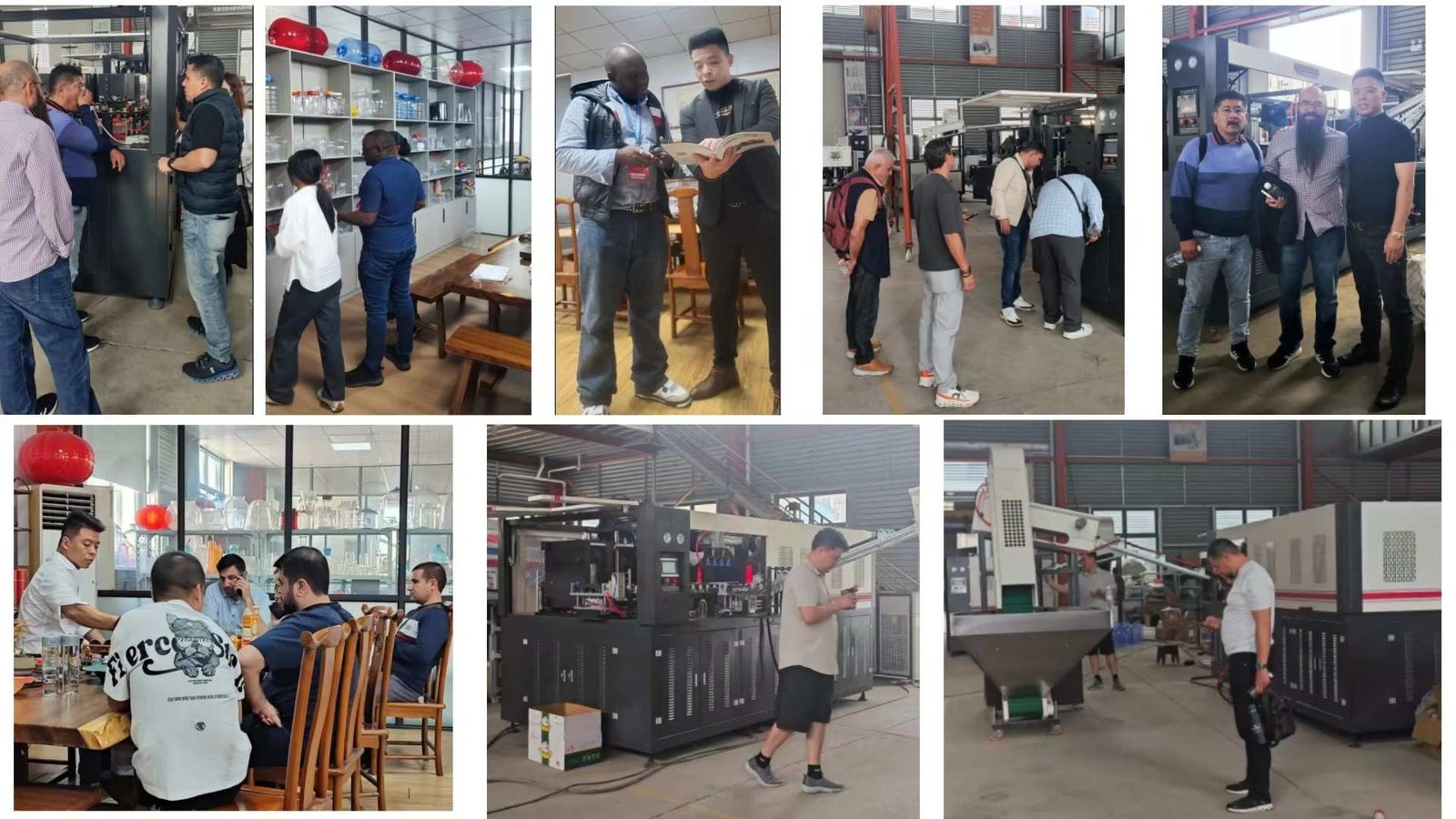
- Conducted comprehensive on-site factory acceptance testing (FAT) and technician training.
Quantifiable Business Results:
| Operational Parameter | Original Setup (Narrow-Neck Only) | Sailwin Hybrid Setup (Bottles + Jars) | Business Impact |
| Product Portfolio Range | 28mm Water & CSD Only | 28mm Bottles + 63mm/89mm Food Jars | Entered high-margin gourmet food packaging |
| Gross Profit Margin | 8.5% (High price competition) | 26.4% on wide-mouth food jars | +210% gross margin increase on jar sales |
| Tooling Changeover Window | — | 115 Minutes (Trained 2-man team) | Zero disruption to weekly delivery schedules |
| New Annual Contract Revenue | Baseline | +$380,000 in regional food packaging | Full capital amortization achieved in 7.5 months |
Looking to Diversify Your Packaging Portfolio into High-Margin Food Jars?
Contact Sailwin today. Our packaging machinery specialists evaluate your factory layout and provide comprehensive turnkey proposals covering hybrid multi-format machinery, custom molds, and auxiliary equipment.
Frequently Asked Questions: Wide-Neck vs Narrow-Neck Machines
What is the maximum neck diameter supported by a wide-neck blow molder?
Standard wide-neck linear machines accommodate neck diameters up to 100mm to 120mm. For specialized ultra-wide containers such as 150mm confectionery bowls, custom extra-wide platen clamping modules with extended tie-bar clearances are engineered to order.
Can I blow wide-mouth jars using recycled PET (rPET)?
Yes. Post-consumer recycled PET (rPET) resin blends (up to 100% rPET) can be blown successfully into wide-mouth food and cosmetic jars. However, because rPET exhibits wider intrinsic viscosity (IV) variations and slight color hazing, the infrared heating tunnel must be configured with precision pyrometer closed-loop temperature control to avoid container brittleness.
Why do wide-mouth jars require higher blow pressure than narrow-neck bottles?
Wide-mouth jars typically feature flat standing bases with intricate anti-vacuum corrugations and sharp bottom radii to maximize label display area. Forcing thick plastic into these complex base geometries before the material cools below its crystallization point requires 32 to 35 bar of high-pressure air, compared to 28 bar for standard small water bottles.
What is the difference in output between a 4-cavity bottle machine and a 4-cavity jar machine?
A 4-cavity narrow-neck machine blowing 500ml water bottles produces 6,000 to 7,500 BPH due to fast heating and rapid air-conveyor discharge. A 4-cavity wide-neck machine blowing 1000ml jars runs at 2,800 to 3,600 BPH because the heavier preform requires longer oven transit times and upright belt conveyor indexing.
Are preforms readily available for wide-mouth PET jars?
Yes. Commercial preform manufacturers supply standard wide-mouth preforms in 53mm, 63mm, 70mm, 83mm, and 89mm neck finishes across a wide variety of gram weights (from 35g to 120g). Sailwin also supplies turn-key preform injection molding systems and precision multi-cavity injection molds for clients seeking vertically integrated in-house container production.
Does Sailwin inspect machine mold alignment prior to export dispatch?
Yes. Every Sailwin wide-neck and narrow-neck blow molding machine undergoes rigorous continuous testing with actual client molds and preforms. Platen parallelism, tie-bar clamping stress, cycle repeatability, and container drop tests are documented and verified in compliance with ISO 9001 certified manufacturing quality standards prior to international shipping.
Summary & Related Machinery Guides
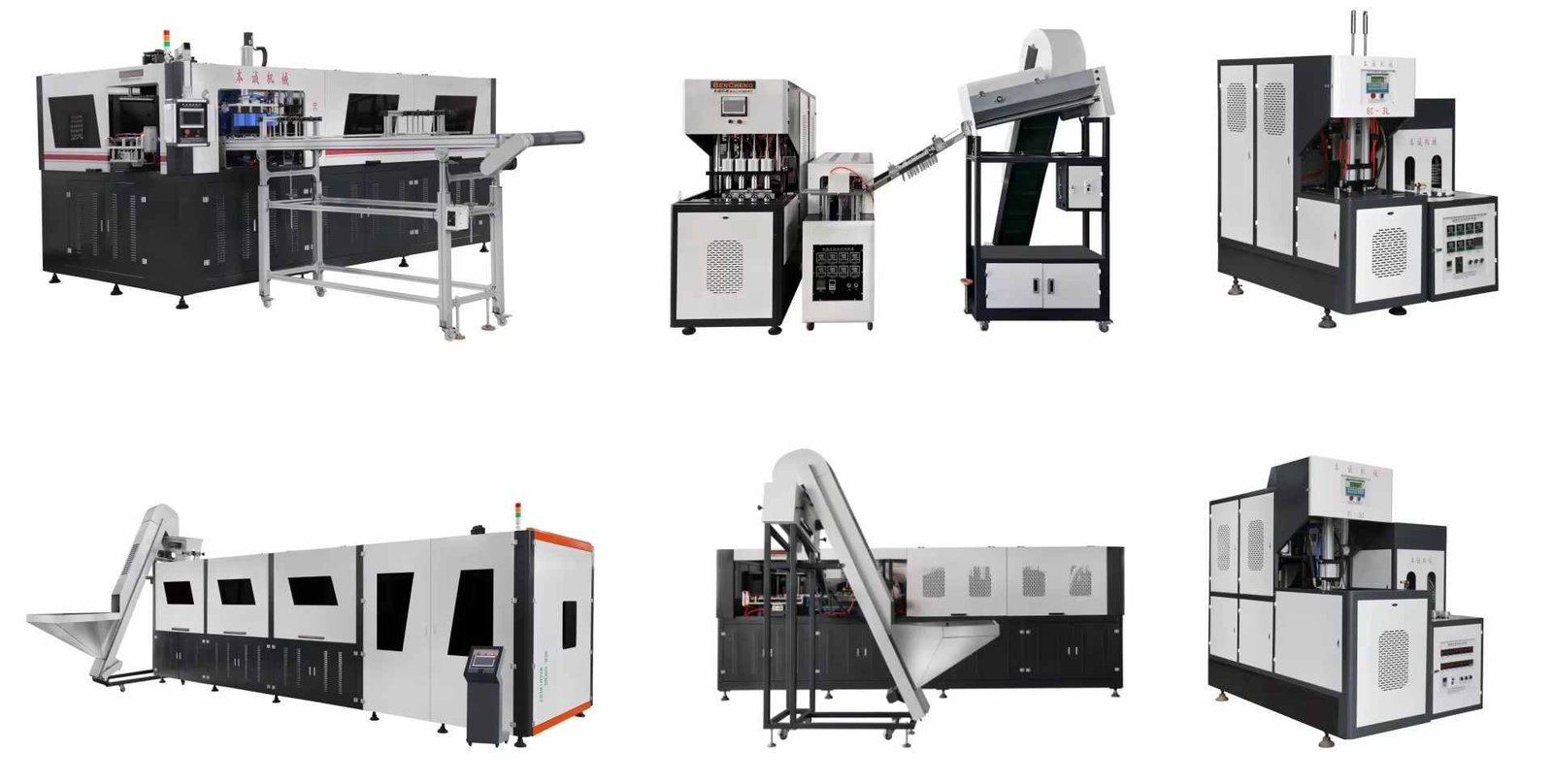
Choosing between a wide-neck jar blow molder and a narrow-neck bottle machine comes down to product geometry, daily output demands, and commercial flexibility. While narrow-neck equipment delivers unmatched high-speed throughput for commodity beverage lines, wide-neck machinery unlocks high-margin food, cosmetic, and nutraceutical packaging markets. For converters balancing diverse product contracts, an engineered hybrid machine delivers the versatility needed to capture multiple revenue streams on a single capital footprint.
To further explore specific equipment configurations, browse our related engineering analyses:
- Wide Neck PET Jar Blow Molding Machine Guide — Dedicated specifications for cosmetic and food jar lines.
- High Speed PET Blow Molding Machine: Output & Cost Guide — Sizing high-velocity beverage bottling machinery.
- 5 Gallon PET Bottle Blow Molding Machine: Guide for Large Jug Production — Equipment sizing for 20L water carboys.
- PET Blow Molding Machine Series Catalog — Browse all linear automatic and semi-automatic machines.
Ready to Engineer Your Next Bottle or Jar Packaging Line?
Speak with Sailwin’s technical sales engineering group today for factory-direct machinery quotations, mold technical drawings, preform supplier contacts, and plant layout designs.