In industrial agrochemicals, automotive fuel tanks, and extended-shelf-life food packaging, packaging engineers encounter a costly physical phenomenon known as the “barrier gap.” A single-layer high-density polyethylene (HDPE) container possesses excellent moisture retention and impact toughness, but its non-polar semi-crystalline molecular structure offers virtually zero resistance to non-polar organic solvents, aromatic hydrocarbons, and atmospheric oxygen. When packaging agrochemical concentrates (such as emulsifiable concentrates or pyrethroids) in monolayer HDPE bottles, solvents permeate through container sidewalls over time, causing severe sidewall collapse (“panelling”), container embrittlement, label peeling, and volatile organic compound (VOC) vapor leakage.
To eliminate solvent permeation, oxygen degradation, and package panelling without resorting to expensive, heavy fluorination treatments, the global packaging industry relies on the multilayer coextrusion blow molding machine. By combining virgin HDPE structural strength with micro-thin barrier polymers like Ethylene Vinyl Alcohol (EVOH) or Polyamide (Nylon/PA) across 3-layer to 6-layer wall architectures, multilayer co-extrusion reduces oxygen transmission rates by over 1,500 times compared to monolayer containers. This comprehensive technical guide details the science behind EVOH and PA barrier performance, analyzes 2-layer to 6-layer extrusion configurations, reviews FIFO die head mechanics for fast color changeovers, and explains how integrating regrind core layers slashes raw material costs by 20% to 35%.
| Layer Setup & Configuration | Structural Cross-Section Architecture | Barrier Performance (OTR Benchmark) | Target Packaging Applications |
| Monolayer HDPE (Baseline) | 100% Virgin HDPE (Single wall) | 150 – 220 cc/m²·day·atm (Zero barrier) | Water, bleach, mild detergents, motor oil |
| 2-Layer Co-Extrusion | Outer Color HDPE (20%) + Inner Virgin/PIR (80%) | 140 – 200 cc/m²·day·atm | Cosmetics, household chemicals, antistatic drums |
| 3-Layer Co-Extrusion (Regrind) | Outer Virgin (20%) + Regrind Core (60%) + Inner Virgin (20%) | 130 – 190 cc/m²·day·atm | Lube oil bottles, industrial jerrycans, PCR containers |
| 5-Layer Symmetrical Barrier | HDPE (45%) + Tie (3%) + EVOH (4%) + Tie (3%) + HDPE (45%) | < 0.10 cc/m²·day·atm (High Barrier) | Pesticides, agrochemicals, condiments, barrier food |
| 6-Layer Asymmetrical Industrial | HDPE (15%) + Regrind (45%) + Tie (3%) + EVOH (4%) + Tie (3%) + Virgin (30%) | < 0.05 cc/m²·day·atm (Ultra Barrier) | UN hazmat chemicals, automotive fuel tanks, aromatic solvents |
Why Single-Layer HDPE Is Not Enough: The “Barrier Gap” Problem
Polyethylene is the most widely processed industrial polymer on Earth, prized for its high impact ductility, zero water absorption, and low manufacturing cost. However, in container packaging, three critical physical limitations render monolayer HDPE inadequate for aggressive liquid chemical formulations:
- Solvent Permeation & Wall Swelling: Organic solvent molecules (such as xylene, toluene, cyclohexanone, and aromatic distillates common in pesticide formulations) possess molecular sizes small enough to dissolve into and migrate through the amorphous regions of polyethylene. This causes container swelling, softening, and steady product volume loss.
- Atmospheric Oxygen Ingress & Shelf-Life Oxidation: Single-layer HDPE has an Oxygen Transmission Rate (OTR) of roughly 150 to 220 cc/m²·day·atm. For oxygen-sensitive active agrochemical ingredients, vitamins, edible oils, or sauces, atmospheric oxygen migrates freely into the bottle, degrading chemical potency, turning edible fats rancid, and inducing container discoloration within 90 days.
- Container Panelling (Sidewall Buckling): When liquid agrochemicals absorb the small volume of headspace oxygen inside a sealed bottle, an internal vacuum is generated. Because single-layer HDPE loses flexural modulus when softened by chemical vapors, the atmospheric pressure outside crushes the container inward (“panelling”), creating severe package deformation and label detachment on retail shelves.
How EVOH Barrier Layer Works: The Science Behind <0.01 cc/pkg/day Permeation
To establish an impenetrable barrier inside an extrusion blow molding machine, modern multi-layer tooling co-extrudes a continuous, micro-thin core layer of Ethylene Vinyl Alcohol (EVOH) copolymer:
The Molecular Mechanics of EVOH
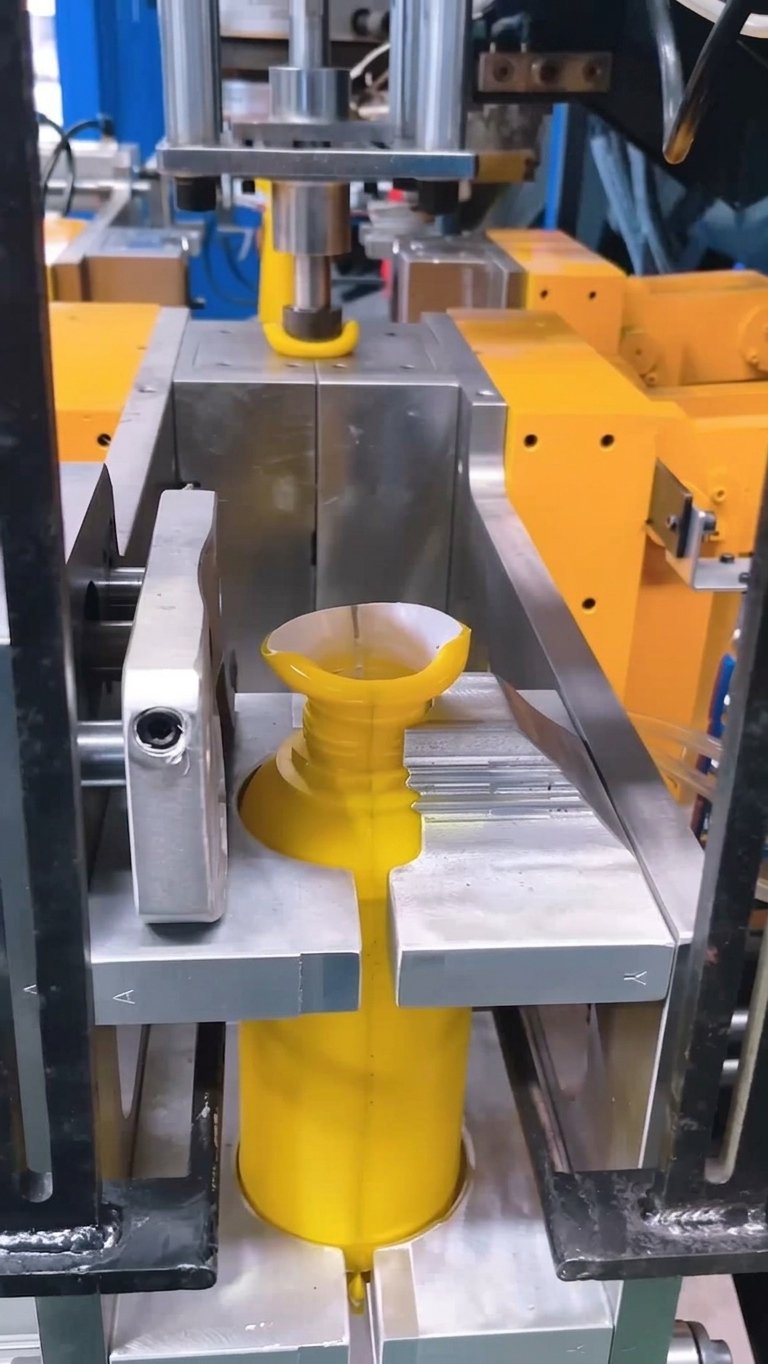
EVOH is synthesized by polymerizing ethylene and vinyl acetate followed by complete hydrolysis into vinyl alcohol. The hydroxyl (-OH) groups on the vinyl alcohol segments form extremely dense intermolecular and intramolecular hydrogen bonds, creating a tightly packed polymer crystal matrix. Oxygen, nitrogen, carbon dioxide, and volatile organic hydrocarbon molecules cannot penetrate this dense crystalline lattice.
- Incredible Barrier Efficiency: An EVOH layer comprising just 3% to 5% of total container wall thickness (30 to 80 microns) reduces oxygen ingress by over 99.9% compared to monolayer HDPE.
- Synergistic Moisture-Oxygen Balance: While EVOH is highly sensitive to moisture (water molecules disrupt its hydrogen-bonded barrier), the surrounding hydrophobic HDPE inner and outer layers shield the EVOH core from contact with liquid contents and atmospheric humidity, keeping the barrier bone-dry and operating at peak efficiency.
- Maleic Anhydride Tie-Layer Technology: Because non-polar HDPE and highly polar EVOH are chemically incompatible, specialized adhesive tie layers (maleic anhydride grafted LLDPE) are extruded between them. The anhydride functional groups react covalently with EVOH hydroxyls while the polyethylene backbone entangles with the HDPE wall, preventing layer delamination under drop impacts.
Experiencing Container Panelling, Solvent Leaks, or Inadequate Shelf Life?
Contact Sailwin’s barrier packaging technical division. Send us your liquid formulation SDS and packaging specifications. Our chemical packaging engineers calculate the exact EVOH barrier percentage and layer structure required for certified container stability.
2 to 6 Layer Configurations: Sizing Your Extrusion Head Architecture
Selecting the optimal number of layers is a strategic decision balancing initial capital equipment expenditure against recurring raw material savings and barrier requirements:
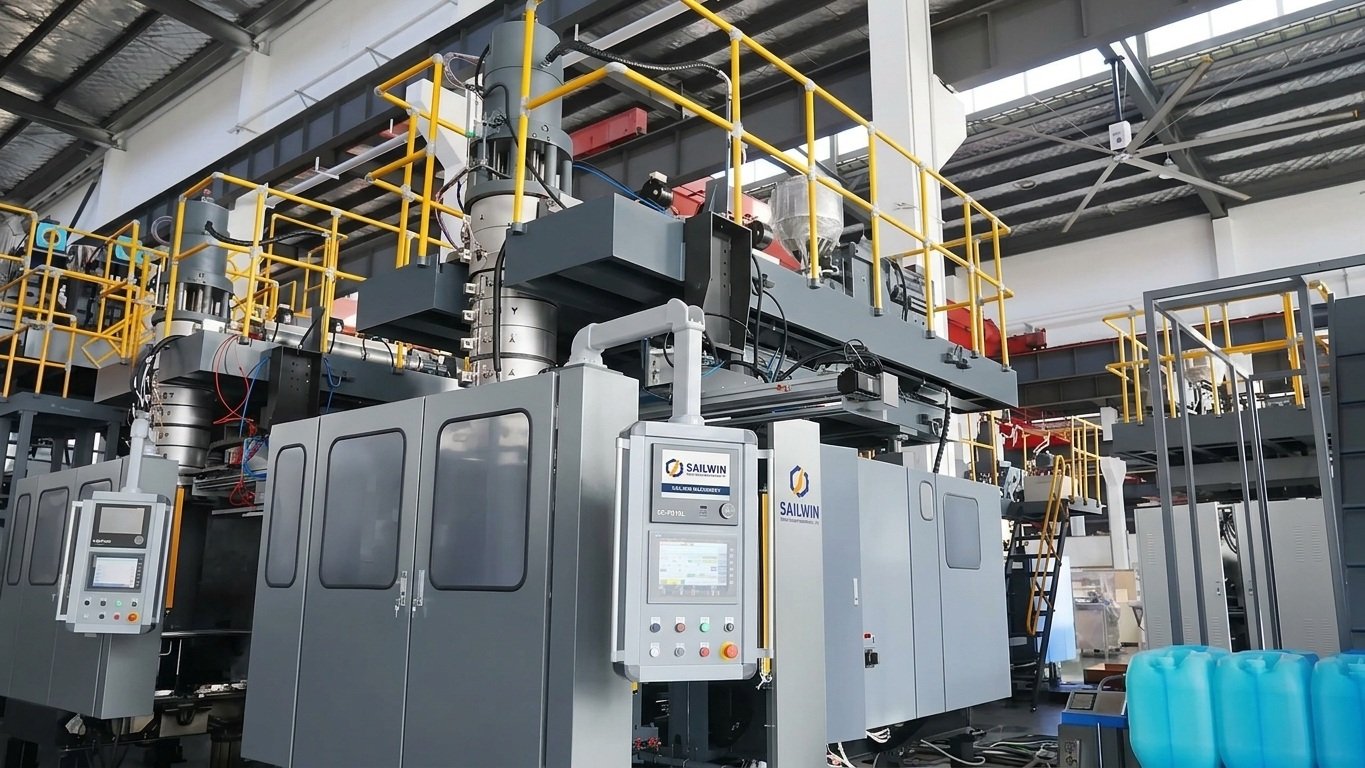
1. Standard 5-Layer Symmetrical Structure (HDPE / Tie / EVOH / Tie / HDPE)
The global benchmark for agrochemical packaging and food containers. Two extruders feed the outer and inner virgin HDPE skins, a micro-extruder feeds the EVOH barrier core, and a fourth extruder feeds both tie-layer streams via balanced flow splitters. This structure guarantees that liquid chemicals never contact the EVOH layer directly, preserving container integrity across extreme pH ranges (pH 1 to 14).
2. Industrial 6-Layer Asymmetrical Structure (HDPE / Regrind / Tie / EVOH / Tie / Virgin)
The premier configuration for industrial jerrycan blow molding machine systems and automotive fuel tanks. By inserting a dedicated regrind extruder between the outer HDPE shell and the tie layer, packaging plants can reintroduce up to 40% to 50% post-industrial flash regrind or Post-Consumer Recycled (PCR) resin directly into the container sidewall. The inner contact layer remains 100% pure virgin HDPE, ensuring regulatory compliance while dramatically slashing resin costs.
FIFO Co-Extrusion Die Head Technology: Minimizing Color Changeover Downtime
In co-extrusion blow molding, the die head is a masterpiece of fluid mechanics. It must divide, spiral, and layer three to five molten polymer streams with differing melt flow indexes (MFI) and temperature profiles into a perfectly concentric, micron-uniform tubular parison without turbulent mixing or weld-line freeze-off:
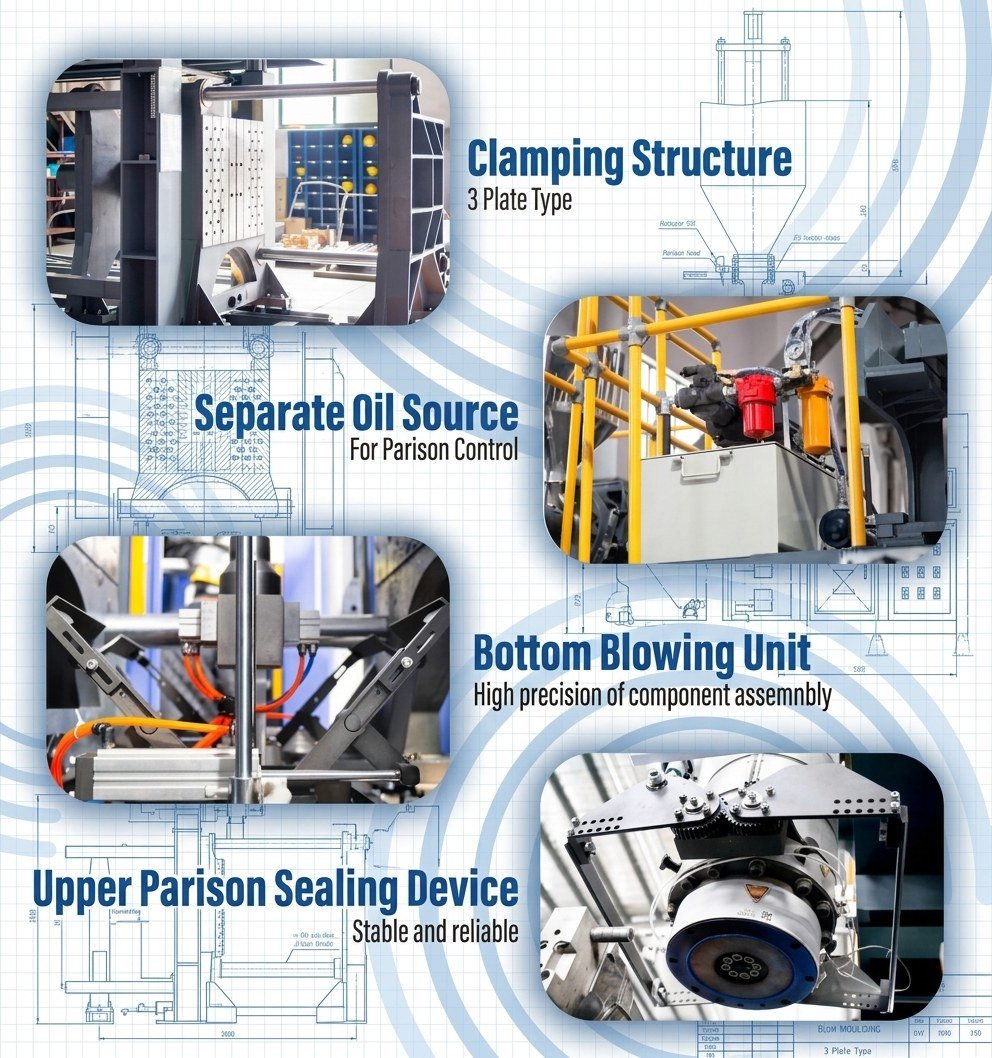
Mechanical Integrity: Clamping Rigidity & 100-Point Parison Control
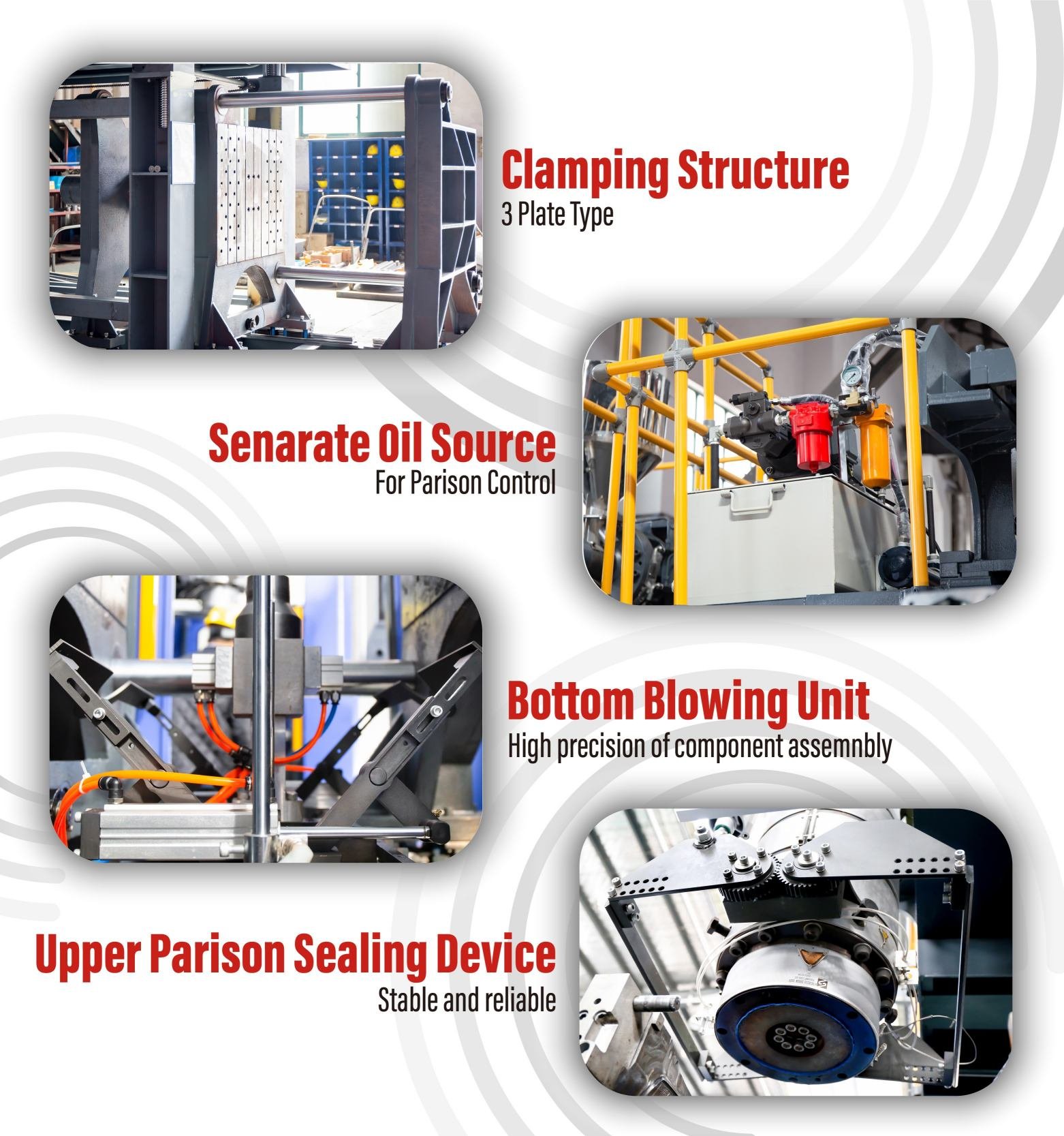
Die Precision: Hydraulic Synchronization & Parison Sealing Station
Sailwin’s multi-layer die heads incorporate advanced First-In, First-Out (FIFO) multi-spiral distribution sleeves that solve the greatest operational bottleneck in co-extrusion: color and resin changeover downtime.
| Operational Parameter | Legacy Torpedo / Mandrel Die Heads | Sailwin FIFO Multi-Spiral Die Head |
| Color Changeover Duration | 3.5 – 5.0 Hours (Stagnant corners) | 40 – 60 Minutes (Rapid purging) |
| Purge Resin Scrap per Change | 180 – 250 kg degraded plastic | 35 – 55 kg purge resin |
| EVOH Barrier Layer Uniformity | ± 25% (Weld lines create thin spots) | ± 4% (Continuous seamless spiral) |
| Thermal Stagnation & Degradation | High risk of EVOH gel black specks | Zero stagnation dead zones; self-cleaning flow |
Polyamide (PA / Nylon) Co-Extrusion for High Chemical Resistance
While EVOH is the undisputed king of gas barrier performance, certain specialized industrial applications demand Polyamide (PA6 or PA66 Nylon) co-extrusion. PA provides extraordinary resistance to polar chemicals, concentrated surfactants, ketones, and cyclic hydrocarbons that can swell EVOH.
- Impact Toughness at Low Temperatures: Unlike EVOH which exhibits brittle behavior under high-speed impacts below 0°C, PA retains high elongation and impact toughness, making it the preferred barrier material for UN-certified cold drop containers.
- Automotive Small Engine Fuel Tanks: EPA and CARB evaporative emission regulations mandate hydrocarbon permeation below 1.5 grams/m²/day. HDPE/Tie/PA/Tie/HDPE 5-layer co-extrusion is standard for motorcycle fuel tanks, lawnmower tanks, and portable fuel caddies.
Regrind Middle Layer Economics: Sashing Material Costs by 20% to 35%
Extrusion blow molding inevitably generates process scrap: top handle punch flash, bottom pinch-off tails, and neck trimmer rings account for 25% to 40% of total shot weight. In a monolayer machine, reintroducing this scrap into the feed throat can cause color inconsistency, gel specks, and reduced environmental stress crack resistance (ESCR).
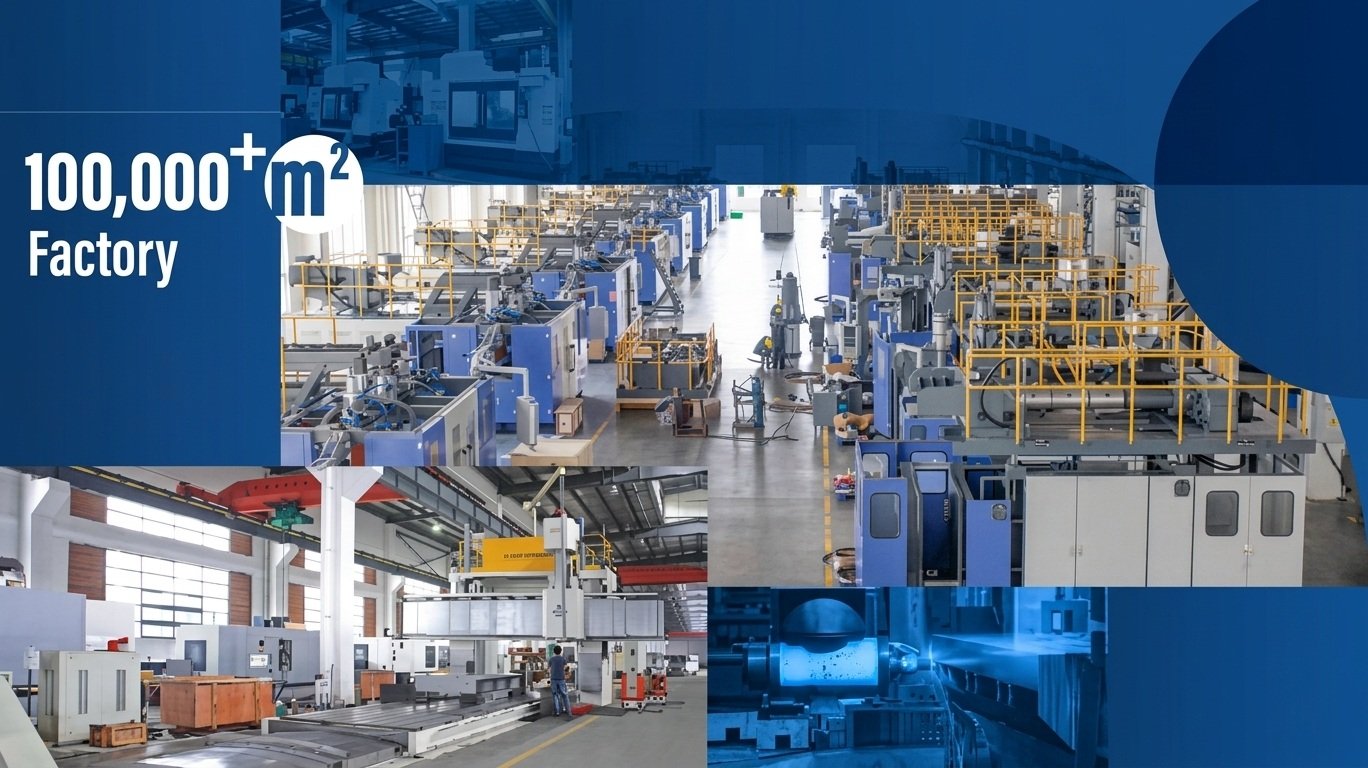
In a 6-layer co-extrusion system, 100% of internal flash regrind is fed directly into Extruder B (the dedicated regrind core layer). The outer layer (15% virgin) provides high-gloss visual branding, while the inner contact layer (25% virgin) seals against active chemicals. By encapsulating 40% regrind inside the core, a plant producing 1.5 million 5-liter jerrycans annually saves over $95,000 in virgin resin costs every year without compromising UN packaging compliance.
Case Study: Agrochemical Formulator Eliminates Container Panelling and Achieves UN 3H1 Certification
Client Profile: A major pesticide and agrochemical packaging manufacturer in North Africa produced 5-liter and 20-liter stacking jerrycans for concentrated organophosphate insecticides using monolayer HDPE machines with internal fluorine gas treatment.
The Production Crisis: In-mold fluorination generated hazardous chemical exhaust, suffered from inconsistent barrier levels, and cost an exorbitant $0.28 per container in fluorine gas licensing and scrubbers. Furthermore, 12% of bottles experienced sidewall panelling during ocean export shipping to southern Europe, resulting in customs rejections.
Sailwin Turnkey Solution:
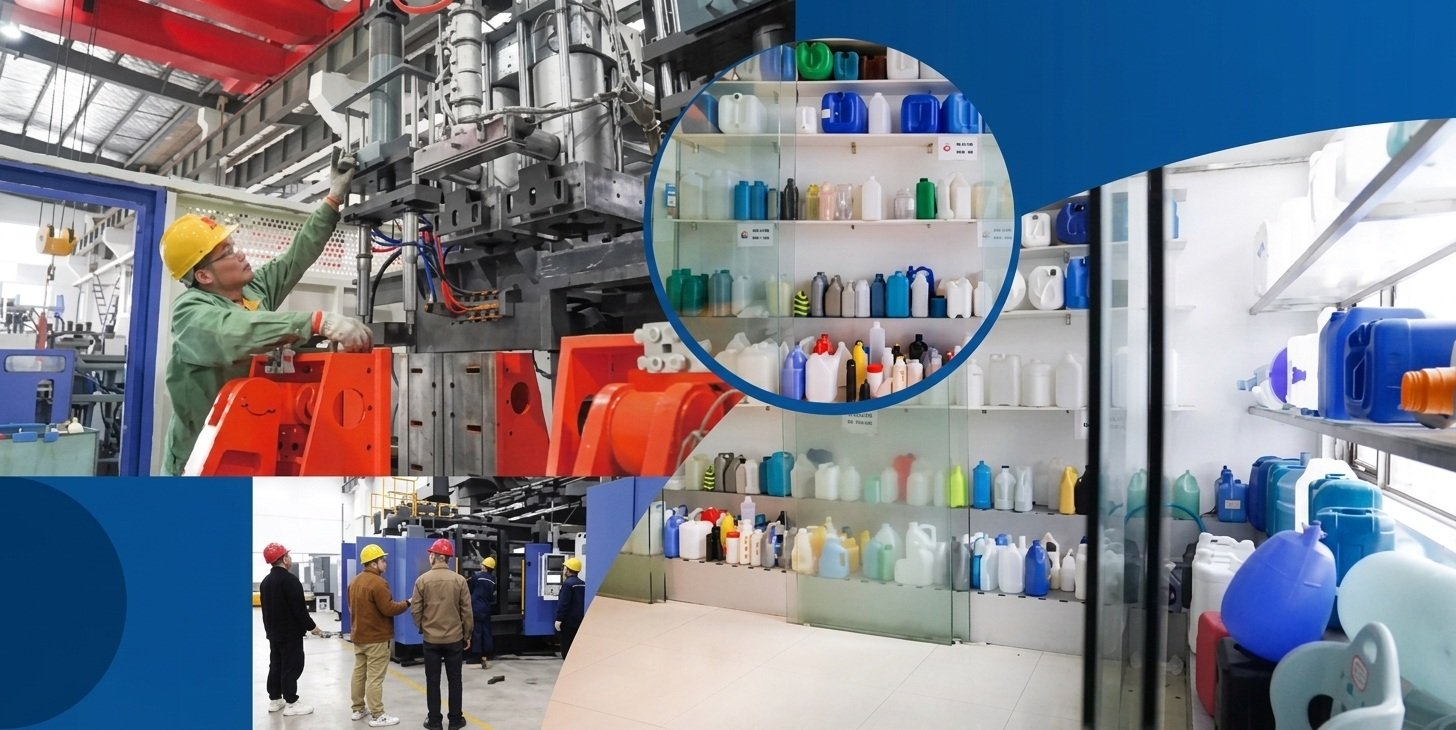
- Supplied a Sailwin SW-6L 5-layer coextrusion blow molding machine configured with HDPE / Tie / EVOH / Tie / HDPE continuous spiral die heads.
- Integrated 100-point MOOG parison wall thickness control with specialized parison pinch-off sealing knives.
- Configured precision gravimetric dosing feeders for Kuraray EVAL EVOH resin and Mitsui Admer tie-layer adhesives.
Quantifiable Production & Regulatory Results:
| Performance Metric | Monolayer Fluorinated HDPE | Sailwin 5-Layer EVOH Co-Extrusion | Operational Benefit |
| Solvent Weight Loss (30-day 50°C) | 3.4% (Exceeds UN limit) | < 0.05% Weight Loss | Achieved certified UN 3H1 packaging approval |
| Container Panelling Failure Rate | 12.5% during sea transit | 0.0% (Zero Panelling) | 100% elimination of ocean export rejections |
| Manufacturing Cost per Container | $1.42 (High fluorination fee) | $1.18 per Container | $0.24 direct savings per container produced |
| Annual Operational Savings | Baseline | $144,000 Saved Annually | Full co-extrusion machinery payback in 10.5 months |
Ready to Upgrade to Multi-Layer Barrier Packaging Technology?
Contact Sailwin’s co-extrusion engineering group today. We provide turnkey machinery proposals, FIFO die head specifications, custom multi-cavity tooling, and factory FAT validation.
Frequently Asked Questions: Multilayer Coextrusion Blow Molding
What is the minimum thickness required for the EVOH barrier layer?
In standard 5-layer and 6-layer containers, the EVOH core layer typically accounts for 3% to 5% of total container wall thickness. For a standard 5L pesticide container with an average 1.2mm wall thickness, the EVOH layer measures approximately 36 to 60 microns. This micro-layer is sufficient to cut oxygen and hydrocarbon transmission by over 99.9%.
Can EVOH barrier containers be recycled in standard recycling streams?
Yes. Leading international plastics recycling associations (including APR in North America and RecyClass in Europe) certify that polyethylene containers containing less than 5% EVOH by weight paired with compatible tie-layer adhesives are fully compatible with standard HDPE recycling streams (Code #2) without causing processing gels or degradation.
What causes layer delamination in multi-layer bottles and how is it prevented?
Delamination (separation of HDPE and EVOH layers under drop impact) occurs when tie-layer temperature profiles are too low to initiate chemical grafting, or when tie-layer thickness drops below 2% of total wall thickness. Sailwin’s multi-spiral die heads ensure continuous 360-degree tie-layer coverage with independent zone temperature control, guaranteeing peel strengths exceeding 15 N/15mm.
What is the difference between multi-layer co-extrusion and post-mold fluorination?
Post-mold fluorination exposes finished monolayer HDPE bottles to toxic fluorine gas, creating a surface barrier. While effective initially, fluorination is a hazardous batch process, suffers from inconsistent barrier uniformity in container corners, and faces tightening global environmental restrictions (PFAS regulatory scrutiny). Multi-layer co-extrusion embeds an inert EVOH polymer core directly inside the wall during molding, offering permanent, non-toxic, and 100% repeatable barrier performance.
How many extruders are required for a 6-layer co-extrusion machine?
Typically four to five extruders. Extruder A feeds outer virgin HDPE; Extruder B feeds the regrind/PCR core layer; Extruder C feeds the tie-layer resin (split into inner and outer tie streams); Extruder D feeds EVOH; and Extruder E feeds the inner contact virgin HDPE layer.
Can a multi-layer machine run standard monolayer containers when needed?
Yes. If a packaging plant has sudden orders for standard monolayer detergent or motor oil bottles, all extruders can be fed with virgin HDPE (or the barrier and tie extruders can be paused with bypass manifolds installed). This provides total operational flexibility to meet fluctuating commercial contracts.
How does Sailwin test barrier container integrity before export shipment?
During 72-hour Factory Acceptance Testing (FAT), containers undergo microtome cross-sectional layer thickness verification under 100x optical microscopy to certify 360-degree EVOH continuity. Full bottle drop testing (-18°C cold drop) and hydraulic leak testing are certified under ISO 9001 certified manufacturing quality standards prior to container packing.
What is the typical return on investment (ROI) for a multi-layer co-extrusion line?
While a 5-layer co-extrusion blow molder costs approximately 35% to 50% more than an equivalent monolayer machine, eliminating outsourced fluorination fees ($0.20 to $0.35/bottle) and incorporating up to 40% regrind inside container core walls typically delivers a complete capital payback within 9 to 14 months of commercial operation.
Summary & Related Machinery Guides
Multilayer coextrusion blow molding is the definitive engineering technology for manufacturing high-barrier industrial packaging. Sizing the proper 5-layer or 6-layer architecture, utilizing FIFO multi-spiral die heads for rapid changeovers, encapsulating regrind scrap inside core layers, and maintaining precise EVOH thickness ensures certified UN hazardous chemical containment, zero product panelling, and substantial recurring resin cost savings.
To further explore blow molding technology and industrial container sizing, explore our technical engineering guides:
- Multilayer Coextrusion Blow Molding Machine Series Catalog — Full specifications for 2-layer to 6-layer barrier models.
- Extrusion Blow Molding Machine (EBM) Series — Sizing shuttle and accumulator extrusion systems.
- Jerrycan Blow Molding Machine Systems — Dedicated platforms for 15L to 30L stackable chemical containers.
- HDPE Blow Molding Machine Container Sizing Guide — Matching container volumes from 1L to 1000L.
Ready to Engineer Your High-Barrier Packaging Line?
Speak with Sailwin’s barrier extrusion engineering group today for turnkey machinery proposals, multi-layer spiral die head specifications, custom mold drawings, and factory layout designs.