In high-volume hollow plastic container manufacturing, electrical energy expenditure represents the single largest recurring operational cost after raw polymer resin. In traditional hydraulic extrusion blow molding lines, continuously running three-phase induction motors drive fixed-displacement hydraulic pumps, constantly circulating high-pressure oil through relief valves even while the machine rests in idle mold-cooling or parison-dwell phases. This hydraulic bypass generates continuous electrical waste, dissipates parasitic heat requiring auxiliary chiller loads, and introduces persistent risks of hydraulic fluid contamination in food and medical packaging cleanrooms.
To eliminate idle power dissipation, elevate mold clamping repeatability to micron levels, and comply with strict GMP cleanroom standards, packaging plants are transitioning toward the all electric blow molding machine. Powered by multi-axis synchronous servo motors and precision recirculating roller screws, all-electric blow molders consume power exclusively on demand, cutting energy usage by 35% to 50% compared to conventional hydraulic platforms. This technical engineering guide provides an objective cost, speed, and precision comparison between all-electric, traditional hydraulic, and servo-hydraulic hybrid systems, delivering a transparent Total Cost of Ownership (TCO) payback model to inform your capital machinery investments.
| Engineering Performance Metric | Conventional Hydraulic Platform | Servo-Hydraulic Hybrid System | All-Electric Servo Architecture |
| Specific Energy Consumption | 0.55 – 0.75 kWh/kg resin processed | 0.38 – 0.48 kWh/kg resin processed | 0.26 – 0.34 kWh/kg (Lowest) |
| Clamping Position Repeatability | ± 0.20 mm (Oil viscosity drift) | ± 0.08 mm (Servo pump assisted) | ± 0.01 mm (Absolute encoder) |
| Operational Cleanroom Suitability | Poor (Oil mist, seal leaks, pipe sweat) | Moderate (Enclosed hydraulic powerpack) | Excellent (Zero oil; ISO Class 7/8 GMP) |
| Factory Ambient Noise Level | 78 – 85 dB(A) (Continuous pump hum) | 70 – 74 dB(A) | < 68 dB(A) (Whisper quiet) |
| Hydraulic Maintenance Requirement | Oil changes (annual 800L), valve rebuilds | Reduced oil changes (biannual 400L) | Zero hydraulic oil; grease lubrication only |
| Capital Equipment Acquisition Cost | Baseline ($) | +12% – 18% Initial Premium | +28% – 42% Initial Premium |
Core Mechanical Architectures: How Power Transmission Differs
To evaluate whether an all-electric or hydraulic machine suits your container portfolio, understanding the fundamental physical mechanisms governing platen movement, carriage shuttle, and parison calibration is essential:
1. Conventional Hydraulic Systems: Fluid Pressure Dynamics
In standard hydraulic extrusion blow molding machines, an AC induction motor runs continuously at a fixed rotational speed, turning a hydraulic vane or piston pump. Solenoid directional valves and proportional throttle valves route pressurized oil into double-acting hydraulic cylinders to drive carriage shuttle, mold clamp toggle linkages, and parison die tooling. During mold cooling or cycle delay phases, excess hydraulic fluid is throttled across relief valves back into the reservoir, converting valuable electrical power into waste heat that must be cooled by external plant chillers.
2. Servo-Hydraulic Hybrid Systems: Variable-Speed Demand Control
Servo-hydraulic technology bridges conventional hydraulics and full electrification. Instead of a fixed-speed AC motor, the hydraulic pump is driven by a high-dynamic AC servo motor:
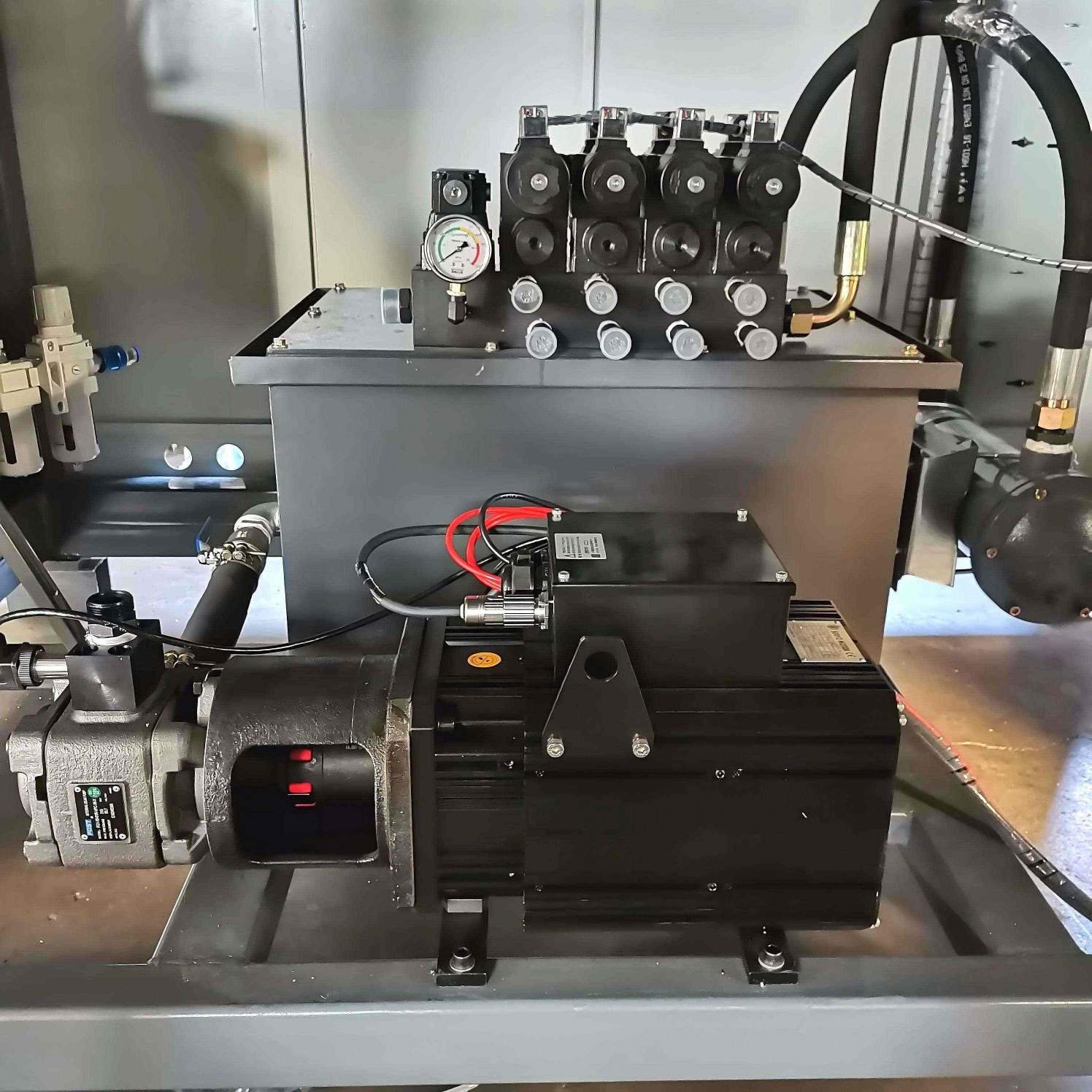
When the machine requires clamping tonnage or carriage translation, the servo motor accelerates to full RPM within 40 milliseconds to deliver precise fluid volume. When the machine enters mold cooling, the servo motor decelerates to near zero RPM, eliminating idle throttling losses and cutting hydraulic energy consumption by 25% to 35%.
3. All-Electric Architecture: Direct Servo-Driven Electromechanics
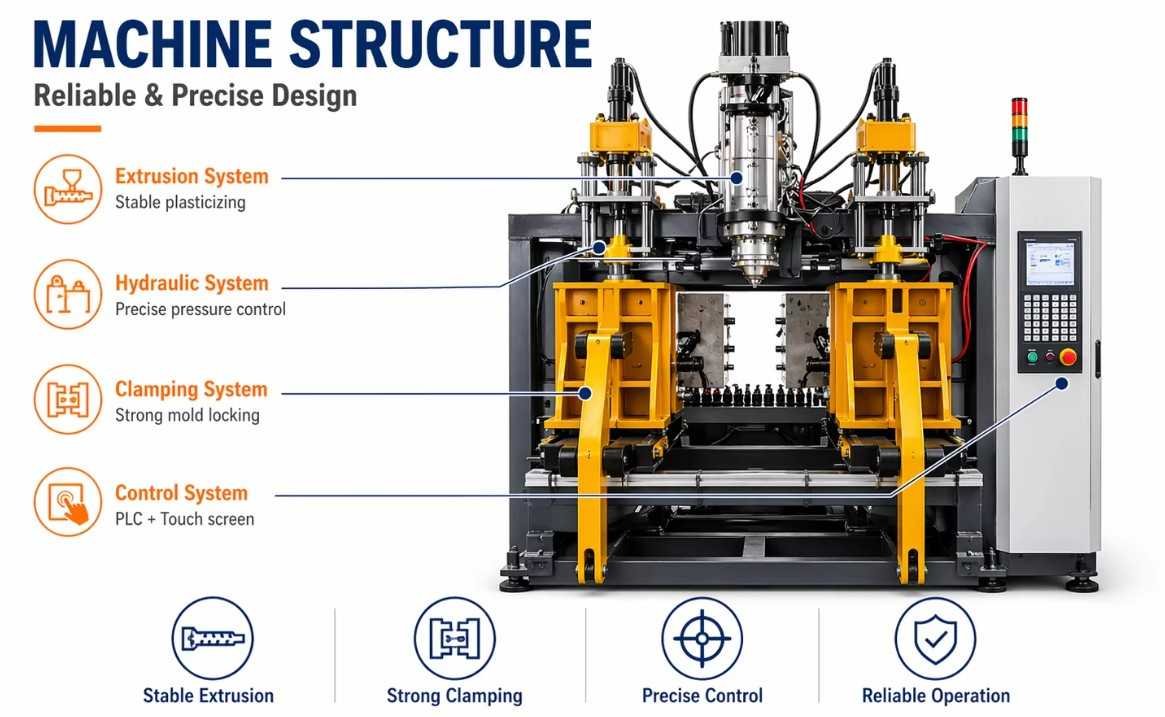
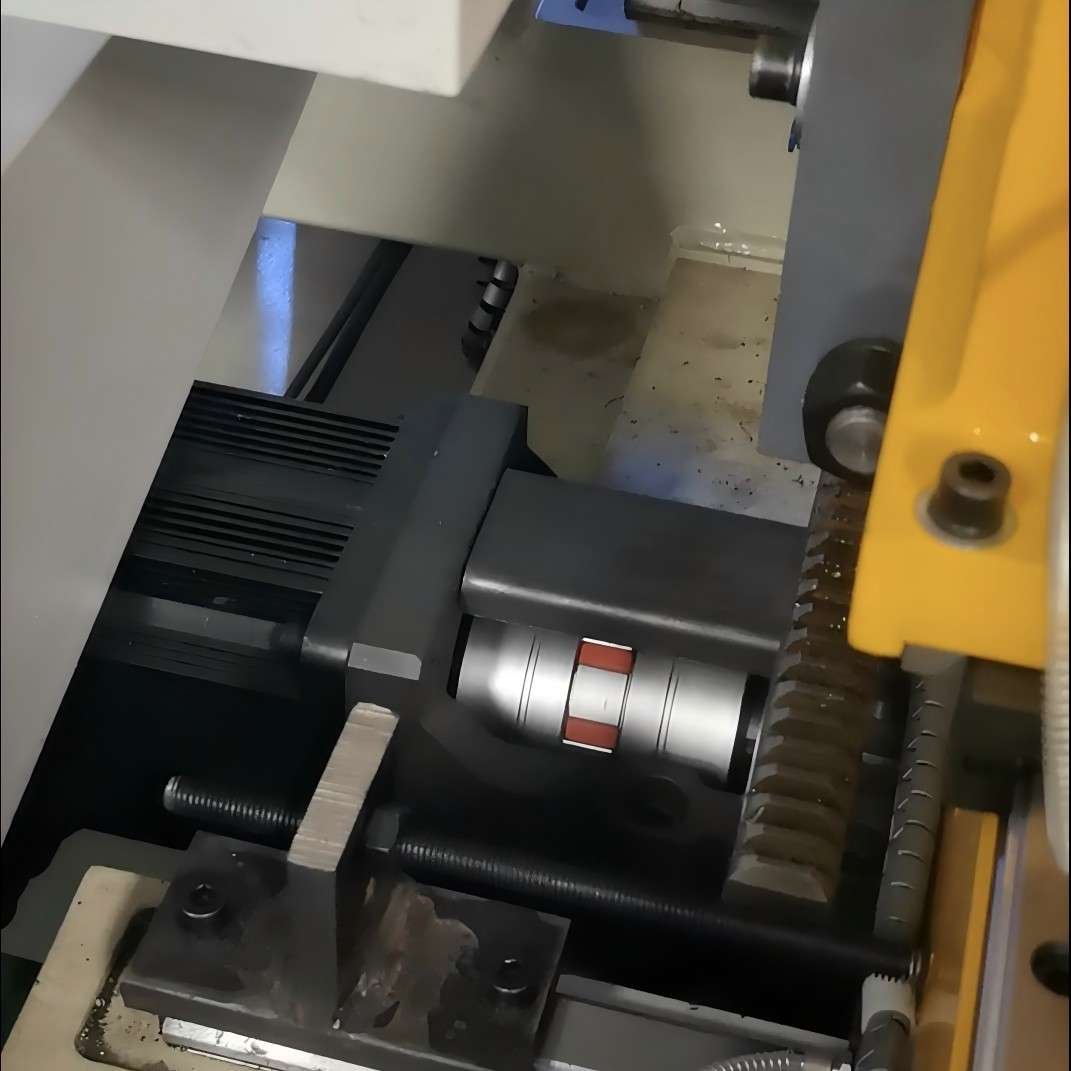
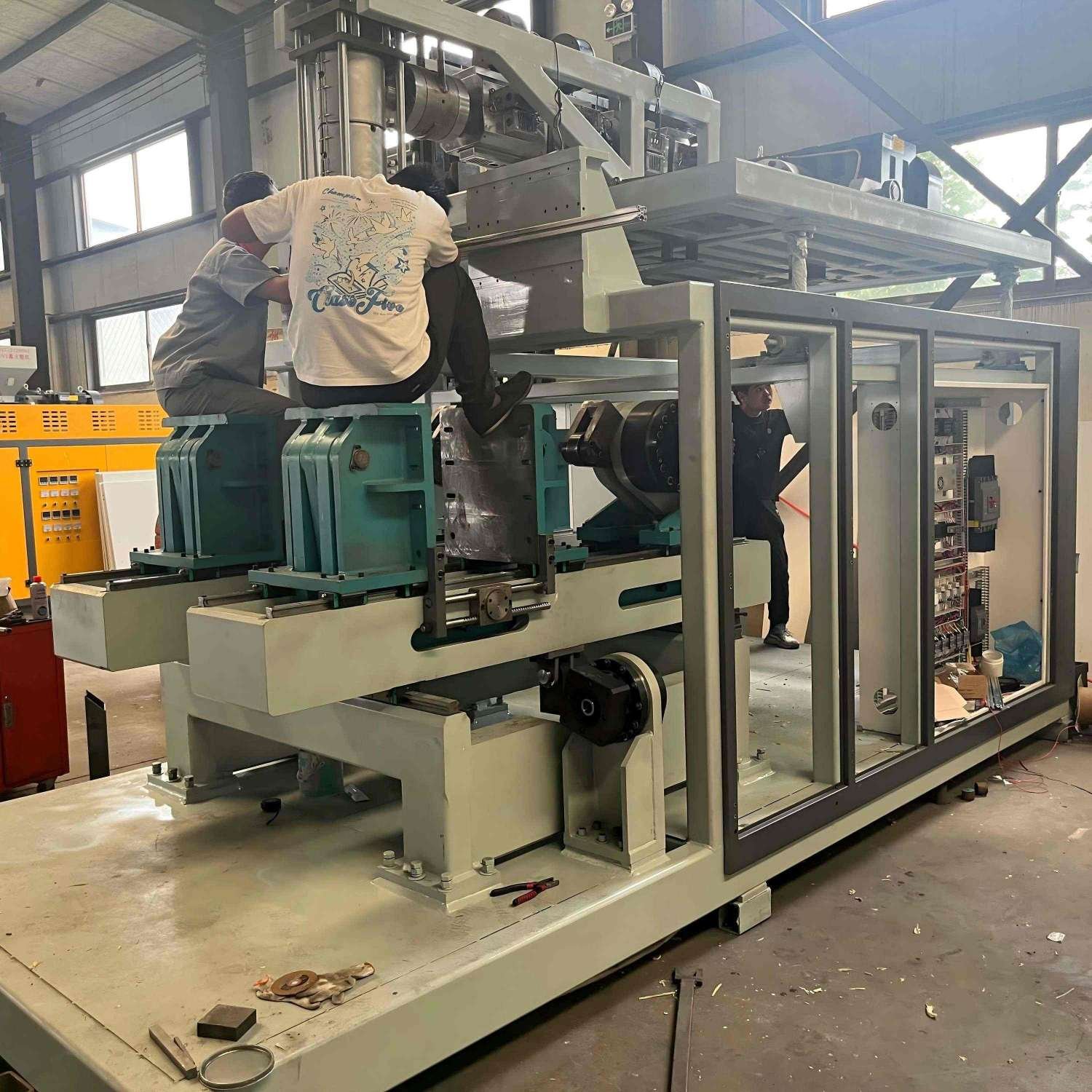
An all-electric blow molding machine completely eliminates the hydraulic tank, fluid lines, proportional valves, and hydraulic seals. Every major kinematic axis is actuated independently by a dedicated brushless AC servo motor coupled directly to planetary roller screws, heavy-duty ball screws, or synchronous rack-and-pinion gearboxes:
- Mold Clamping Axis: Twin synchronized high-torque servo motors drive toggle mechanisms or dual roller screws, delivering rapid mold closing speeds up to 1,200 mm/s followed by smooth clamping deceleration.
- Carriage Shuttle Axis: A servo-driven linear actuator propels the mold carriage smoothly between die head and calibration stations on high-precision recirculating linear guide rails.
- Blow Pin Calibration Axis: Servo-driven calibration allows multi-speed penetration: high speed during descent, with instant micro-speed control during neck flash shear to prevent cutting-ring impact chipping.
- Parison Wall Thickness Axis: An ultra-fast linear servo motor or dynamic voice-coil actuator shifts the die core pin with 0.001mm resolution according to a 100-point programmed curve.
Evaluating an Equipment Upgrade and Unsure About Energy Payback?
Contact Sailwin’s technical engineering group. Provide your container volume, cycle time, annual production volume, and local electricity rate. Our engineers generate a customized electrical consumption audit calculating real capital payback periods.
Speed, Precision & Cycle Repeatability: The 0.01mm Mechanical Advantage
In high-speed consumer container molding, cycle consistency directly dictates scrap rates and container weight uniformity:
Eliminating Oil Temperature Drift
A persistent operational flaw in hydraulic machinery is thermal viscosity drift. When a hydraulic machine begins production on a cold Monday morning, oil temperature sits at 22°C. By 2:00 PM, heavy cycling warms hydraulic fluid to 50°C. As oil viscosity drops, valve response times accelerate and internal leakage increases, causing mold closing speeds and platen impact forces to drift by ±8% to 15% across a 24-hour shift. Operators must continuously tweak proportional valve settings to maintain neck calibration.
In contrast, all-electric machines utilize closed-loop digital optical encoders reading absolute position at 16,000 pulses per revolution. Platen position repeatability remains constant at ± 0.01mm, completely independent of ambient weather, shift duration, or seasonal plant temperatures.
Simultaneous Overlapping Axis Kinematics
Because traditional hydraulic machines share fluid volume from a central pump manifold, executing two high-load movements simultaneously (such as extruder screw plasticization while clamping under full tonnage) causes pressure drop and speed lag across both circuits. All-electric platforms possess dedicated independent servo drives for every mechanical motion. Carriage translation, mold decompression, parison extrusion, and bottom blow pin movement execute simultaneously with millisecond synchronization, shaving 0.8 to 1.5 seconds off total cycle time per container.
Cleanroom, Medical & Food Packaging Compliance: The Zero-Oil Mandate
For pharmaceutical packaging plants, medical diagnostic vials, and infant nutritional packaging, hydraulic blow molders pose severe contamination risks:
- Aerosol Oil Mist Contamination: Rapid reciprocating hydraulic cylinders and breather caps vent microscopic aerosolized hydrocarbon droplets into ambient factory air. In unsealed plant environments, these aerosols settle onto open bottle necks prior to capping.
- Hose Rupture Disasters: High-pressure hydraulic hoses operate at 140 to 180 bar. A single fatigue burst blankets tooling, conveyors, and cleanroom flooring with hundreds of liters of hot industrial fluid, forcing days of sanitization and total product scrap.
- Certified GMP & ISO Class 7/8 Compatibility: All-electric machinery is 100% fluidless above the platen base. Roller screws and linear guides utilize food-grade NSF H1 grease sealed inside labyrinth gaskets, permitting seamless certification in ISO Class 7 cleanrooms and dairy bottling halls.
Noise Abatement, Maintenance Overhead & Operational Longevity
Beyond energy and cleanroom standards, all-electric architecture radically transforms working conditions on the factory floor:
| Maintenance & Environmental Factor | Conventional Hydraulic Platform | Sailwin All-Electric Servo System |
| Routine Fluid Management | Hydraulic oil testing, top-offs, oil filter changes | Zero fluid monitoring; automated central greasing |
| Waste Disposal Regulations | Hazardous waste disposal costs for spent oil and oily rags | Zero hazardous liquid waste generation |
| Heat Load to Factory Air | 12 – 18 kW thermal load radiated into room | < 3 kW thermal dissipation (Slashes HVAC load) |
| Acoustic Working Environment | 80 – 85 dB(A) (Requires mandatory ear protection) | < 68 dB(A) (Normal conversation permitted) |
Total Cost of Ownership (TCO) & Financial Payback Model
Notice: The following financial comparison is a representative industrial engineering benchmark model based on standard 24/7 manufacturing parameters (6,000 annual operating hours at an assumed baseline industrial electricity tariff of $0.12 per kWh). Actual commercial savings vary according to local utility rate structures, container grammage, and machine configurations.
| Operating Cost Category (Annual 6,000h) | Standard Hydraulic (Model Benchmark) | All-Electric Servo (Model Benchmark) | Annual Cost Variance (Estimate) |
| Average Connected Power Draw | 42.0 kW continuous draw | 22.5 kW continuous draw | -19.5 kW power cut (-46.4%) |
| Annual Electrical Energy Expenditure | 252,000 kWh × $0.12 = $30,240 | 135,000 kWh × $0.12 = $16,200 | $14,040 saved in direct electricity |
| Auxiliary Chiller Load for Oil Cooling | 6.0 kW dedicated oil chilling = $4,320 | $0 (Zero hydraulic oil cooling required) | $4,320 saved in auxiliary chiller power |
| Hydraulic Oil & Filter Replacements | 800L oil change + filters + disposal = $3,400 | $250 automated grease cartridges | $3,150 saved in fluid maintenance |
| Start-Up Defect Scrap Reduction (Est.) | 1.8% cold-start scrap rate | 0.4% cold-start scrap rate | ~$3,800 saved in polymer scrap loss |
| Total Annual Operational Expenditure | $37,960 / year | $16,450 / year | $21,510 Annual Net Savings (Calculated) |
Assuming a capital price premium of approximately $26,000 to $32,000 for a dual-station all-electric extrusion platform over an equivalent standard hydraulic machine, the direct operating cost differential recovers the initial capital investment premium in 14.5 to 17.8 operating months. Over an average 10-year production lifespan, the all-electric platform yields substantial net operational savings while shielding packaging facilities against rising industrial utility tariffs.
Sizing Your Packaging Line: When to Choose Electric vs Hydraulic
While all-electric technology represents the future of packaging automation, hydraulic systems retain specific engineering advantages in heavy industrial applications:
Choose an All-Electric Machine When:
- Producing food, beverage, dairy, pharmaceutical, or cosmetic containers under 5 liters.
- Operating inside certified cleanrooms (ISO 7/8 or GMP standards) where fluid leakage is prohibited.
- Operating in regions with elevated electricity tariffs (exceeding $0.10 / kWh).
- Requiring rapid mold changeovers with high cycle repeatability and zero operator fine-tuning.
Choose a Hydraulic or Servo-Hydraulic System When:
- Manufacturing large-format industrial drums (50L to 220L), chemical barrels, or 1,000-liter IBC containers where clamping forces exceed 1,000 kN.
- Operating in emerging industrial regions where local technicians lack specialized electrical servo tuning skills.
- Working within limited initial capital expenditure budgets where entry-level startup investment is paramount.
Illustrative Benchmark Case Study: Dairy Packaging Facility Energy Modernization
(Representative industrial benchmark application for high-density polyethylene dairy container production)
Industrial Setting: A commercial dairy packaging plant operating four continuous extrusion lines producing 1-liter HDPE milk bottles at 4,200 BPH faced rising regional electricity tariffs and strict hygiene inspection scrutiny from dairy brand customers.
Baseline Performance: Four legacy hydraulic machines generated excessive ambient heat, required continuous chiller operation to keep hydraulic oil under 52°C, and suffered from 1.6% container scrap caused by morning temperature viscosity drift on the neck calibration tooling.
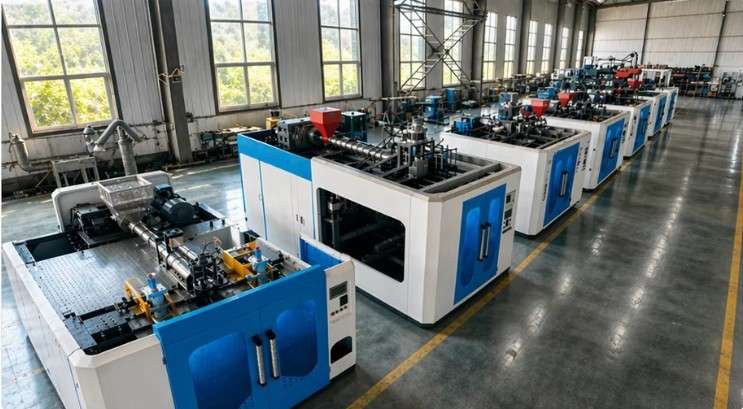
Modernization Approach: The plant replaced two aging hydraulic units with Sailwin dual-station all-electric extrusion blow molding systems featuring direct roller screw clamping, continuous multi-cavity parison heads, and food-grade lubricated linear motion guides.
Engineering Results (Benchmarked over 12 Months):
- Specific Energy Reduction: Power consumption dropped from 0.62 kWh/kg on the hydraulic lines to 0.31 kWh/kg on the all-electric lines (a 50% energy efficiency gain).
- Cleanroom Ambient Temperatures: Ambient plant floor temperature decreased by 4.5°C due to the total elimination of hydraulic oil cooling radiators.
- Start-Up Scrap Drop: Morning start-up bottle rejects dropped from 1.6% to under 0.3%, with container neck wall thickness maintaining consistent ±0.02mm tolerance from the very first mold cycle.
Ready to Analyze Electric vs Hydraulic Options for Your Facility?
Contact Sailwin’s technical machinery specialists today. We provide fully itemized equipment proposals comparing all-electric and servo-hydraulic configurations with transparent technical specifications and payback calculations.
Frequently Asked Questions: All-Electric vs Hydraulic Machinery
Do all-electric blow molding machines possess sufficient clamping force for multi-cavity tooling?
Yes. Contemporary all-electric blow molding machines utilize planetary roller screws and mechanical toggle mechanisms capable of generating over 300 to 500 kN of clamping force with zero platen deflection. This provides ample tonnage to mold 4-cavity, 6-cavity, or 8-cavity small container tooling without parting line flash.
What is the typical lifespan of roller screws and servo motors compared to hydraulic cylinders?
Industrial planetary roller screws and heavy-duty AC brushless servo motors are rated for over 20,000 to 30,000 operational hours under continuous automated grease lubrication. Unlike hydraulic cylinders which require routine seal kit replacements every 12 to 18 months to prevent internal bypass, electromechanical roller screws operate with zero friction-induced fluid breakdown.
Are spare parts for all-electric machines easy to source internationally?
Sailwin standardizes electrical drivetrains using universally recognized automation brands including Mitsubishi Electric, Beckhoff, and Schneider Electric. Standard servo drives, absolute optical encoders, and linear motion bearings are readily sourced off-the-shelf from industrial automation distributors across North America, Europe, Asia, and Latin America.
Can an all-electric blow molding machine process recycled PCR materials?
Yes. All-electric machines are exceptionally well suited for processing Post-Consumer Recycled (PCR) resin. Because servo-driven extruder screws maintain constant plasticizing torque and precise melt pressure feedback, all-electric systems compensate for minor MFI fluctuations in recycled feedstocks more smoothly than hydraulic drives.
What happens during a sudden factory power outage?
Sailwin all-electric platforms integrate intelligent dynamic braking circuits with UPS-backed control memory. During sudden power interruptions, kinetic energy from decelerating servo axes is captured to execute an orderly mold platen separation, preventing tooling collision and protecting custom mold cavities from thermal damage.
Does Sailwin test machinery before export shipping?
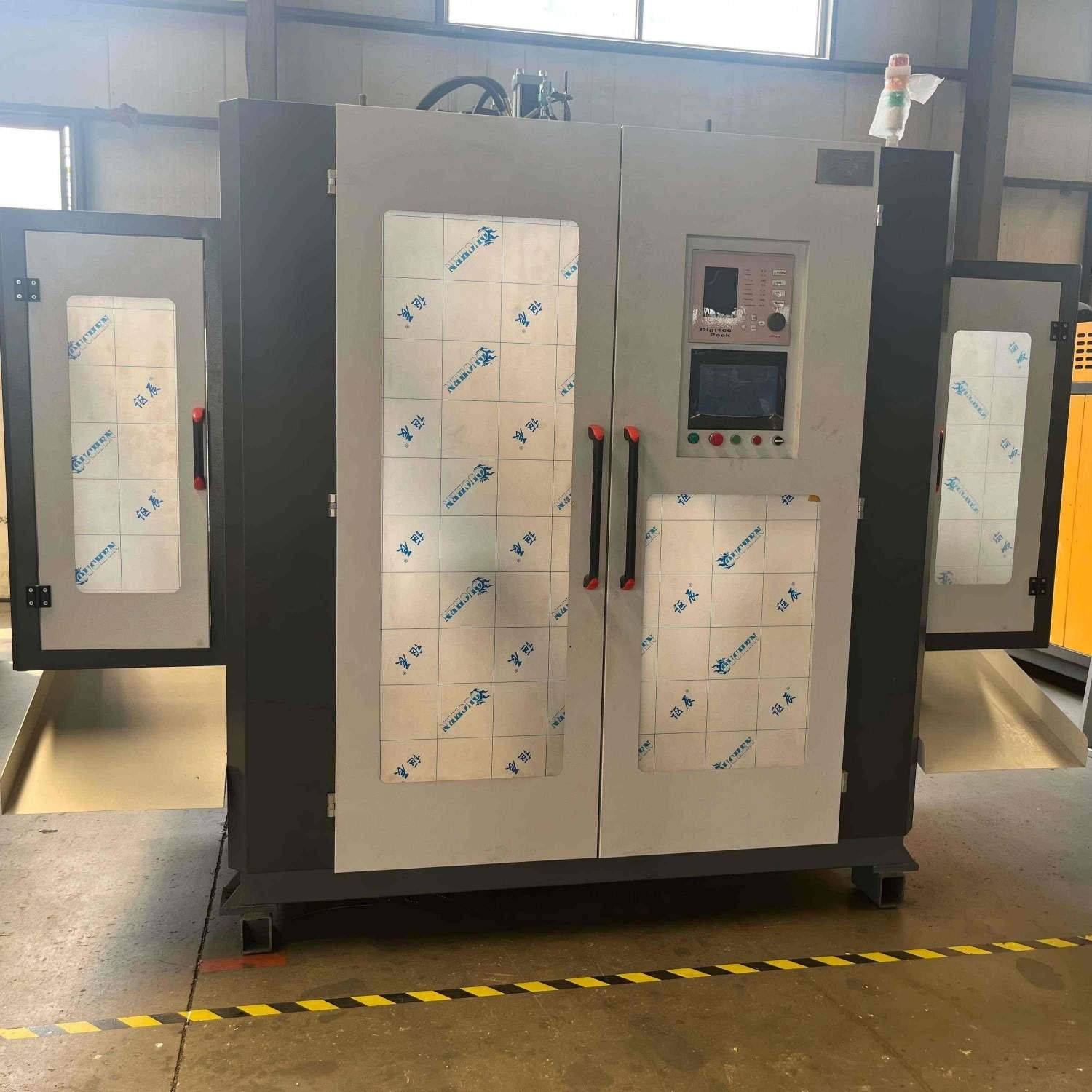
Yes. Every Sailwin all-electric and servo-hydraulic blow molding machine completes continuous 72-hour Factory Acceptance Testing (FAT) with real customer resin and mold tooling. Clamping position repeatability, energy consumption data logs, and container burst pressure testing are documented and certified under ISO 9001 certified manufacturing quality standards prior to export packaging.
Summary & Related Machinery Guides
Choosing between all-electric and hydraulic blow molding machinery hinges on container volume, cleanroom standards, and electrical utility economics. For small to medium containers in pharmaceutical, food, and personal care packaging, all-electric servo technology delivers decisive advantages in energy efficiency, 0.01mm repeatability, fluidless cleanroom operation, and low total cost of ownership. For large-format chemical drums and IBC tanks, servo-hydraulic hybrid systems provide cost-effective tonnage and structural reliability.
To further explore blow molding technology and machine sizing, review our technical library:
- All-Electric Blow Molding Machine Series Catalog — Browse full technical specifications for fluidless servo platforms.
- Extrusion Blow Molding Machine (EBM) Series — Comparing shuttle and accumulator extrusion systems.
- HDPE Blow Molding Machine Container Sizing Guide — Sizing machinery for 100ml to 1000L containers.
- Blow Molding Machine Knowledge Center — Comprehensive hub covering extrusion and stretch blow molding systems.
Ready to Upgrade to High-Efficiency All-Electric Technology?
Speak with Sailwin’s technical machinery specialists today for comprehensive equipment proposals, power consumption audits, custom bottle mold drawings, and plant layout designs.