In high-speed plastic packaging operations, unplanned blow molder downtime is the single greatest threat to factory operational efficiency (OEE) and contract delivery deadlines. When a linear stretch blow molder suddenly jams at the preform infeed or begins producing bottles with hazy whitening, off-center gates, or heavy parting line flash, every minute of diagnostic hesitation generates hundreds of scrap containers and wastes high-pressure compressed air. In most packaging plants, over 70% of chronic machine stoppages are not caused by catastrophic mechanical failure, but by minor, preventable oversights: clogged mold vent micro-pores, misaligned optical sensors, drifting infrared lamp voltages, or neglected pneumatic valve seal wear.
Establishing a disciplined, standardized protocol for blow molding machine maintenance is the definitive difference between plants plagued by fire-fighting emergencies and facilities achieving consistent 95%+ operational availability. This technical engineering guide details the root causes and instant corrective actions for the 10 most common PET and extrusion blow molding defects, provides a pragmatic 15-minute daily pre-shift inspection checklist, establishes a structured weekly and monthly Preventive Maintenance (PM) schedule, and provides clear decision criteria for when to resolve issues in-house versus contacting your machinery OEM.
| Container Defect / Operational Symptom | Primary Mechanical / Thermal Root Cause | Immediate Corrective Troubleshooting Action |
| Pearly Whitening (Hazing) on Base / Shoulder | Preform temperature too low; cold PET stretched below Tg (stress-induced crystallization) | Increase IR lamp percentage in affected zone by 2%–4%; verify preform rotation; clean dusty reflector panels. |
| Off-Center Bottom Gate (Uneven Petaloid) | Stretch rod misalignment, worn linear guide bushing, or unequal preform circumference heat | Re-center stretch rod tip into bottom mold cavity; inspect preform rotation spindles; verify pre-blow timing delay. |
| Neck Finish Ovality & Thread Distortion | Chilled water cooling failure around neck shield; excessive top IR lamp radiation | Inspect neck protection water flow; clear scale in cooling channel; raise top lamp distance or lower Zone 1 heat. |
| Heavy Parting Line Flash & Mold Seam Burrs | Insufficient mold clamping tonnage, worn toggle pins, or high-pressure blow timing premature | Increase mold clamp hydraulic/servo pressure; calibrate toggle lock-over; delay high-pressure blow trigger by 0.05s. |
| Base Rupture / Exploding Bottles in Mold | Pre-blow pressure too high; stretch rod piercing overheated preform base; preform IV too low | Reduce pre-blow pressure from 8-10 bar to 6-7 bar; decrease bottom lamp zone temperature; verify preform moisture. |
| Folded Creases / Dent Marks on Sidewall | Clogged mold exhaust micro-vents; trapped air preventing complete mold cavity contact | Clean aluminum mold cavity vent holes with brass wire brush and solvent; verify mold exhaust solenoid valve operation. |
| Preform Infeed Jams on Sorting Track | Guide rail gap out of tolerance; dust accumulation; static cling or deformed preform necks | Adjust slide rail width to preform neck diameter +0.5mm; wipe down stainless tracks with antistatic cleaner. |
| Delayed High-Pressure Blow Pressure Ramp | High-pressure solenoid valve spool sticking, worn valve seal rings, or pilot line pressure drop | Inspect valve manifold for moisture contamination; clean valve spool; replace worn polyurethane dynamic seal kit. |
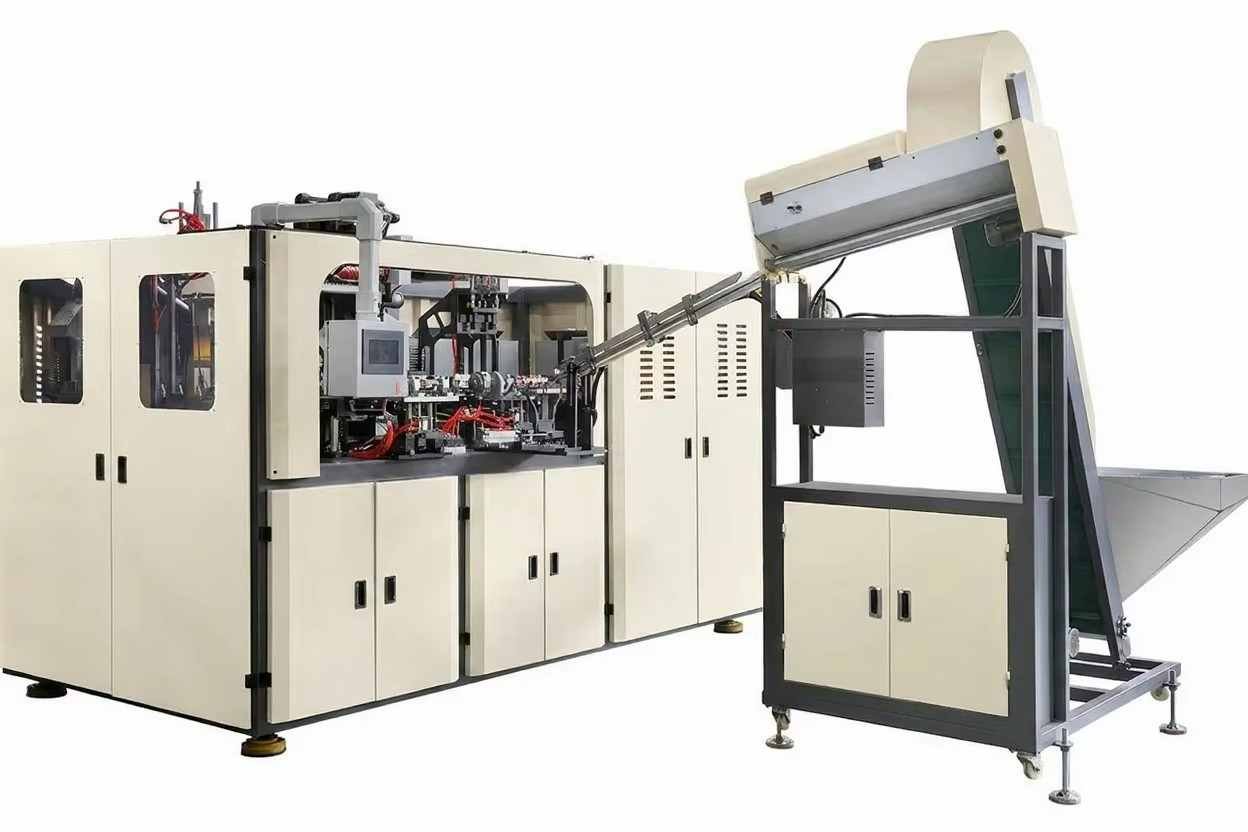
Preform Feeding & Infeed Mechanism Troubleshooting
In high-speed PET blow molding machine production, the automatic preform elevator and sorting system accounts for over 45% of unexpected minor operational stops:
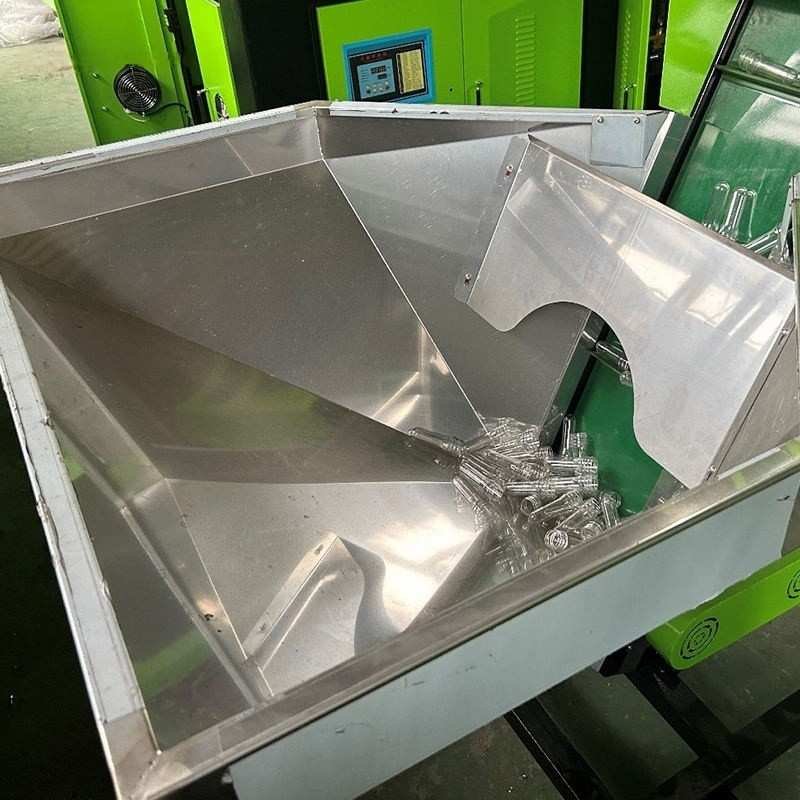
Hopper Infeed: Elevator Level Sensors & Anti-Bridging Baffles
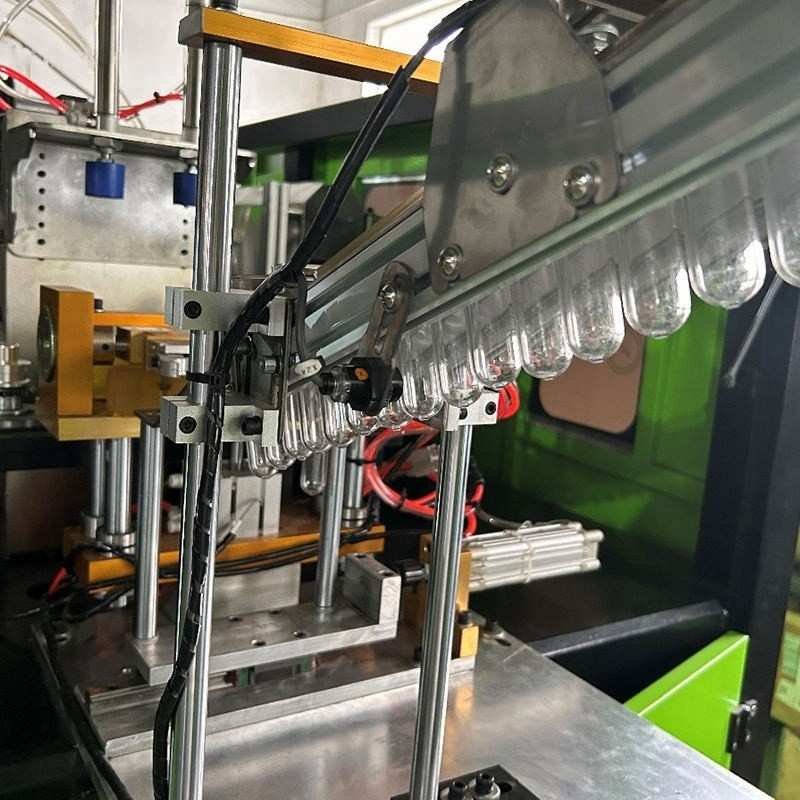
Slide Rail Track: Clearance Calibration & Photoelectric Positioning
1. Hopper Bridging and Elevator Stoppages
When preforms bridge over the elevator belt intake, the machine starves of materials, halting production. Ensure preforms are loaded in batches no larger than 75% of hopper rated volume. Inspect elevator drive chain tension monthly and check photoelectric level sensors for dust accumulation that triggers false “hopper full” alarms.
2. Slide Rail Jamming & Angle Misalignment
The gravity sorting slide rail must maintain precise neck ring clearance. If the rail gap is too wide, preforms overlap and lock; if too narrow, friction stops the descent. Calibrate track width to neck support ring diameter +0.5mm. Clean tracks daily with isopropyl alcohol to prevent electrostatic dust buildup that increases friction coefficients.
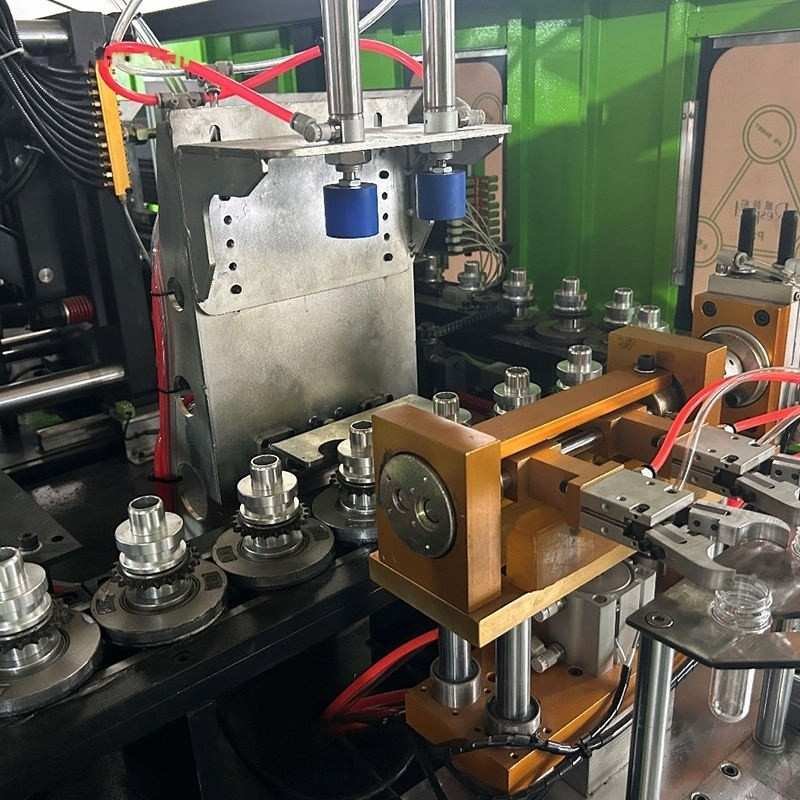
3. Star Wheel Transfer Synchronization
The loading star wheel indexes preforms into the heating spindles. A timing lag of just 20 milliseconds between the infeed pneumatic pusher and star wheel pocket causes preform neck pinching. Inspect pneumatic cylinder cushioning daily; replace worn polyurethane bumpers on mechanical transfer grippers every 6 months.
Heating Oven Diagnostics: IR Lamps, Spindles & Temperature Control
The heating oven governs polymer molecular orientation. Over 60% of bottle quality defects originate from thermal inconsistency across preform wall thickness:
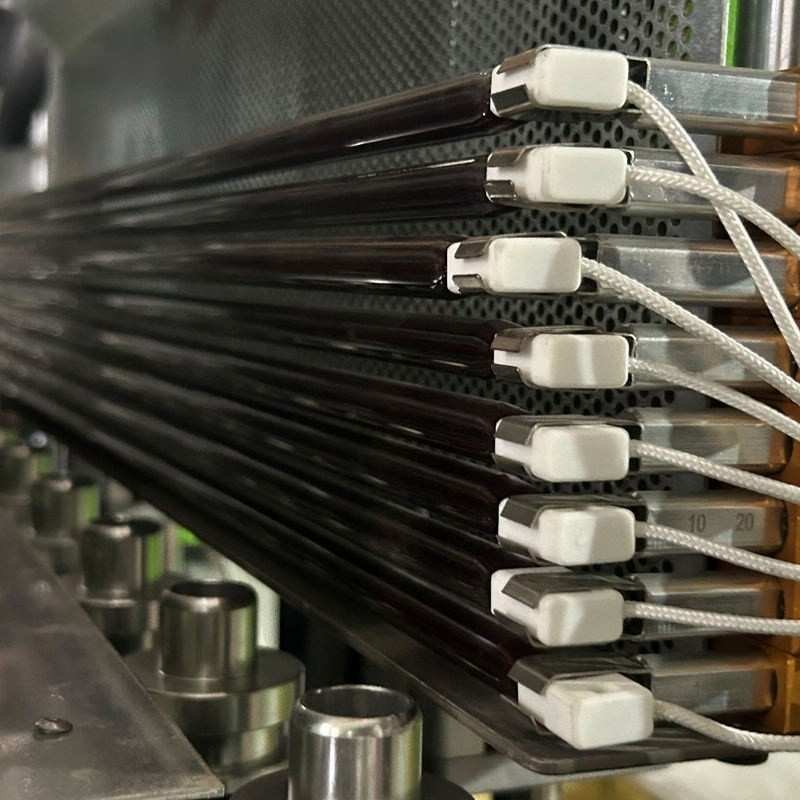
Infrared Radiant Heating: Quartz Lamp Arrays & Mirror Reflectors
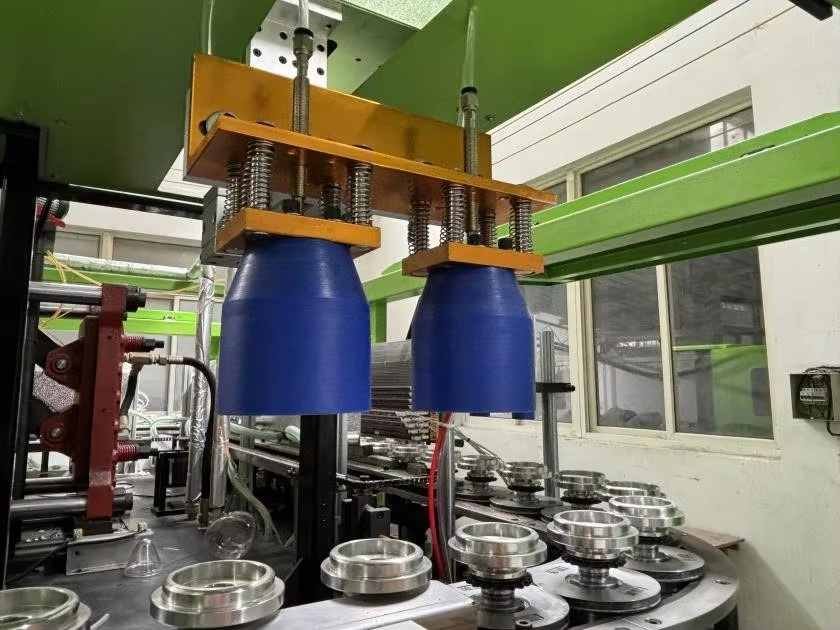
Spindle Rotation: 360-Degree Heat Uniformity & Neck Water Cooling
- Infrared Lamp Aging & Voltage Drift: Quartz short-wave IR lamps lose 8% to 12% of radiant efficiency after 5,000 operating hours. Monitor solid-state relay (SSR) outputs weekly; replace entire zone lamp sets simultaneously to maintain balanced cross-preform heating.
- Reflector Panel Cleaning: Ceramic and gold-plated reflector panels accumulate dust and vaporized oligomer residue, cutting thermal reflectance by up to 30%. Wipe reflector surfaces weekly with an ethanol-soaked lint-free cloth.
- Spindle Rotation Inspection: Preforms must rotate continuously as they travel through the oven. If a spindle bearing seizes, the preform stops rotating, cooking one side while leaving the opposite side cold. This results in severe bottle bananing (crooked bottles) and immediate mold jam-ups.
- Neck Protection Water Channel Flow: Chilled water circulating through neck shielding plates prevents radiant heat from softening preform thread finishes. Inspect chiller supply pressure daily; if cooling water temperature exceeds 18°C, thread finishes expand and distort, resulting in capping seal failures on bottling lines.
Experiencing Chronic Bottle Quality Defects or Frequent Machine Jams?
Contact Sailwin’s technical machinery service division. Send us photos of your defective containers or describe your error codes. Our senior field service engineers provide rapid remote diagnostic support and custom preventive maintenance SOPs.
Mold Cavity & High-Pressure Pneumatic Maintenance
The interface between mold cavity tooling and the pneumatic valve block dictates surface replication, cooling speed, and parting line tightness:
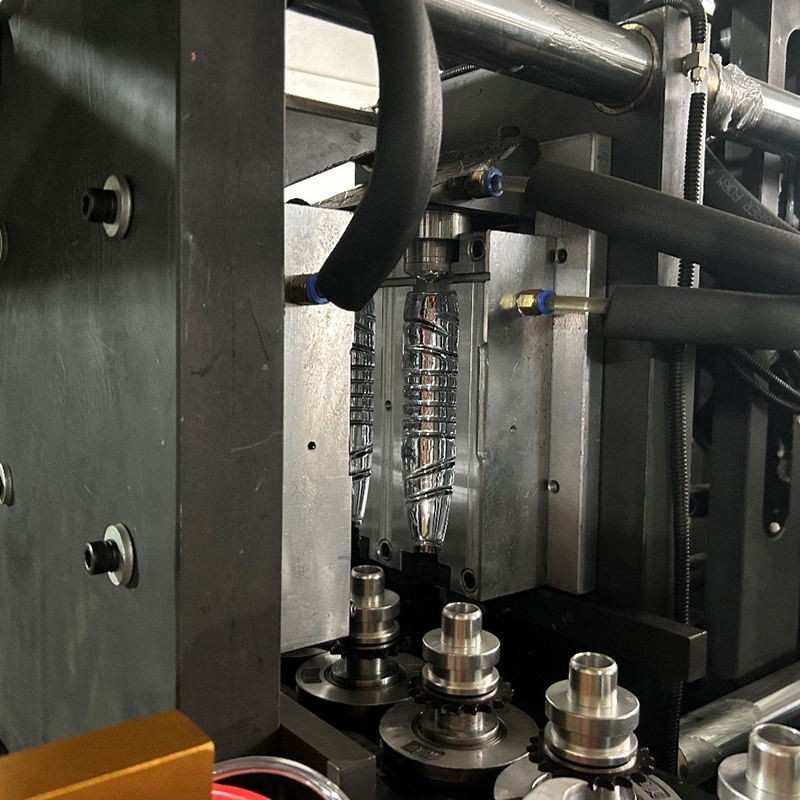
Mold Tooling: Cavity Venting & High-Flow Chilled Water Hoses
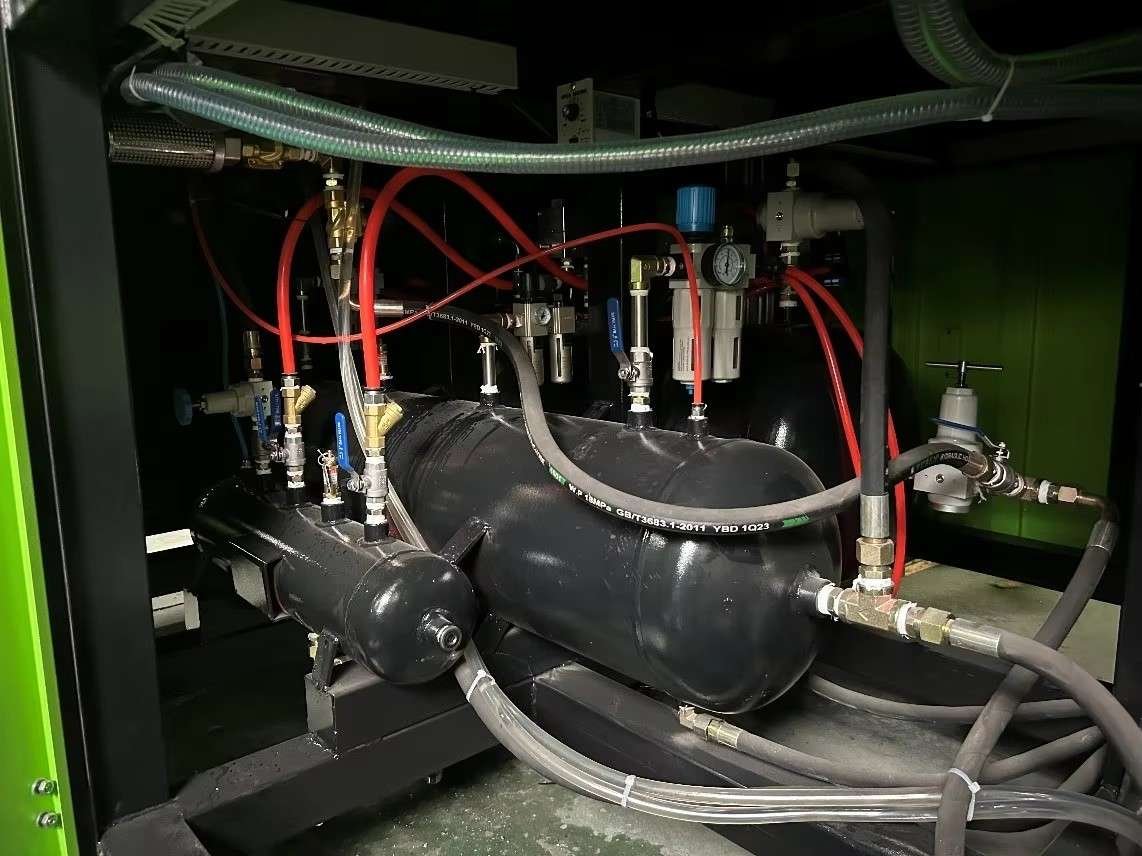
Pneumatic Valve Block: 40-Bar Solenoids & Air Recovery Circuits
1. Aluminum Mold Cavity Micro-Vent Cleaning
During high-speed blowing, atmospheric air inside the closed mold must evacuate in fractions of a second through 0.2mm micro-vent holes. Over weeks of operation, plastic additives and condensation clog these vents. When air cannot escape, it compresses into localized hot pockets, creating dented bottle sidewalls, dull surface patches, and incomplete petaloid base definition. Inspect and clear cavity vents weekly using brass wire brushes and ultrasonic solvent baths.
2. 40-Bar High-Pressure Valve Manifold Maintenance
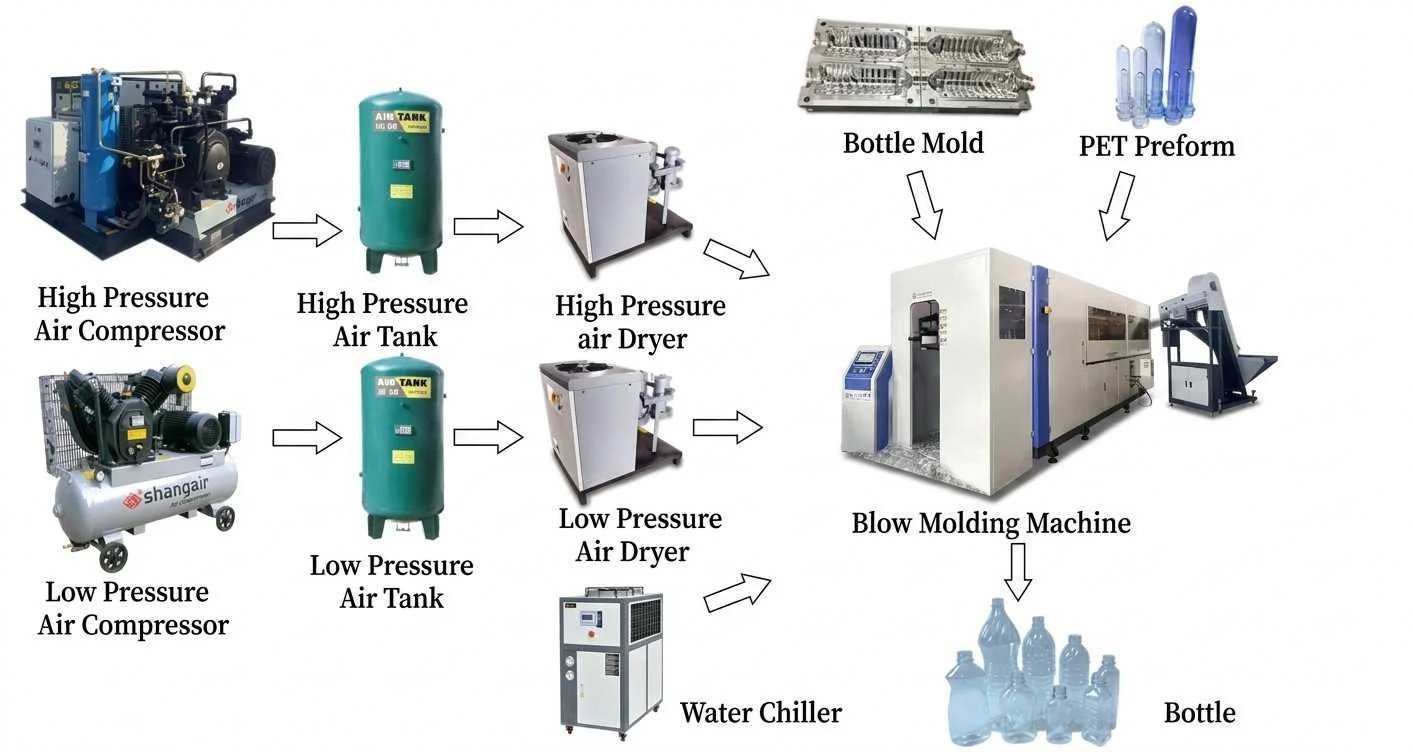
High-pressure blowing valves cycle millions of times each month under 30 to 40 bar pneumatic pressure. Infiltrating water droplets from faulty refrigerated air dryers cause valve spool corrosion and seal degradation. Inspect condensate drains on high-pressure receiver tanks daily; rebuild valve seal packs every 10 to 12 months (or ~4 million cycles) to prevent blowing pressure ramp delays that cause variable container burst strength.
Downstream Discharge, Electrical Cabinets & PLC Systems
Ensuring clean discharge onto downline conveyors while maintaining electrical health shields facilities from sudden catastrophic electronics damage:
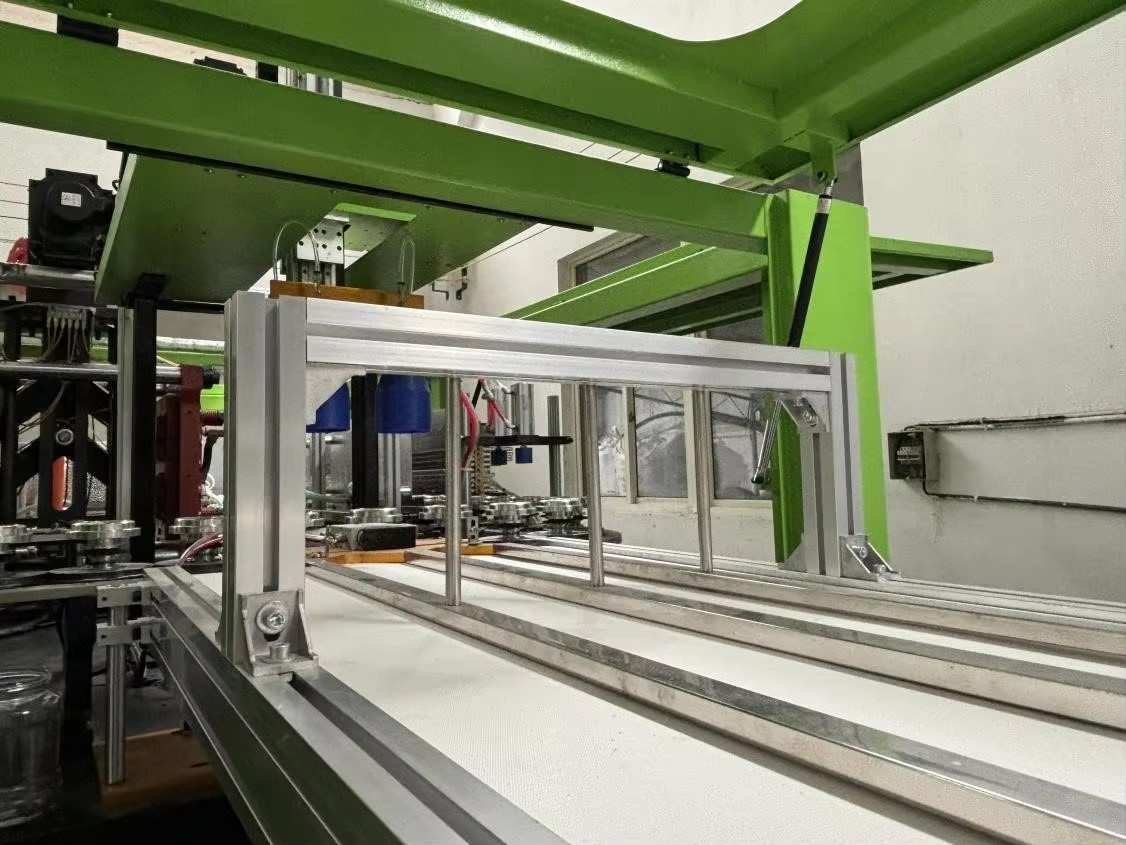
Bottle Discharge: Ejection Grippers & Air Conveyor Alignment
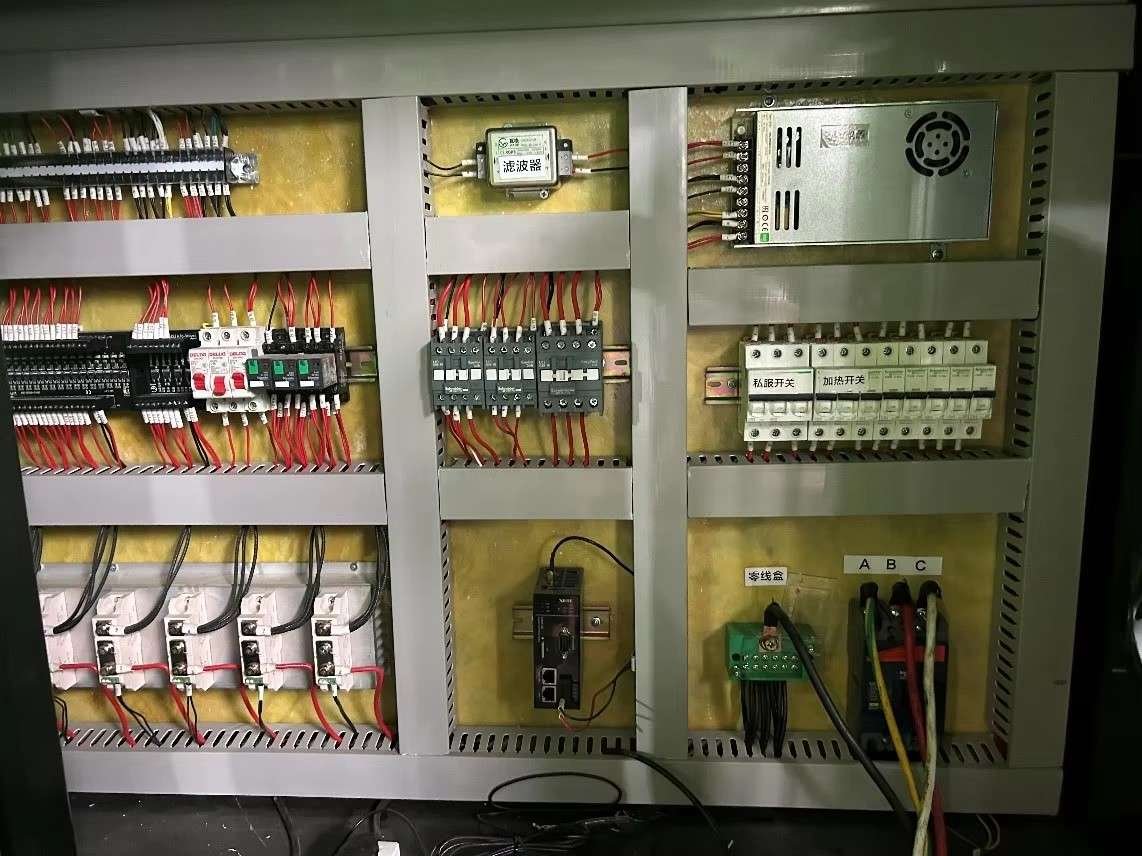
Electrical Health: Servo Drives, PLC Relays & Filter Cleaning
- Bottle Ejection Gripper Synchronization: If mechanical discharge claws release 30 milliseconds late, bottles tilt and crash into conveyor neck guides, causing bottle logjams that trip mold-safety interlocks. Calibrate gripper release stroke weekly.
- Cabinet Ventilation & Thermal Dissipation: Industrial electrical cabinets house sensitive servo inverters and PLC modules. Ambient cabinet temperatures must remain below 45°C. Clean cabinet intake air filter mats weekly; clogged filters cause internal thermal throttling, random servo inverter faults, and premature circuit board failure.
- Terminal Screw Torque Auditing: Machine vibration from high-speed toggle clamping can gradually loosen electrical terminal screws over 12 months. Conduct thermal imaging audits or torque-check terminal blocks semi-annually to eliminate high-resistance electrical hot spots.
The 15-Minute Daily Pre-Shift Maintenance Checklist
Implementing this standardized 15-minute routine before every production shift catches minor anomalies before they escalate into catastrophic line shutdowns:
| Check Sequence (15 Min) | Inspection Sub-System | Standard Operational Condition / Tolerance |
| Minutes 1 – 3 | Pneumatic Filter & Drains | Drain moisture from low/high pressure filter bowls; check operating pressures (LP: 8-10 bar; HP: 30-38 bar). |
| Minutes 4 – 6 | Chilled Water System | Verify mold chiller water supply pressure ≥ 3.5 bar; confirm supply temperature sits between 10°C and 14°C. |
| Minutes 7 – 9 | Heating Oven Lamps | Visually inspect all quartz IR lamps during pre-heating; confirm zero broken elements; check spindle free rotation. |
| Minutes 10 – 12 | Automated Lubrication | Inspect central grease pump reservoir level; verify pressure build-up on linear rail distribution manifolds. |
| Minutes 13 – 15 | Emergency Stops & Safety Doors | Test safety interlock switches on all enclosure doors; verify immediate mechanical stop upon door opening. |
Preventive Maintenance (PM) Schedule: Weekly, Monthly & Annual
| PM Frequency | Target Sub-Assembly | Mandatory Service Procedures |
| Weekly (1 Hour) | Molds & Oven Reflectors | Clean mold cavity micro-vents with brass brushes; wipe gold reflectors; vacuum electrical cabinet filter mats. |
| Monthly (4 Hours) | Drive Chains & Pneumatics | Check elevator & oven chain tension; check pneumatic valve exhaust mufflers; lubricate stretch rod linear bearings. |
| Quarterly (8 Hours) | Calibration & Seals | Check toggle clamp lock-over alignment; inspect high-pressure blow seal rings; calibrate thermocouple temperature probes. |
| Annual (Overhaul) | Comprehensive Overhaul | Replace high-pressure valve dynamic seal kits; replace entire IR lamp sets; flush mold cooling water circuits; audit PLC torque. |
When to Fix In-House vs When to Call the Machinery Supplier
- Resolve In-House: Temperature profile optimization, optical sensor realignment, conveyor guide rail clearance calibration, mold cavity vent cleaning, pneumatic filter bowl drainage, and routine grease replenishment.
- Contact OEM Supplier: PLC internal program corruption, servo motor encoder communication loss, high-pressure blowing valve manifold cracking, mold clamping platen cracking/misalignment, and multi-layer co-extrusion die head flow channel imbalance.
Representative Industrial Maintenance Benchmark: Shifting from Reactive to Preventive Care
(Representative industrial packaging benchmark based on typical multi-line bottling facility operations)
Operational Baseline: A regional beverage co-packing facility operating three linear blow molders suffered from recurring downtime averaging 8.5% of total scheduled shift hours. Nearly all stoppages were reactive emergencies: seized oven rotation spindles, blown pneumatic valve seals, and emergency mold cleanings caused by severe sidewall denting.
Standardization Implementation: The packaging plant partnered with Sailwin machinery service engineers to implement structured daily 15-minute checklists, ultrasonic weekly mold venting cleaning, and scheduled 12-month high-pressure valve rebuilds.
Benchmarked Operational Gains:
- Unplanned Downtime Reduction: Emergency line stoppages dropped from an average of ~8.5% down to under 2.2% across a 12-month evaluation cycle.
- Start-Up Quality Consistency: Morning start-up bottle defects were virtually eliminated due to standardized oven lamp pre-heating and zone calibration routines.
- Spare Part Lifecycle Extension: Scheduled dynamic seal replacements eliminated catastrophic valve blowouts, preventing secondary damage to high-pressure air receiver manifolds.
Need Original Spare Parts or On-Site Maintenance Training?
Sailwin maintains comprehensive emergency spare part kits (valves, seal rings, IR lamps, PLC modules) ready for worldwide express dispatch, backed by certified field engineering support.
Frequently Asked Questions: Blow Molding Machine Maintenance
How often should infrared quartz heating lamps be replaced?
High-quality short-wave quartz IR lamps deliver an average lifespan of 5,000 to 6,000 operational hours (approximately 10 to 12 months under 24/7 continuous operation). When radiant efficiency drops by more than 10%, or when visual inspection reveals tungsten filament sagging, replace the complete zone array simultaneously.
What is the correct compressed air quality standard for stretch blow molders?
Stretch blow molding requires dry, oil-free compressed air conforming to ISO 8573-1 Class 1.4.1. Residual moisture dew point must remain below 3°C (refrigerated dryer) or -40°C (desiccant dryer), with oil aerosol content under 0.01 mg/m³ to protect pneumatic valves from sticking.
Why do preforms bridge and jam in the storage hopper?
Hopper bridging occurs when excessive preform volume is dumped into the bin, causing gravitational interlocking, or when high ambient summer factory temperatures soften preforms slightly, increasing surface tackiness. Keep hopper fill levels below 75% and ensure ambient warehouse temperatures remain under 35°C.
How do I clean clogged mold exhaust vents without damaging aluminum tooling?
Never use steel picks, drill bits, or hardened screwdrivers, which scratch aluminum cavity surfaces and destroy parting lines. Use specialized brass-bristled wire brushes with non-corrosive plastic mold cleaner solvent, or submerge removable vent plugs in an ultrasonic cleaning bath.
What causes excessive machine vibration during mold clamping?
Clamping vibration is typically caused by worn toggle linkage brass bushings, loose tie-bar lock nuts, or misaligned hydraulic/servo deceleration profiles. Check toggle pin lubrication and verify that servo deceleration curves slow platen velocity smoothly 10mm prior to final parting line touch.
Can I use standard automotive grease on all-electric blow molding machines?
No. All-electric blow molding roller screws and linear guide blocks require high-performance, low-viscosity synthetic lithium complex grease with extreme pressure (EP) additives (or NSF H1 food-grade grease in cleanrooms). Standard heavy automotive greases cause excessive viscous drag and overload servo motors.
How do I identify a failing high-pressure blow valve?
Symptoms include sluggish high-pressure ramp times displayed on the PLC pressure curve, audible air hissing through exhaust mufflers during the blow cycle, and sudden container base petaloid under-fill across specific mold cavities. Rebuild valve dynamic seals immediately upon noticing pressure ramp delays.
How does Sailwin provide remote maintenance support for overseas clients?
Sailwin blow molding machines feature IoT-enabled PLC architectures. With customer authorization, our senior technical engineering team in China connects via secure VPN to review real-time sensor I/O logs, adjust servo kinematic profiles, diagnose error codes, and guide local technicians via live video consultation under ISO 9001 certified manufacturing quality standards.
Summary & Related Machinery Guides
Preventive maintenance is the cornerstone of profitable, high-OEE blow molding production. Executing 15-minute daily pre-shift inspections, keeping mold vents and infrared reflectors immaculate, enforcing strict pneumatic air drying standards, and adhering to quarterly valve seal rebuilds preserves container quality, eliminates costly emergency downtime, and extends equipment operational life beyond 15 years.
To further enhance your packaging plant operations, explore our engineering technical library:
- Blow Molding Machine Engineering Knowledge Hub — Sizing and operating industrial blow molding systems.
- PET Blow Molding Machine Series Catalog — Explore automatic 2-cavity to 6-cavity linear stretch platforms.
- Extrusion Blow Molding Machine (EBM) Series — Troubleshooting shuttle and accumulator extrusion lines.
- All-Electric Blow Molding Machine Series — Low-maintenance, fluidless servo platforms for cleanrooms.