Updated: 2026 Engineering Standard · By Sailwin Technical Team
Valve Gate vs. Self-Locking Preform Molds: Which Hot Runner System Delivers Better Bottle Clarity?
When purchasing multi-cavity tooling for a high-speed preform injection line, mold engineers face a critical tooling architecture decision: should you specify pneumatic needle valve-gate nozzles or thermal self-locking gate systems? While both designs eliminate cold runner scrap by maintaining molten polymer throughout the hot runner manifold, they produce radically different gate vestige finishes, maintenance downtime, and cycle time limits.
In high-speed mineral water and carbonated beverage bottling, an unoptimized gate pip causes severe preform stringing, gate cracking, and bottom blowouts on downstream PET water bottle blowing machines.
This technical analysis deconstructs hot runner metallurgy, shutoff mechanics, gate cooling hydraulics, and maintenance payback across 8-cavity to 72-cavity tooling running on Sailwin SW-P preform injection systems.
Key Engineering Takeaways
- Zero-Vestige Surface Finish: Valve-gate molds feature pneumatic piston-actuated needle shutoff pins that mechanically cut the gate flush with the preform base, leaving a virtually invisible gate pip (<0.2mm) with zero stringing.
- Self-Locking Alignment Precision: Self-locking taper interlocks mechanically center each core within its matching cavity sleeve before clamp lockup, preventing preform wall thickness eccentricity (<0.05mm).
- Cycle Time Advantage: Valve-gate systems allow larger nozzle orifices that fill cavities 20% faster, cutting total molding cycle times by 1.5 to 2.5 seconds per shot.
Need Custom Preform Mold Engineering & Cavity Layouts?
Submit your container drawing (neck finish & gram weight) for free 3D mold layout simulation and factory-direct pricing.
1. Technical Comparison: Valve Gate vs. Thermal Self-Locking Molds
Tooling Engineering Rule: For water preforms where cycle time is paramount (<12s), valve gate is mandatory. For wide-mouth jars or low-volume startups, self-locking hot runner systems offer lower maintenance barriers.
Review the engineering differences between both hot runner architectures:
| Engineering Parameter | Pneumatic Valve-Gate System | Thermal Self-Locking System | Impact on Production |
|---|---|---|---|
| Gate Shutoff Method | Mechanical needle pin driven by pneumatic piston | Thermal thermal freeze-off controlled by tip temperature | Valve gate produces zero plastic hairs or gate stringing. |
| Gate Vestige Height | Smooth flat pip (< 0.2mm) | Raised teardrop nub (0.8mm – 1.8mm) | Valve gate prevents preform bottom puncture in packaging. |
| Cavity Fill Speed | Fast (large orifice 1.8mm – 2.5mm) | Moderate (restricted orifice 0.8mm – 1.2mm) | Valve gate fills 20% faster with lower polymer shear heat. |
| Tooling Initial Cost | Higher ($15,000 – $45,000 for 24–48 cavities) | Lower ($10,000 – $28,000 for 24–48 cavities) | Valve gate requires air manifold and valve cylinders. |
| Maintenance Complexity | Requires piston seal checks every 1M cycles | Simpler (no moving pins inside nozzles) | Self-locking tips require less pneumatic maintenance. |
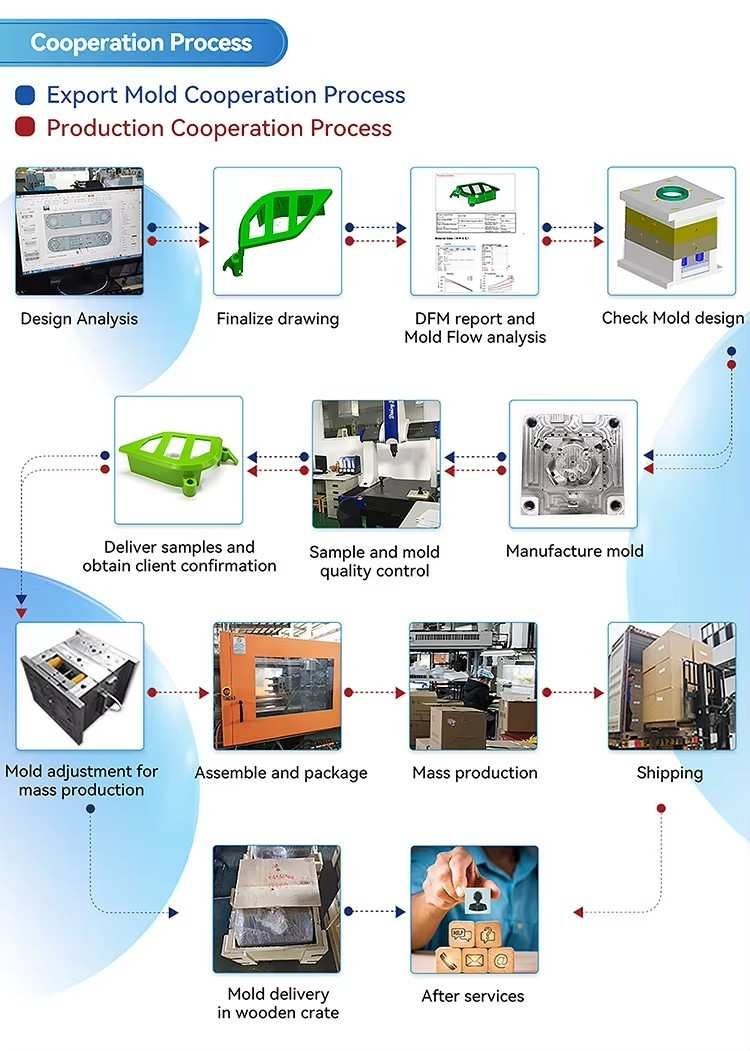
Sailwin Customer Case Study: Beverage Co-Packer Slashes Preform Gate Rejection from 3.2% to 0.05%
How a high-volume bottler in Mexico replaced thermal-gate molds with a Sailwin 32-cavity valve-gate preform system.
- Thermal-gate preforms suffered from sharp gate nubs that punctured adjacent preforms during bulk bin shipping.
- High preform stringing caused blow molder stretch rods to misalign and pierce bottle bases.
- Frequent tip nozzle clogging required weekly mold tear-downs.
- Supplied Sailwin 32-cavity valve-gate preform mold engineered from imported ASSAB S136 stainless steel.
- Integrated synchronized dual-piston pneumatic air manifolds for instantaneous pin closure.
- Configured independent multi-zone PID hot runner temperature controllers.
- Gate vestige reduced to a smooth 0.15mm flat pip with zero stringing.
- Downstream blow molder base-puncture scrap dropped to 0.05%.
- Maintenance intervals extended from 7 days to over 90 days of continuous operation.
Data source: Sailwin Tooling Performance Log & Customer Field Audit, 2026.
Frequently Asked Questions
SAILWIN MACHINERY · FACTORY-DIRECT PACKAGING SYSTEMS
Upgrade to High-Speed Valve-Gate Preform Tooling
Sailwin manufactures high-precision S136 stainless steel preform molds from 8 to 72 cavities. Guaranteed sub-0.05mm concentricity and 5-million cycle warranty.
Explore Integrated Packaging Machinery on Sailwin:
• PET Preform Injection Molding Machine – High-speed 140T to 550T systems for multi-cavity bottle preform lines.
• PET Water Bottle Blowing Machine – Linear automatic servo stretch blow molding equipment.
• Liquid Filling Machine & Bottling Line – 3-in-1 rotary monoblocs for drinking water and beverage factories.
• HDPE Extrusion Blow Molding Machine – Industrial continuous blow molding systems for jerrycans and drums.
• Need technical plant advice? Contact our engineering team for free turnkey consultation.