Updated: 2026 Engineering Standard · By Sailwin Technical Team
Sanitary SUS304 vs. SUS316L Stainless Steel in Beverage Machinery: When is 316L Essential?
In food, beverage, and pharmaceutical packaging machinery, the metallurgical integrity of product-contact surfaces directly determines product safety and equipment longevity. While visually identical when mirror-polished, specifying the wrong stainless steel alloy across filling valves, product holding tanks, and manifold piping leads to microscopic pitting corrosion, metal ion leaching, and catastrophic weld cracking during aggressive Clean-in-Place (CIP) chemical wash cycles.
Equipment buyers frequently encounter machinery quotes offering “all-stainless steel construction” without specifying the alloy grade. On Sailwin liquid filling production lines, understanding the critical metallurgical distinction between austenitic SUS304 and molybdenum-fortified SUS316L is essential for capital asset protection.
This engineering metallurgical guide compares chemical compositions, pitting resistance equivalent numbers (PREN), acid corrosion limits, and sanitary welding standards to guide equipment specifications.
Key Engineering Takeaways
- Molybdenum Makes the Difference: SUS316L contains 2.0% to 3.0% Molybdenum and low carbon (<0.03%), providing dramatic resistance to chloride-induced pitting corrosion and harsh sanitizing chemicals.
- Application Rule of Thumb: SUS304 is the global gold standard for purified mineral water, cleanroom frames, and external carousels. SUS316L is strictly mandatory for acidic fruit juices (pH < 4.0), carbonated sodas with phosphoric acid, and pharmaceutical liquids.
- Surface Ra Roughness: Sanitary stainless steel must be electropolished to Ra < 0.4μm to eliminate microscopic fissures where bacteria (such as Biofilm, E. coli, or yeast) can anchor.
Need Metallurgy Specifications for Your Beverage Project?
Submit your liquid chemical parameters (pH, chlorides, pasteurization temp) for tailored stainless steel alloy selection.
1. Chemical Composition & Mechanical Comparison: SUS304 vs. SUS316L
Sanitary Law: Chlorides and hot acids attack standard 304 stainless steel grain boundaries; 316L’s molybdenum barrier prevents crevice pitting during hot caustic CIP washes.
Review the chemical composition and corrosion resistance benchmarks below:
| Metallurgical Property | SUS304 (AISI 304 / 1.4301) | SUS316L (AISI 316L / 1.4404) | Sanitary Performance Impact |
|---|---|---|---|
| Chromium (Cr) % | 18.0% – 20.0% | 16.0% – 18.0% | Forms passivated protective chromium oxide (Cr₂O₃) layer. |
| Nickel (Ni) % | 8.0% – 10.5% | 10.0% – 14.0% | Higher nickel stabilizes austenitic crystal matrix. |
| Molybdenum (Mo) % | 0.0% (None) | 2.0% – 3.0% | Molybdenum dramatically halts chloride pitting corrosion. |
| Carbon (C) Max % | 0.08% Max | 0.03% Max (Extra Low Carbon) | Low carbon prevents carbide precipitation during welding. |
| PREN Pitting Index | 18.0 – 20.0 | 23.0 – 25.5 | Higher PREN number ensures superior chemical wash resistance. |
| Cost Differential | Baseline (1.0×) | Approx. 25% – 35% higher material cost | 316L is used specifically on product-wetted valve paths. |
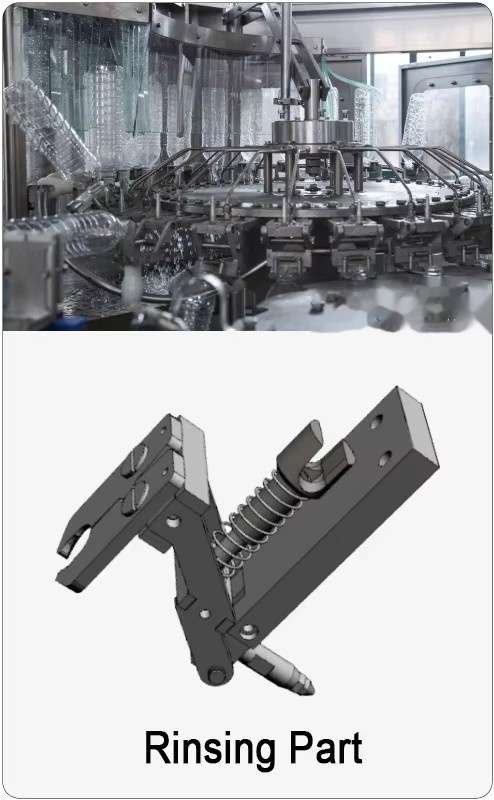
Sailwin Customer Case Study: Juice Producer Eliminates Valve Pitting Corrosion with SUS316L Retrofit
How a commercial apple and citrus juice factory solved recurring filling valve pinhole leaks by upgrading to Sailwin SUS316L metallurgy.
- Older filler using standard 304 valves developed microscopic pinhole leaks after 14 months of daily hot nitric acid CIP wash.
- Metal ion tests detected trace nickel leaching into juice batches.
- Frequent unscheduled shutdowns to weld and re-machine damaged valve seats.
- Replaced filling carousel manifold and all 24 valves with Sailwin electropolished SUS316L sanitary components.
- Executed automated orbital TIG welding with argon gas backing to eliminate interior weld burrs.
- Standardized internal surface roughness to mirror Ra 0.28μm finish.
- Pitting and crevice corrosion completely eradicated across 3 years of hot CIP washes.
- Beverage safety audits verified zero heavy metal ion migration.
- Machine sanitary compliance certified to international 3-A and FDA standards.
Data source: Sailwin Quality Control Metallurgical Lab Report & Client Sanitation File, 2026.
Frequently Asked Questions
SAILWIN MACHINERY · FACTORY-DIRECT PACKAGING SYSTEMS
Build Sanitary, Certified Bottling Plants with Sailwin
Sailwin manufactures fully certified sanitary filling monoblocs with SUS304/316L dual-inspection certificates and orbital sanitary welding.
Explore Integrated Packaging Machinery on Sailwin:
• PET Preform Injection Molding Machine – High-speed 140T to 550T systems for multi-cavity bottle preform lines.
• PET Water Bottle Blowing Machine – Linear automatic servo stretch blow molding equipment.
• Liquid Filling Machine & Bottling Line – 3-in-1 rotary monoblocs for drinking water and beverage factories.
• HDPE Extrusion Blow Molding Machine – Industrial continuous blow molding systems for jerrycans and drums.
• Need technical plant advice? Contact our engineering team for free turnkey consultation.