Updated: 2026 Sizing Guide · By Sailwin Technical Team
Automatic vs. Semi-Automatic Bottle Blowing Machine: Sizing for Startups & Scale
When starting a bottled water plant, edible oil facility, or beverage company, deciding between a low-cost semi-automatic blower and a modern fully automatic blow molding machine is a defining operational fork in the road. While semi-automatic machines attract budget-conscious entrepreneurs with lower upfront price tags, they introduce severe hidden costs: high manual labor dependencies, inconsistent heating cycles, operator fatigue, and excessive scrap rates that cripple downstream automated filling lines.
Sailwin manufactures both precision semi-automatic blowers (including dedicated 5-gallon drum systems) and high-speed linear automatic platforms. We help factory owners conduct rigorous 3-year Total Cost of Ownership (TCO) calculations, demonstrating how automated preform elevators and robotic transfer grippers pay for themselves in months.
This technical sizing guide evaluates labor overhead, cycle time repeatability, hygiene standards, and capital expenditure across semi-automatic and fully automatic stretch blowers.
Key Takeaways
- Labor Savings Erases Price Gap in 5 Months: Running a semi-auto machine requires 2 operators per shift ($18,000-$24,000 annual wages); an automatic machine runs unmanned, saving more than the equipment price delta within half a year.
- Quality & Scrap Rate Discrepancy: Inconsistent manual preform transfer times cause thermal drift and high scrap rates (4.5% vs <0.2% on automatic servo blowers).
- Cleanroom Inline Hygiene: Automatic blowers connect directly to air conveyors and monoblock fillers, eliminating secondary dust contamination from manual bagging.
Evaluating whether to start with semi-auto or fully automatic blowers?
Sailwin engineers will model your daily production targets and calculate exact labor and electricity payback.
1. Comprehensive Technical & Operational Comparison
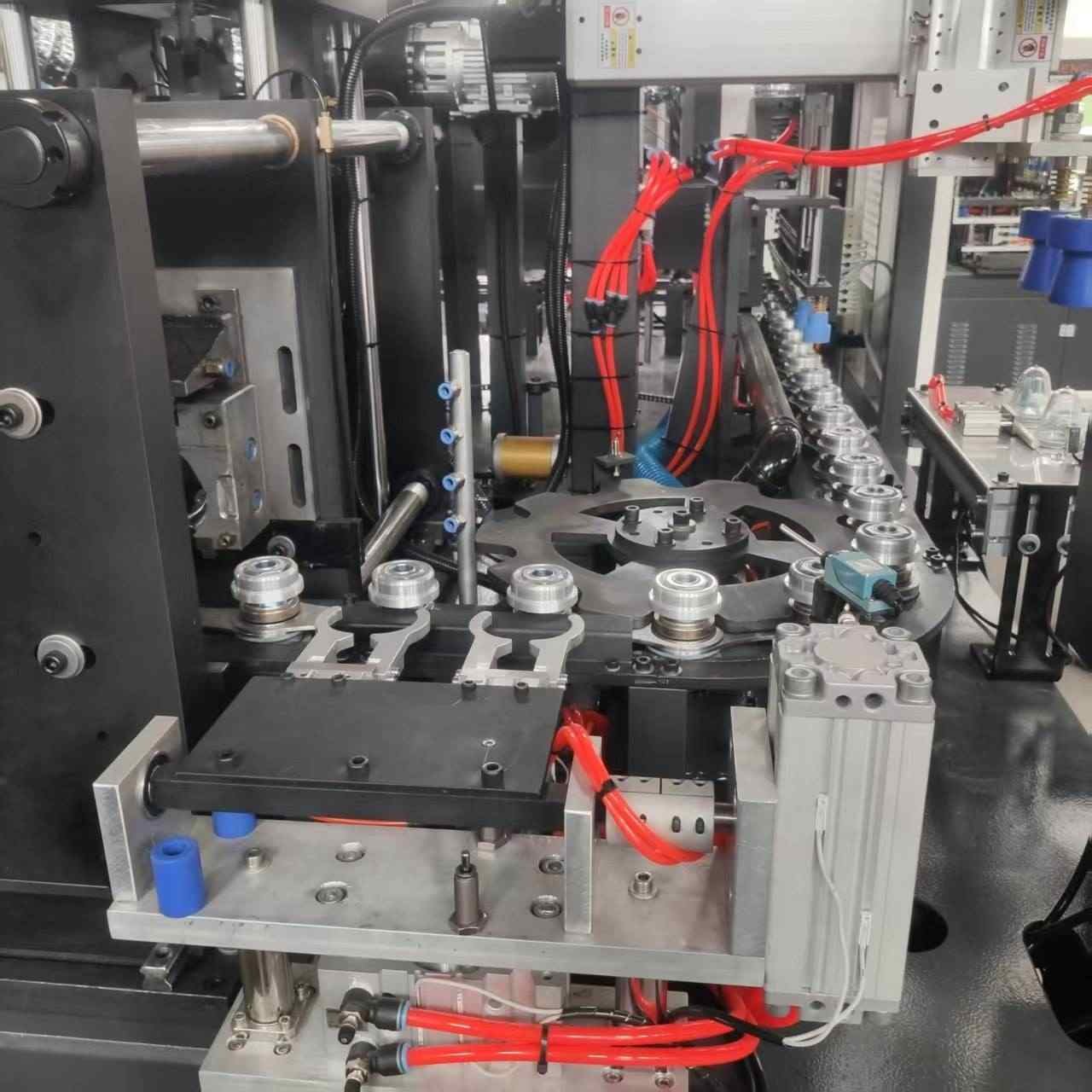
In semi-automatic blow molding, the operator is the clock. Human fatigue over an 8-hour shift introduces 1 to 3 seconds of preform cooling variance, causing pearlescence and wall thickness defects.
| Feature | Semi-Automatic Blower | Fully Automatic Linear Blower |
|---|---|---|
| Production Speed | 800 – 1,200 BPH | 2,000 – 12,000 BPH |
| Labor Requirement | 2 Dedicated Workers per Shift | 0.2 Man (Unmanned continuous run) |
| Scrap / Defect Rate | 3.5% – 6.0% (Human transfer delay) | < 0.2% (Servo precision) |
| Hygiene & Cleanliness | Manual handling; requires offline storage | 100% Closed cleanroom inline feed |
| Initial Equipment Price | $15,000 – $22,000 (Low entry) | $28,000 – $58,000 |
Explore our complete machinery line on our main PET blow molding machine catalog, or review detailed price models in our blow molding machine cost guide.
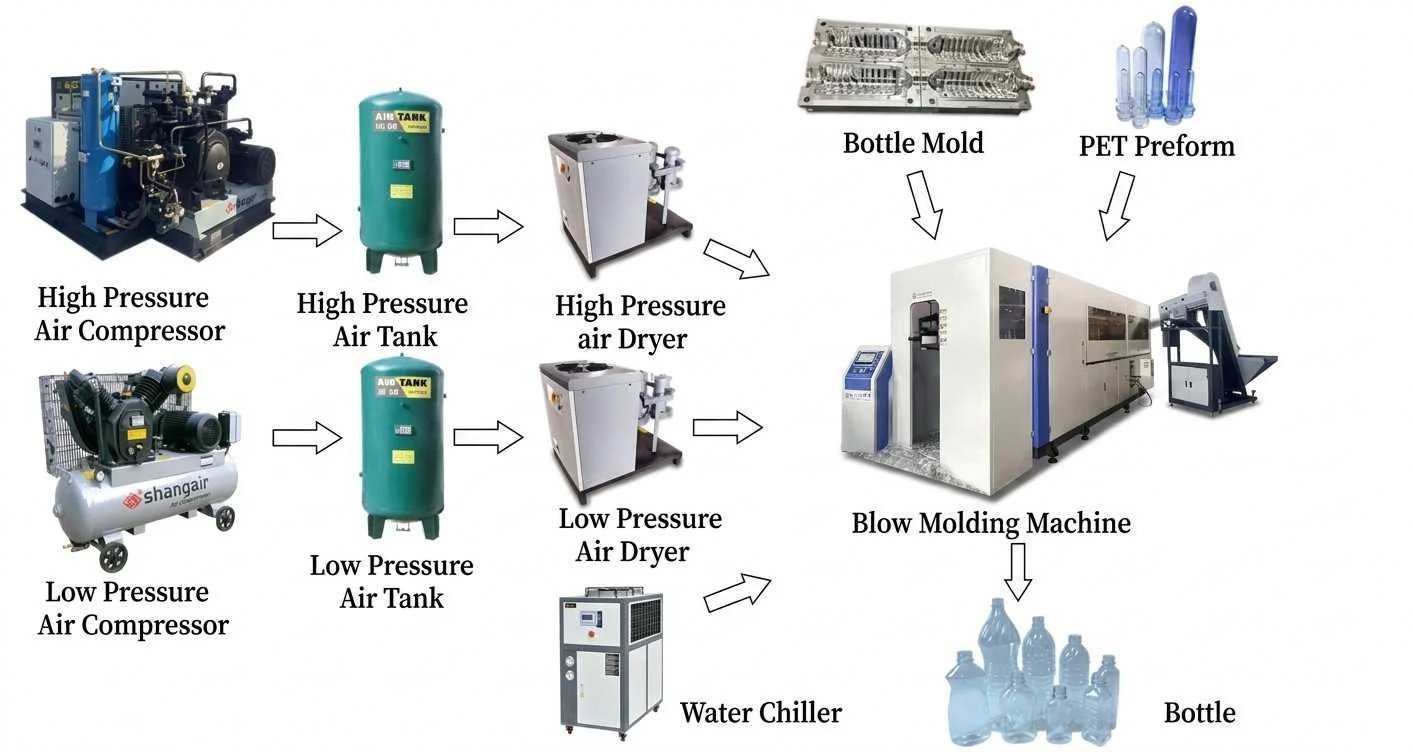
Need help sizing your compressor and electrical requirements?
Our technical team will review your local factory power specs and provide an auxiliary sizing blueprint.
2. Sailwin Case Study: Beverage Startup Cuts Annual Labor by $36,000
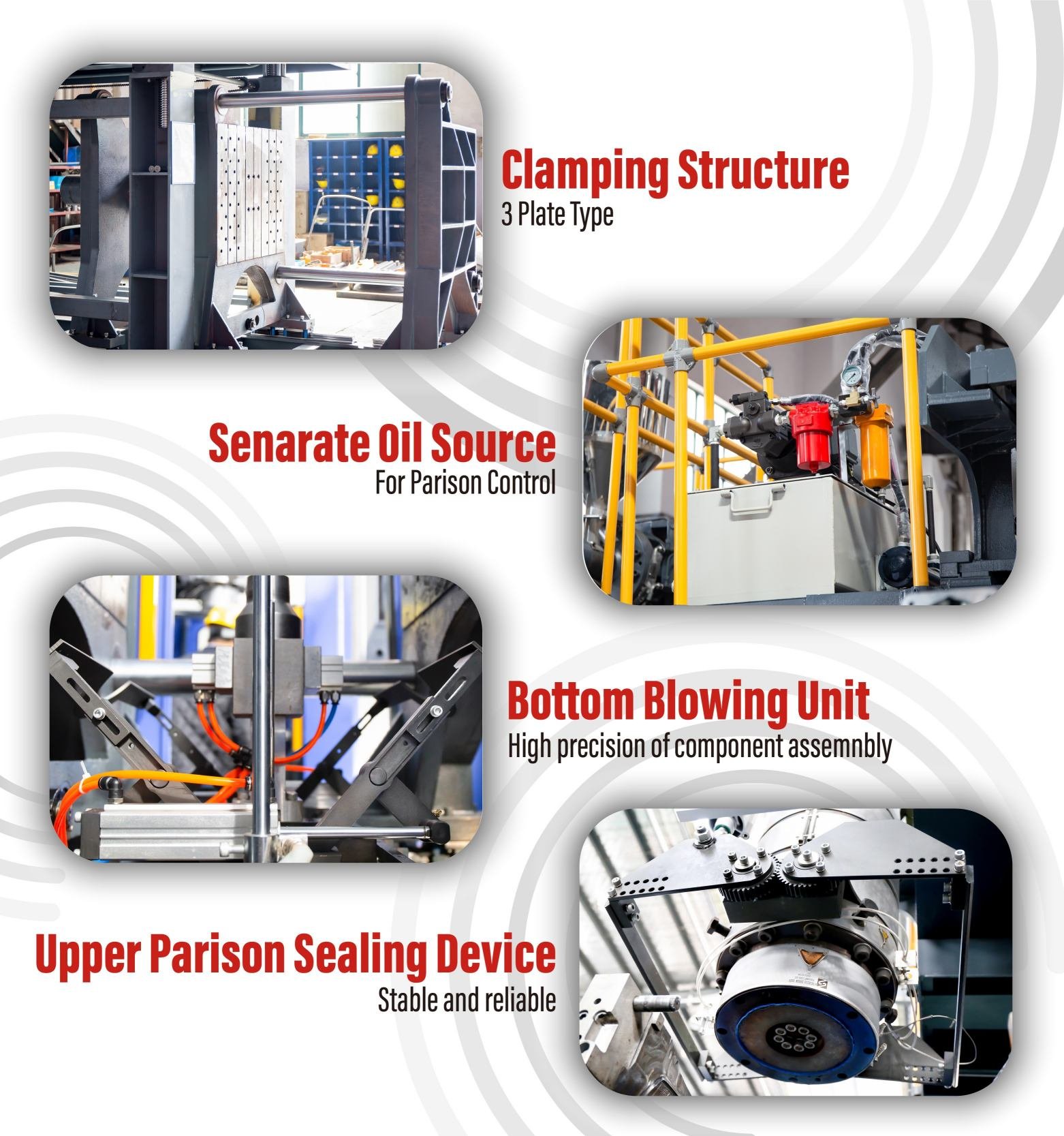
A water packaging enterprise in Nigeria replaced two semi-automatic 2-cavity blowers with a single Sailwin 4-cavity linear automatic system, tripling output while cutting operator count from 4 to zero.
- Client: Packaged water startup running two 2-cavity semi-automatic blowers across two shifts.
- Problem: Employed 4 full-time workers per shift (8 workers total) to load ovens and molds; labor cost exceeded $3,000/month.
- Defect Toll: 5.2% scrap rate due to operators hesitating when inserting preforms, causing cold stretch bottle haze.
- Automation Upgrade: Commissioned Sailwin SW-4A 4-cavity automatic linear blow molder (4,500 BPH).
- Material Handling: Integrated auto-elevator and unscrambler feeding preforms into continuous infrared quartz oven.
- Inline Transfer: Connected blower discharge starwheel directly to an air conveyor feeding an automated 16-16-5 filler.
- Labor Slashed: Shifted 8 operators to warehouse distribution, eliminating $36,000 in direct annual packaging wages.
- Output Tripled: Daily bottle production jumped from 14,000 bottles to 42,000 bottles in a single 10-hour shift.
- Scrap Plummeted: Defect rate dropped from 5.2% to 0.12%, saving $14,500 in wasted PET preforms annually.
Data source: Sailwin Customer Operations File #NIG-2025-02. Equipment: SW-4A 4-Cavity Linear Automatic Blowing Line.
Ready to automate your bottle blowing production floor?
Send us your target bottle sizes and daily production goals for an automated line proposal.
3. Frequently Asked Questions: Automatic vs. Semi-Automatic Blowers
Have questions on automated preform feeding or machine speeds?
Connect directly with Sailwin’s automation engineers on WhatsApp for instant technical advice.
4. Summary: Scaling Toward Automated Packaging
While semi-automatic bottle blowers serve niche prototyping needs, investing in a fully automatic blow molding machine is the single most impactful step toward reducing labor costs, eliminating packaging defects, and building a scalable commercial beverage brand.
- Choose fully automatic machines to eliminate human transfer delays and keep scrap below 0.3%.
- Link automatic blowers directly to air conveyors for 100% sterile, untouched bottle handling.
- Partner with Sailwin for turnkey blow molding automation, factory layouts, and rapid-payback equipment.
SAILWIN MACHINERY · PACKAGING AUTOMATION
Ready to Upgrade from Manual to Automated Blowing?
Send us your current monthly bottle output and labor staffing levels. Our packaging engineers will prepare a customized automation blueprint and ROI payback analysis within 24 hours.
Explore Complete PET Packaging Solutions:
• PET blow molding machine – Comprehensive catalogue of linear and rotary stretch blowers.
• pet blow molding machine cost guide – Complete 2026 pricing and auxiliary breakdown.
• linear vs rotary blow molding machine – Output capacity and changeover comparison.
• contact our engineering team – Request customized machinery blueprints and quotations.
• Need dedicated technical advice? Contact our machinery specialists for a 1-on-1 equipment evaluation.