When searching for an industrial PET blow molding machine price in 2026, equipment buyers encounter one of the most confusing pricing spectrums in modern packaging machinery. A single inquiry for an automatic 4-cavity linear blow molding machine can yield supplier quotes ranging from $14,000 to over $45,000 from Chinese manufacturers, and upwards of $120,000 from European builders. Why does such an extreme pricing spread exist for machines that claim identical hourly bottle outputs?
In B2B machinery procurement, the lowest initial quote frequently conceals catastrophic long-term operational liabilities. Low-cost machines often cut corners by substituting generic electrical components, utilizing recycled scrap iron castings, omitting preform neck water cooling, and excluding essential auxiliary equipment from the quotation. This comprehensive 2026 price guide demystifies industrial blow molder cost structures, breaking down the 5 engineering factors that drive equipment pricing, analyzing Mitsubishi versus domestic PLC control system economics, and providing an apples-to-apples quotation evaluation checklist to protect your capital investment.
| Machine Class & Cavity Setup | Rated Output (500ml) | 2026 Factory Price Range (FOB) | Key Engineering Features |
| Semi-Automatic 2-Cavity (Manual Load) | 800 – 1,000 BPH | $7,500 – $11,000 | Rotary infrared heater, pneumatic clamping, entry-level startup |
| Semi-Automatic 4-Cavity (Manual Load) | 1,600 – 2,000 BPH | $11,500 – $15,500 | Dual heating tunnels, hydraulic clamping option, medium volume |
| Full Automatic 2-Cavity Linear | 2,000 – 2,500 BPH | $16,000 – $22,500 | Auto preform elevator, pneumatic/servo stretch, 28mm-38mm neck |
| Full Automatic 4-Cavity Linear Servo | 4,500 – 6,000 BPH | $26,000 – $36,000 | Full servo electric drive, air recycling ready, high thermal efficiency |
| Full Automatic 6-Cavity High-Speed | 8,500 – 10,000 BPH | $42,000 – $58,000 | High-speed rotary kinematics, integrated air recovery (ARS), multi-zone SWIR |
| 5-Gallon Large Jug Semi-Auto | 80 – 120 BPH | $18,000 – $28,000 | Heavy nodular platen, 700g preform heater, 55mm neck tool kit |
Why Two “Identical” Machines Differ by 40% to 60% in Price
On equipment marketplace listings, two machines may carry identical headline specifications: “Automatic 4-Cavity PET Blow Molding Machine, 5,000 BPH.” Yet, one supplier quotes $18,000 while another quotes $32,000. This pricing gap is not arbitrary margin markup — it represents fundamental differences in component quality, structural durability, cycle repeatability, and operational longevity.
When you purchase an industrial PET blow molding machine, you are investing in a machine that must cycle under 30+ bar pneumatic pressure over 40 times per minute, 16 hours a day, 300 days a year. Five critical engineering factors govern why machine costs vary so drastically:
Factor 1: Cavity Count, Mold Material & Pneumatic Valve Architecture
The core of every blow molder is its mold clamping and valve block assembly. Increasing cavity count from a 2-cavity machine to a 4-cavity blow molding machine doubles platen surface area, requiring more than double the structural clamping tonnage to prevent mold parting line flash under 35-bar blow expansion.
Mold Material: Aviation 7075 Aluminum vs Low-Grade Steel
- Aviation-Grade 7075-T6 Aluminum ($3,500 – $6,000 per 4-cavity mold): High thermal conductivity permits circulating chilled water (8°C) to freeze molten PET plastic in 0.6 seconds. Molds feature hard anodized surface treatments resisting over 5 million cycles without parting line erosion.
- Budget Carbon Steel or 6061 Aluminum ($1,200 – $2,200 per mold): Poor thermal transfer slows cycle times by 20% to 35%, while lower surface hardness results in premature parting line wear and sharp, jagged bottle parting seams within 12 months.
Pneumatic Valves: German/Japanese Valves vs Generic Clones
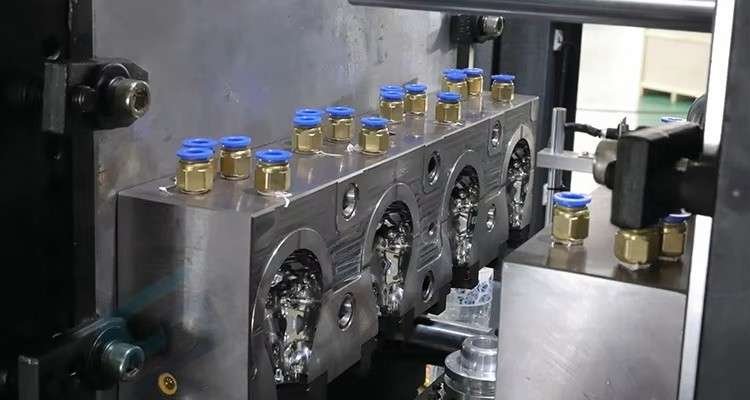
High-speed blowing requires high-flow, instant-response directional valves. Premium manufacturers utilize authentic Festo (Germany) or SMC (Japan) high-pressure valve manifolds that maintain 10-millisecond response repeatability across 10 million cycles. Budget builders substitute unbranded domestic valve copies that cost 70% less upfront, but suffer from internal seal leakage within 6 months, causing fluctuating blow pressure and localized bottle thin spots.
Factor 2: Level of Automation (Preform Handling & Unscrambler Elevators)
A major cost differentiator between semi-automatic and fully automatic PET blow molding machine configurations is the automated preform feeding mechanism. In a semi-automatic line, operators manually insert preforms onto rotary heating mandrels and hand-transfer heated preforms into the mold. While equipment capital costs are low ($8,000 – $14,000), recurring labor expenditure across two shifts can easily exceed $25,000 per year.
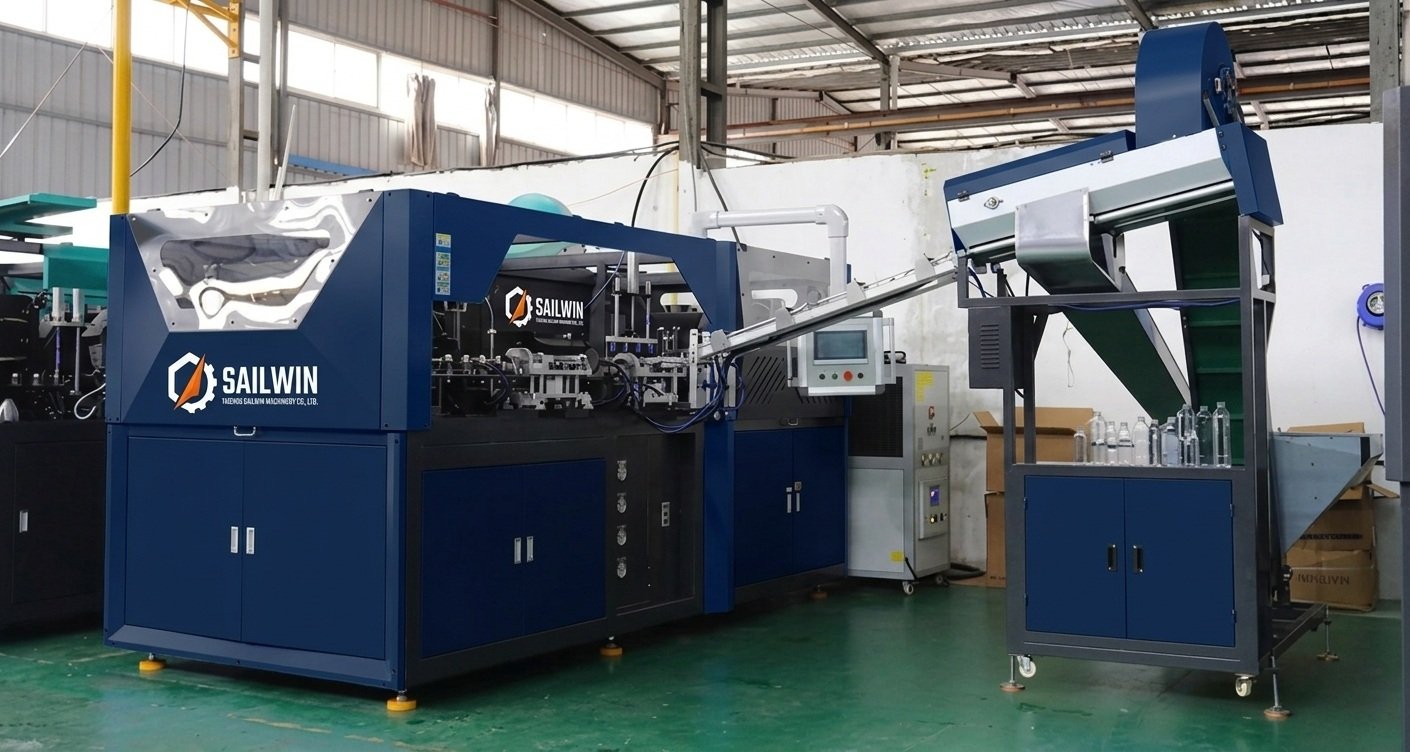
In contrast, full automatic systems integrate floor-level bulk preform hoppers, vertical cleated elevators, twin-roller unscramblers, and multi-axis mechanical transfer arms. This automated feeding architecture adds $8,000 to $14,000 to initial capital costs, but completely eliminates human contact, safeguards bottle hygiene, and permits a single technician to oversee multiple production lines simultaneously.
Evaluating an Equipment Proposal and Unsure About Component Quality?
Send us your competitive machine quote or bill of materials. Our packaging machinery specialists perform a line-by-line component audit identifying cut corners, missing auxiliaries, and real 5-year operating costs.
Factor 3: Control System Architecture: Tier-1 Mitsubishi vs Standard Domestic PLC
The electrical control cabinet is the brain of the blow molding cell. In today’s market, buyers typically choose between two primary control configurations:
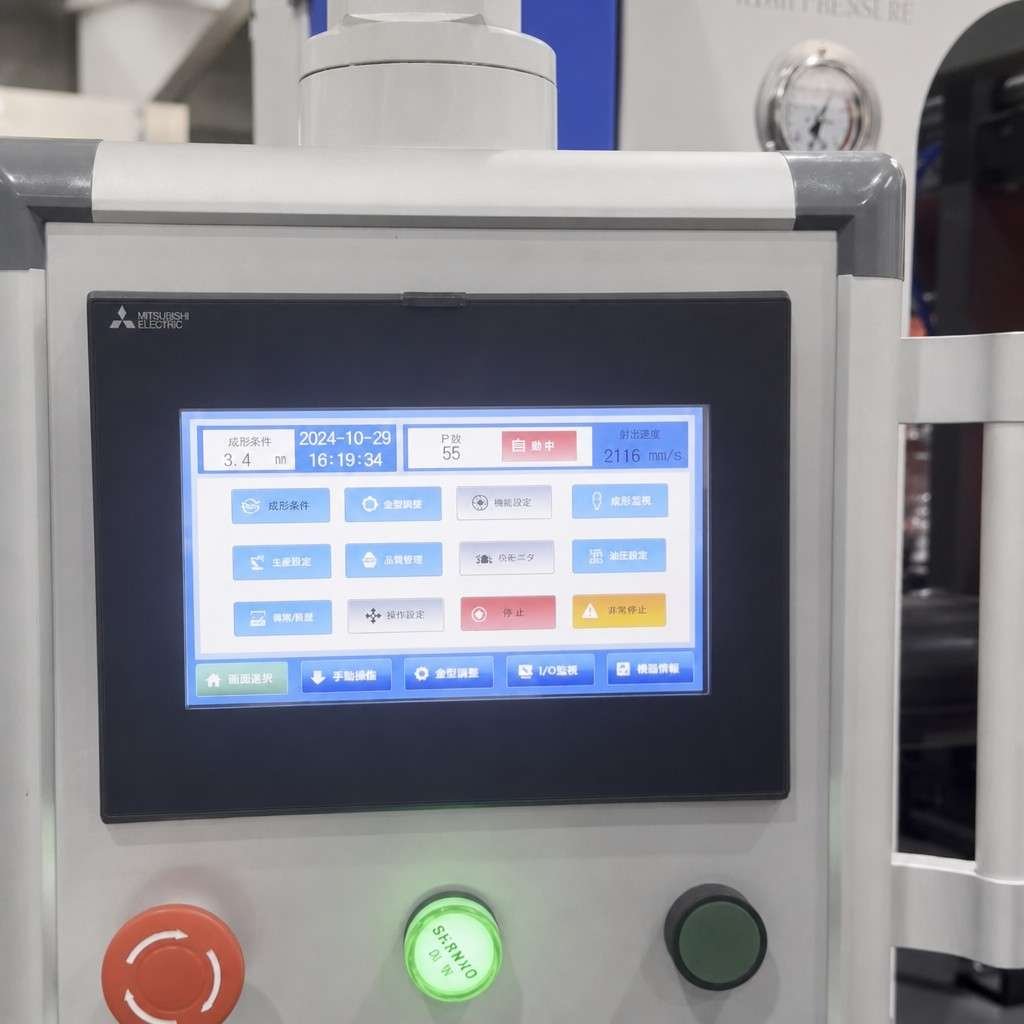
Option A: Premium Tier-1 Mitsubishi PLC & HMI Architecture
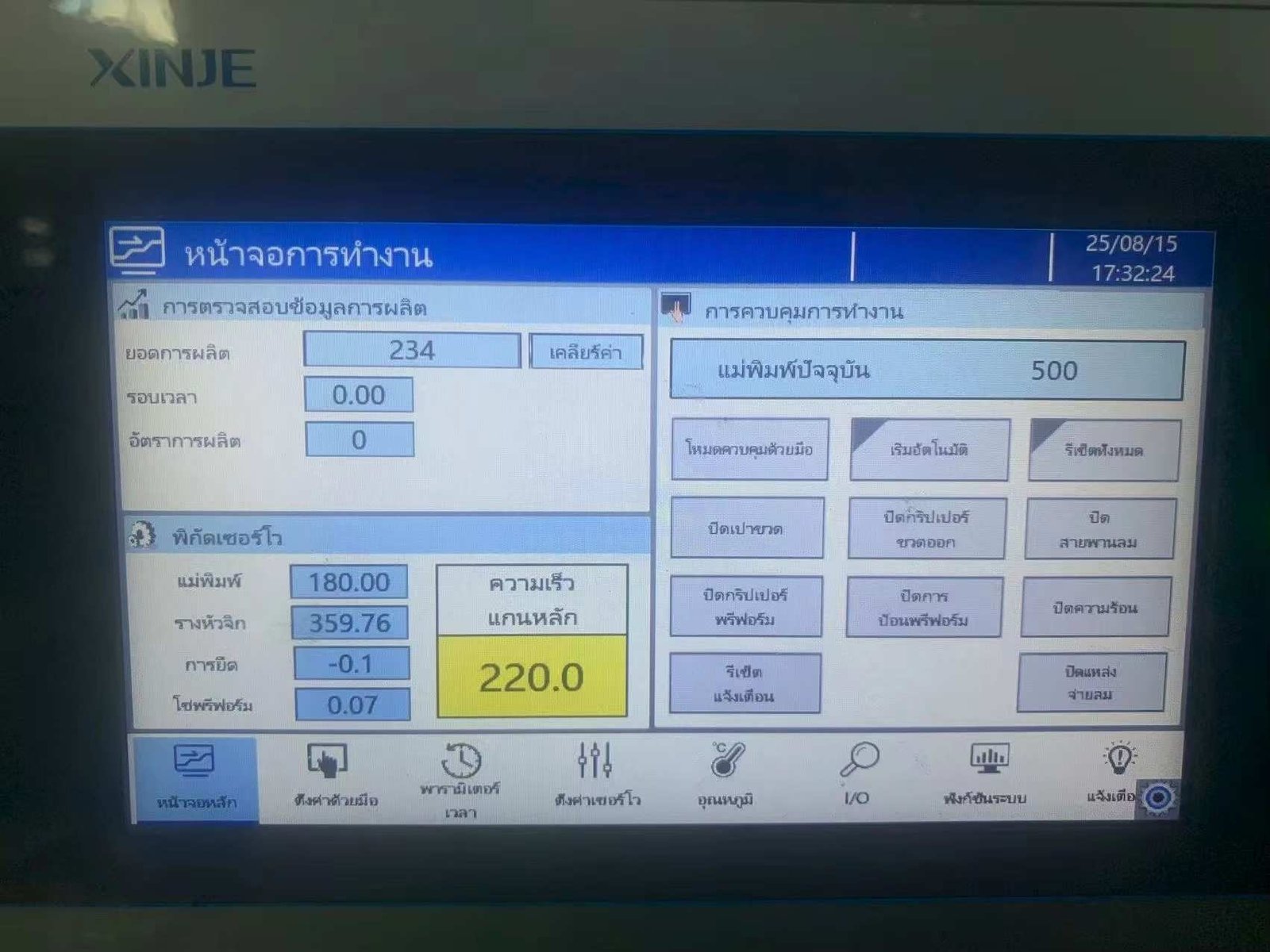
Option B: Standard High-Performance Multi-Language Intelligent HMI
Understanding the price and technical trade-offs between these two control architectures is vital for international buyers:
| Control Feature & Benchmark | Tier-1 Japanese Brand (Mitsubishi Electric) | Standard High-Grade Domestic PLC (Inovance / Xinjie) |
| System Hardware Cost Impact | +$1,800 – $3,200 premium per machine | Standard baseline configuration |
| Global Component Availability | Universal off-the-shelf local sourcing in 100+ countries | Sourced via factory direct courier or regional distributors |
| Noise Immunity & Harsh Environment | Extreme electrical noise filtering; rated for 55°C ambient | High industrial noise immunity; rated for 45°C ambient |
| Multi-Language Touchscreen Interface | English, Spanish, French, Arabic, Russian | English, Spanish, French, Arabic, Russian, Portuguese |
| Recommended Buyer Profile | Remote international plants requiring localized spare parts | Cost-conscious packaging plants seeking maximum value |
For remote plants in Africa, South America, or the Middle East where machine downtime must be avoided at all costs, specifying a brand-name Mitsubishi PLC system provides immense peace of mind: if an I/O card is damaged during a grid voltage surge, a local industrial automation distributor can supply an identical replacement within hours.
Factor 4: Complete Turnkey Line vs “Bare Machine” Quotations
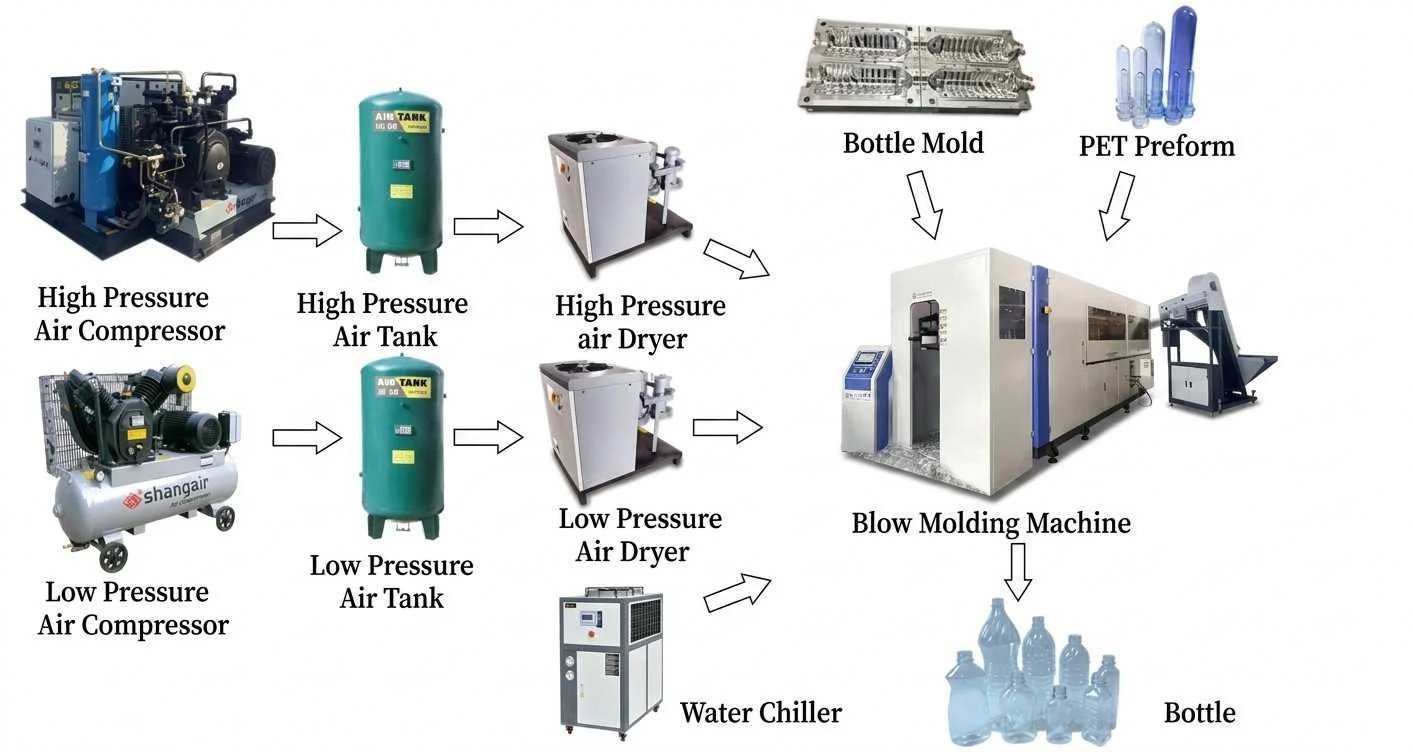
One of the most frequent traps encountered by first-time blow molder buyers is the bare machine quotation. A buyer sees a quoted price of $18,000 for an automatic blow molder and assumes they are ready to produce bottles. Upon arrival at the factory, they discover the machine cannot operate without a complete auxiliary equipment package that adds another $15,000 to $25,000 to the total investment:
- High-Pressure Air Compressor (30 – 35 bar): Supplies the massive air volume required to expand molten PET preforms into mold cavities ($10,000 – $18,000).
- Refrigerated Air Dryer & High-Pressure Filters: Removes oil aerosols, moisture, and particulates down to 0.01 micron. Water droplets inside blow air cause cloudy bottle defects ($2,500 – $4,500).
- High-Pressure Air Receiver Tank (1.0 – 2.0 m³): Buffers sudden pneumatic surges during mold expansion ($1,200 – $2,500).
- Industrial Water Chiller (5HP – 10HP): Circulates 8°C chilled water through mold water jackets to freeze bottles rapidly ($2,200 – $4,500).
Always verify whether an equipment quotation is for a bare machine or a complete turnkey production cell before comparing proposals.
Factor 5: New Equipment vs Used Machinery: The Hidden Financial Traps
Equipment buyers frequently ask: “Can I save 50% by purchasing a used blow molding machine from a plant liquidation?”
While second-hand European machines (such as Krones, Sidel, or SIPA) offer exceptional engineering pedigree, purchasing a used rotary or linear machine older than 8 years introduces severe financial risks:
- Obsolete Proprietary Electronics: Legacy proprietary PLCs and servo drives are frequently discontinued by their original makers. A single fried motherboard can render a $60,000 used machine permanently inoperable.
- Worn Platen Bushings & Hydraulic Seals: Replacing worn toggle linkages and hydraulic proportional valves can cost $12,000 to $20,000 in specialized technician labor.
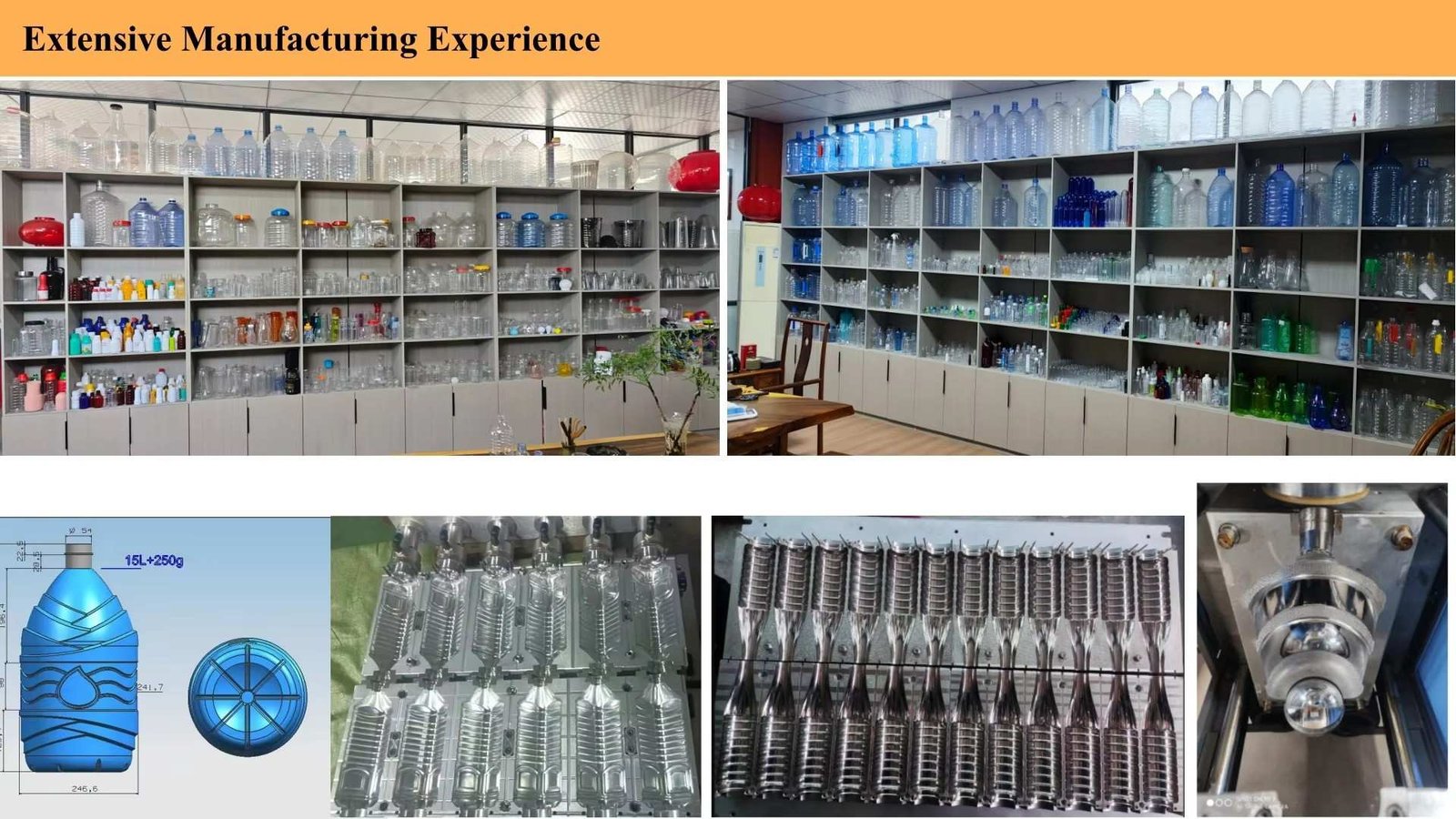
- Custom Mold Retooling Costs: Retrofitting existing used mold platens to your specific bottle geometry and neck standard often costs more than purchasing brand-new molds from Sailwin.
- Zero Warranty & Remote Tech Support: Liquidation brokers offer “as-is, where-is” terms with zero post-sale responsibility.
Quotation Comparison Checklist: How to Compare Offers on Equal Terms
Before issuing a deposit payment for any blow molding equipment, require every supplier to confirm the following technical specifications in writing:
| Specification Item | Budget / Low-Cost Machine Proposal | Sailwin Industrial Standard Proposal |
| PLC & Touchscreen Brand | Unbranded or domestic clone | Mitsubishi Electric or Inovance Premium |
| Mold Cavity Material | Cast aluminum or carbon steel | Aviation 7075-T6 CNC machined aluminum |
| Pneumatic Solenoid Valves | Generic domestic valve blocks | Original Festo (Germany) or SMC (Japan) |
| Electrical Switchgear & Relays | Generic domestic contactors | Schneider Electric (France) / Omron |
| Air Recycling System (ARS) | Not included / Non-existent | Integrated ARS (35% – 45% compressor power cut) |
| Factory Acceptance Testing (FAT) | Dry run without customer molds | 72-hour continuous FAT with customer preforms & mold |
Ready for a Transparent, Line-by-Line Factory Direct Quotation?
Contact Sailwin machinery today. We provide fully itemized equipment proposals detailing every electrical component, mold material grade, and auxiliary equipment specification with zero hidden costs.
Case Study: Beverage Co-Packer Saves $34,000 by Avoiding a “Cheap” Quotation
Client Profile: A beverage co-packer in Central America sought to purchase an automatic 4-cavity linear blow molding machine to bottle carbonated soft drinks at 4,500 BPH.
The Dilemma: Supplier A quoted $19,500 for a “complete” machine with carbon steel molds and domestic generic valves. Sailwin quoted $31,500 for a machine configured with 7075-T6 aviation aluminum molds, a Mitsubishi PLC/HMI package, Festo pneumatic valves, and an integrated Air Recycling System (ARS).
Long-Term Financial Realization:
- Mold Wear & Scrap: Supplier A’s carbon steel mold produced severe thermal haze and required 3.2 seconds cooling time per cycle, limiting real output to 3,600 BPH (a 20% loss in rated capacity). Sailwin’s 7075 aluminum mold cooled bottles in 0.65 seconds, maintaining full 4,800 BPH throughput.
- Electrical Consumption: Supplier A’s machine lacked an air recycling system, requiring a continuous 75 kW high-pressure compressor. Sailwin’s integrated ARS reclaimed 40% of exhaust blow air, allowing the client to operate a 45 kW compressor, saving $14,400 annually in industrial electricity.
- Valve Failure Downtime: Supplier A’s domestic valve blocks failed after 7 months, causing 3 weeks of production downtime waiting for overseas replacements.
Over a 3-year operating window, the “more expensive” Sailwin machine yielded net operational savings exceeding $48,000, completely proving that buying quality upfront is the most profitable financial decision in container packaging.
Frequently Asked Questions: PET Blow Molding Machine Pricing
What is the average price of an automatic 4-cavity PET blow molding machine?
In 2026, an industrial-grade automatic 4-cavity linear PET blow molding machine from a reputable manufacturer ranges between $26,000 and $36,000 (FOB) for the bare machine. A complete turnkey line including 30-bar compressor, refrigerated dryer, air tank, mold, and water chiller typically ranges from $44,000 to $62,000.
How much does a custom PET bottle mold cost?
Precision CNC-machined molds manufactured from aviation-grade 7075-T6 aluminum cost approximately $800 to $1,400 per cavity. A standard 4-cavity water bottle mold costs between $3,500 and $5,000 including custom bottom petaloid base design, neck wear rings, and conformal cooling circuits.
Is it cheaper to buy semi-automatic or fully automatic machines?
A semi-automatic PET blow molding machine is cheaper to purchase initially ($7,500 – $15,500). However, if your plant runs two shifts and produces more than 15,000 bottles daily, the recurring labor expense and higher scrap rate make a fully automatic machine far more cost-effective within 10 to 14 months.
Can I finance or lease blow molding machinery?
International buyers typically finance equipment purchases through regional commercial equipment leasing firms or Letter of Credit (L/C at sight) mechanisms. Sailwin supports standard international commercial financing terms and LC payment structures for qualified overseas buyers.
How much does shipping and container freight cost for a blow molding machine?
A standard 4-cavity automatic blow molder and its auxiliary compressor skid occupy one 20-foot or 40-foot HQ shipping container. Ocean freight rates vary by global trade lane, typically ranging between $2,500 and $6,500 including marine cargo insurance.
Does Sailwin test machines prior to final payment?
Yes. Every Sailwin machine undergoes continuous 72-hour factory acceptance testing (FAT) using the client’s actual preforms and bottle molds. Comprehensive video documentation, cycle speed logs, and container burst-pressure test reports are certified in compliance with ISO 9001 quality management protocols prior to balance payment and container dispatch.
Summary & Related Machinery Guides
Navigating the PET blow molding machine price landscape requires looking beyond initial price tags to evaluate real total cost of ownership. Sizing the proper cavity count, investing in aviation-grade 7075 aluminum tooling, specifying proven control systems like Mitsubishi, and integrating air recycling systems guarantees sustained output, low scrap rates, and long-term commercial profitability.
To further analyze specific machine models, capacities, and cost-benefit trade-offs, explore our engineering library:
- 4 Cavity vs 6 Cavity PET Blow Molding Machine: Cost, Output & ROI Comparison — Sizing linear capacity for your factory.
- How to Start a PET Bottle Manufacturing Business: Equipment & Cost Guide — Turnkey plant budgeting and capital planning.
- High Speed PET Blow Molding Machine: Output & Cost Guide — Engineering high-volume beverage bottling lines.
- Semi-Automatic PET Blow Molding Machine Series — Affordable entry-level solutions for startup packaging plants.
Ready to Receive an Itemized Factory-Direct Quotation?
Speak with Sailwin’s technical sales engineering group today for comprehensive machinery proposals, transparent component breakdowns, custom mold drawings, and factory layout designs.