Every filling line already owns capacity that never appears in its output figures: the hours between the last good bottle of one product and the first good bottle of the next. Filling machine changeover is rarely treated as a production metric, so it is rarely measured, and what is not measured does not improve. A line that loses four hours a week to format changes gives away two hundred hours a year — roughly five working weeks of production capacity, already paid for.
The cost compounds in ways that are easy to miss. Changeovers generate the highest scrap rates on the line, because the first bottles are produced while the machine is still being adjusted. They consume cleaning chemicals and water out of proportion to the volume produced. They create the conditions for quality escapes, since a product change is exactly when the wrong cap, the wrong label or the wrong fill level reaches the market. And they discourage the plant from accepting small orders at all, which quietly removes margin-rich business from the sales team’s reach.
Sailwin has built liquid filling equipment for 15+ years, with 500+ machines delivered to 60+ countries, manufacturing under ISO 9001:2015 with CE marking and supporting installations with a 2-year machine warranty. The range includes 3-in-1 rinsing-filling-capping monoblocs with quick format change, isobaric lines for carbonated products, hot-fill lines for juice, 5-gallon filling systems and product-contact parts in SUS304 and SUS316L. This guide sets out how to analyse a changeover, which change parts deserve investment, how recipe recall should work, and the sequence that turns a four-hour change into a forty-minute one.
Key Takeaways
- Measure the changeover before improving it. Record every step, who performs it, how long it takes and whether the machine must be stopped for it. Improvement without that baseline is guesswork.
- Most of the saving is in work that can be done while the line still runs. Preparing change parts, kitting tools, warming a tank or staging labels outside the machine converts downtime into set-up time.
- Change parts are the capital item that pays for itself fastest. Quick-release filling valves, tool-less neck-handling change parts and pre-set capping heads remove minutes from every changeover, every week, for the life of the machine.
Shortening Changeover on an Existing Filling Line?
Send your current format range and changeover sequence — Sailwin engineers return a change-part and recipe-recall proposal with a factory-direct quotation within 24 hours.
1. Changeover Time Is Capacity You Already Own
The reason changeover improvement is neglected is that it has no natural owner. Production sees it as unavoidable, engineering sees it as an operating routine, and finance sees it as a fixed cost of flexibility. Nobody is measured on it, so nothing happens.
Make it a metric and the arithmetic becomes visible. Take a line running 6,000 hours a year with two format changes a week, each taking three hours including cleaning, first-bottle approval and the ramp back to steady output. That is 300 hours a year consumed by changeover — five per cent of available time, and a much larger share of the hours that are actually productive once planned maintenance and unplanned stops are removed. Cutting the three hours to ninety minutes returns 150 hours a year, with no capital expenditure beyond change parts and a procedure.
There is a second gain that finance reports separately but operations feels every week: the scrap and rework generated during changeover. A changeover that is finished quickly but leaves the line running at a marginally incorrect fill level for two hours produces a product that is technically sellable and commercially weak. Define changeover as ending when the line is at full speed producing product that passes all release checks, not when the last mechanical adjustment is made. That definition changes which steps get optimised.
Finally, accept that the ability to change quickly is a commercial capability, not only an efficiency project. It determines the smallest order the plant can accept profitably, how many SKUs a sales team can offer, and whether a trial batch for a new customer is a favour or a routine. In markets where brands proliferate and order sizes fall, that capability is often worth more than a few per cent of line speed.
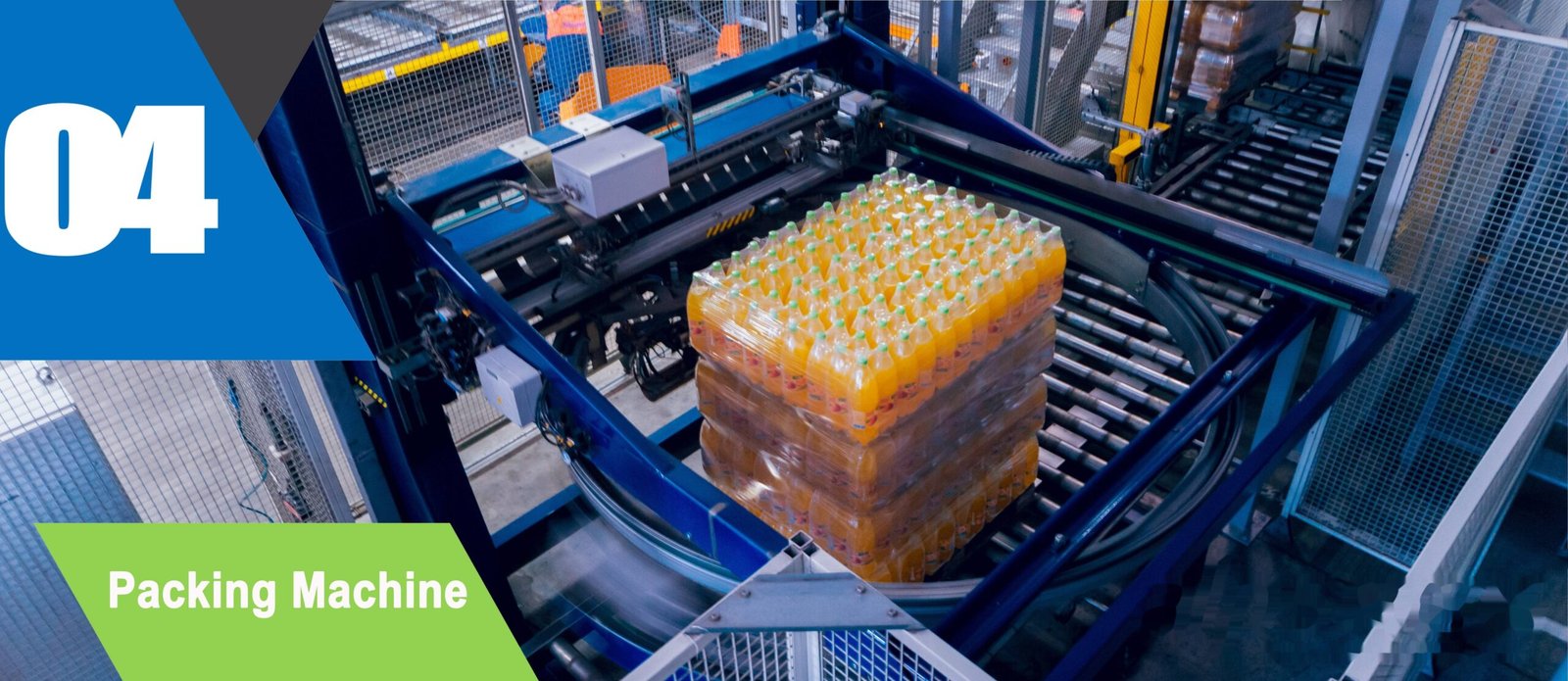
Precision Engineering & Core Components: turnkey bottling line step 04 shrink wrapping packing machine
2. Map the Changeover Before You Improve It
Stand at the machine with a stopwatch and a clipboard, and write down every action from the moment the last good bottle of the outgoing product is packed. Record the step, the person, the duration, and one additional column that decides most of the improvement: whether the line has to be stopped while the work happens.
Work that must be done with the line stopped is internal. Work that can be done while the line still runs — fetching tools, preparing change parts, pre-warming a tank, staging the next product’s caps and labels, filling in the batch record — is external. The standard improvement path is to convert internal work into external work wherever physically possible, then to shorten what genuinely must be internal, then to standardise the remaining sequence so two people do it the same way on both shifts.
| Typical changeover step | Type | What usually goes wrong | How to shorten it |
|---|---|---|---|
| Run out the outgoing product | Internal | Tank-draining time is discovered at the moment it is needed | Planned lowest-fill point agreed in advance; drain and purge path prepared before the last bottle |
| CIP and rinse of the product circuit | Internal, partly unavoidable | Cycle shortened in a hurry, then repeated because the result was not verified | Validate the cleaning cycle for the product pair; make it a recipe, not a judgement call |
| Container format change (neck handling, guides, star wheels) | Internal | Change parts in the store with no identity, found by trial and error | Tool-less, colour-coded change parts stored as a kit for each format |
| Change parts staged at the machine | External | Nobody fetches them until the line is already stopped | Kit delivered to the machine before the changeover window opens |
| Filling valve and nozzle change | Internal | Threaded components, torque-critical seals, valves re-set by feel | Quick-release valves with fixed stop positions and a documented torque value |
| Capper head and torque change | Internal | Torque re-established by trial; the first cases may be out of specification | Pre-set heads or recalled recipe setpoints, confirmed with a torque measurement on the first filled container |
| Recipe selection and parameter check | Internal, but only seconds if prepared | Adjustments made from memory, then repeated after the first check | Recall by product code with an access level, and a printed confirmation of the active settings |
| First-bottle approval and ramp-up | Internal | Checks improvised, so the line runs and later drifts out of band | Fixed first-bottle checklist covering fill volume, torque and visual criteria, with a signature |
In most plants the first pass through this analysis reveals that a large share of the changeover duration is travelling, searching, deciding and re-adjusting rather than actual mechanical work. That is good news: those minutes are removed by organisation, not by purchasing new machinery.
A changeover ends when the line is producing at full speed with the next product passing every release check. Anything measured from “stop” to “start” is flattering the process and hiding the scrap.
3. Change Parts: Where the Money Is Spent Best
Three groups of change parts determine how much of a format change can be done quickly, and each has its own design logic.
Neck handling and container guidance. On a machine that grips the bottle by the neck — as a monobloc does, with the same clamps that invert the container for rinsing — the format change starts with the neck handling: clamp jaws, neck guides, star wheels, infeed and outfeed change parts. These are the parts that are swapped most often and they should be designed for tool-less change with a positive location and a visible confirmation that they are fully seated. A clamp that looks engaged but is not will drop bottles at speed, which is both a quality failure and a safety event.
Filling valves and nozzles. Where a format change alters the container height or the fill volume, the filling valves or nozzles may have to change. Quick-release designs with a fixed stop position allow the swap to be done without re-establishing critical dimensions by measurement, and a documented torque value for each screwed or clamped connection removes the guesswork that produces leaks and inconsistent fills. Where a change can be avoided entirely by adjusting a nozzle height instead of replacing a nozzle, that is worth having as standard.
Capper heads. Capping is the change part most often overlooked, because it does not look like a format item. But the cap changes when the product changes, and the torque window with it. Constant-magnetic-torque capping heads hold a set torque independently of speed and wear, which is exactly what a changeover needs: a head that can be set to a known value and verified on the first filled container, rather than a friction system that has to be re-tuned by trial. Whatever the technology, the changeover procedure should end with a measured torque on a real filled container at the real product temperature.
Two organisational rules make change parts work. First, kit them: every format has a container, a labelled kit containing all its change parts, and a documented list inside the lid. Second, give them identity: colour coding, a part number etched or stamped on the component, and a storage position that is obvious. A change part that cannot be identified without measuring it will be identified by trial and error on the machine.
4. Recipe Recall, Verification and First-Bottle Approval
Mechanical change parts can be swapped in minutes; the parameter set that suits the next product is where the time and the risk both live. The rule is simple: the machine should already know the settings, and the operator should be able to prove that it does.
Recipes should be recalled by product code rather than typed in, held in the machine’s control system, protected by an access level, exportable for backup, and recorded against the batch. That has three consequences worth stating explicitly. It removes the fastest route to a bad batch, which is a parameter changed from memory and never changed back. It makes two shifts behave identically. And it turns the changeover from an exercise in judgement into an exercise in verification — which is a task that a well-written checklist can standardise.
Verification then needs to be specific to a filling line. Four checks cover most of the risk. Fill volume or level across the full set of valves or heads, not a sample of two, because the purpose of the check is also to catch a valve that was not correctly re-seated. Capping torque measured on real filled containers at the process temperature. Container handling integrity, confirmed by watching the machine run at target speed for several minutes with the new format and no bottle displacement. And label or decoration position where applicable, since a changed format usually changes the label position too and that is a frequent escape after a changeover.
Make the first-bottle approval a signed step. A short form — product, format, recipe version, measured fill volume, measured torque, visual result and the name of the person who approved it — does two things. It gives the plant a record it can use when a customer complains about the first cases of a run, and it changes behaviour, because people verify more carefully when the result is written down and attributed.
Where the machine monitors a large number of process parameters in real time, use the changeover as the moment to confirm that the monitoring is functioning rather than to rely on it. A quick review of the active setpoints against the recipe printout, and a glance at whether temperatures and pressures have settled to their operating values, catches the class of problem where the machine is running correctly but not at the setting the recipe intended.
Changeover Taking Longer Than It Should?
Send your format range and current changeover sequence — Sailwin engineers return a change-part, recipe-recall and quick-release valve proposal within 24 hours.
5. Case Study: A Contract Filler With Too Many Formats
A contract bottler running a 3-in-1 monobloc had built its reputation on accepting small orders across many bottle formats. The same flexibility that won the work was consuming so much line time that the plant could not quote on several potential customers.
- Twelve container formats in regular rotation, with changeover time never formally measured
- Neck-handling change parts stored loose, identified by looking at them
- Capping torque re-established by trial on every change, with the first cases held for checking
- Recipe parameters recorded in a shift notebook rather than in the machine
- Observe and time three complete changeovers, recording every step and whether the line had to be stopped
- Build a formatted change-part kit for each of the twelve formats, colour coded and listed
- Convert the capper to a constant-magnetic-torque head with a recorded setpoint per product
- Move all recipes into the control system with access control and a printed confirmation of active settings
- Most of the reduction came from external work — kits and recipes prepared before the window opened
- Torque established from a setpoint and confirmed by measurement, removing held first cases
- Small-order quoting reopened once the changeover cost per order became known
- Changeover recorded as a production metric and reviewed weekly, so the gain was not lost again
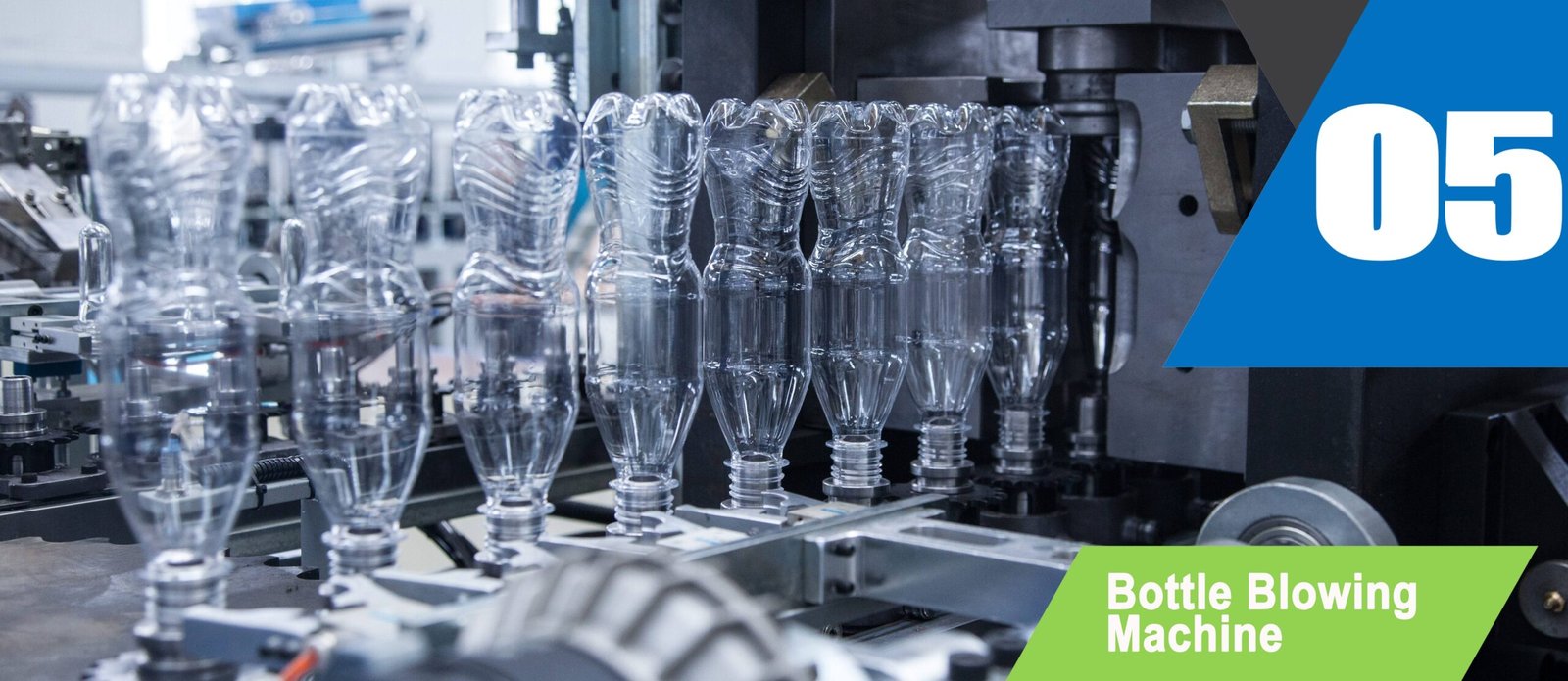
Industrial Machinery Assembly & Workshop: turnkey bottling line step 05 automatic bottle blowing machine
6. A Changeover Sequence Worth Standardising
The following sequence is generic and can be adapted to most filling lines. Its value is less in the individual steps than in the discipline of running them in the same order with defined responsibilities.
Before the window opens (external). Confirm the next product and format; retrieve the change-part kit and place it at the machine; stage caps, labels and packaging; print the recipe confirmation; assign roles and confirm who will verify fill volume and torque; prepare the cleaning recipe for the product pair.
During the window (internal, in parallel where safe). Run out the outgoing product to the agreed lowest-fill point; run the cleaning and rinse cycle; change neck handling and container guidance; change or adjust filling valves and nozzles; change or set capper heads; recall the recipe; remove all tools and confirm no loose parts remain in the machine.
After the window (verification). Run the new format at reduced speed until handling is stable, then at target speed; measure fill volume across all valves or heads; measure capping torque on filled containers; check label or decoration position; sign the first-bottle approval; record the actual changeover duration, including the ramp to full speed, as the metric for next time.
Three mistakes undo most of the effort. Parallelising work that shares a single locked-out energy source is unsafe, and the safe answer is often to accept a slightly longer changeover. Skipping the cleaning validation for a product pair — especially where an allergen or a strongly flavoured product is involved — creates a risk that no changeover saving can justify. And failing to record the duration means the improvement decays back to the old routine within a couple of months, because nobody notices the regression.
Finally, treat changeover capability as a specification item when buying a machine. Sailwin filling machines are built for quick format change with tool-less change parts, recipe storage in the control system and a 24-hour factory acceptance test before shipment, and are commissioned on site in 3 to 7 days with common wear parts dispatched within 48 hours and remote engineering support available 24/7. Ask a prospective supplier to demonstrate a format change on your own containers before you buy: the difference between machines is measured in tens of minutes, and it is best seen rather than described.
Frequently Asked Questions
Make Your Next Changeover a Measured Metric
Send your bottle drawing, container sample or target output. Our engineering team replies with a machine recommendation, mould assessment and factory-direct quotation within 24 hours.
Related Reading:
• Liquid Filling Machines — Monobloc, Isobaric and Hot Fill
• Neck Handling Inside a 3-in-1 Monobloc
• Capping Torque Control and How to Verify It
• Fill Accuracy Standards After a Format Change
• Cleaning Cycles Between Products
• Gravity, Piston and Flow-Meter Filling Compared