Updated: 2026 Engineering Guide · By Sailwin Pressure Vessel Team
Carbonated Soft Drink (CSD) Petaloid Base Blowing: Pressure & Stress Relief
Carbonated soft drinks (CSD), sparkling waters, and beer bottles exert continuous internal pressure between 4.0 and 8.0 bar under elevated ambient temperatures. If a beverage converter blows carbonated drinks using standard flat-base water molds, the container base instantly balloons outward into a convex sphere, causing bottles to wobble, topple on filling lines, and explode in retail displays. Mastering high-pressure csd bottle blow molding with self-standing 5-point petaloid bases is the definitive engineering standard for carbonated packaging.
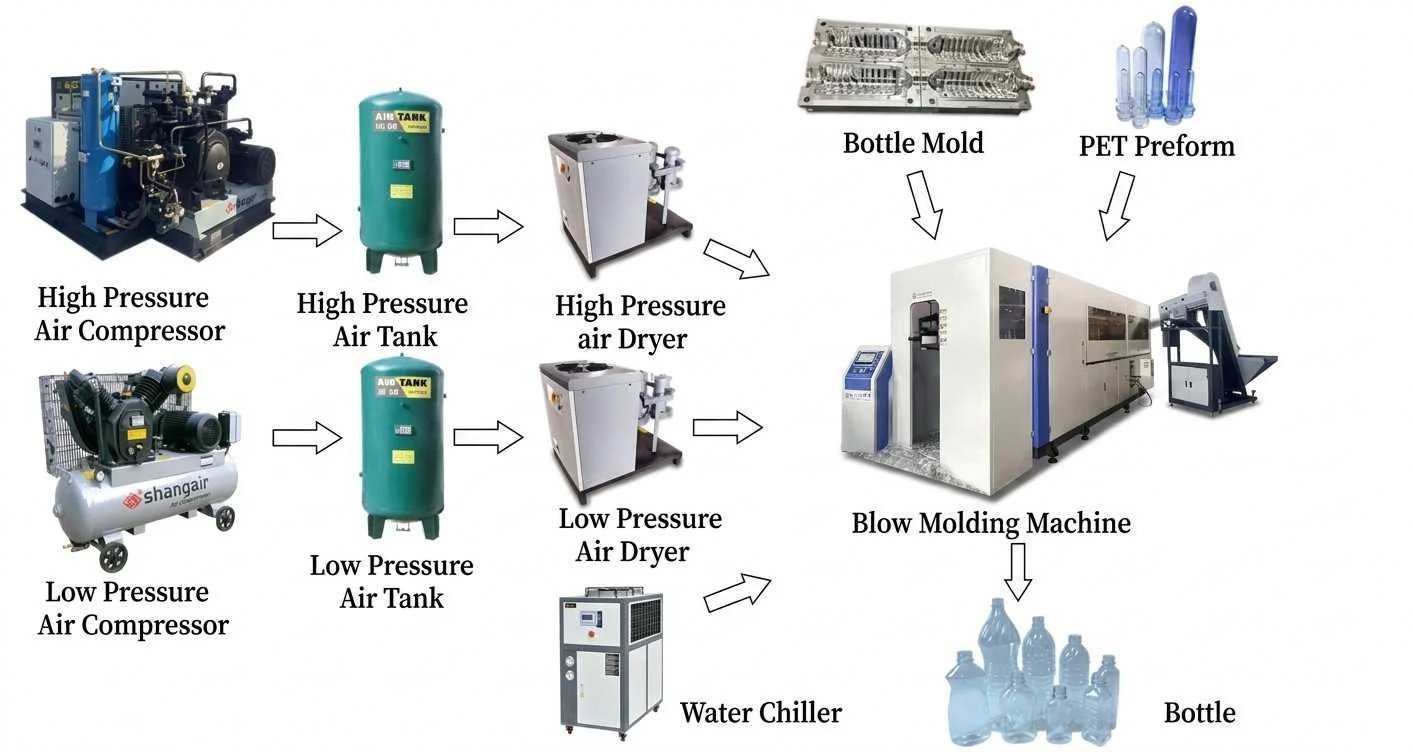
Sailwin engineers and builds high-pressure linear and rotary stretch blow molding systems capable of continuous 38-bar blowing. Our specialized petaloid base mold inserts, high-speed pneumatic exhaust valves, and precision bottom water-cooling circuits deliver stress-free, rock-solid bases that pass rigorous 10-bar burst pressure and environmental stress crack resistance (ESCR) audits.
This technical manual explores the structural mechanics of 5-point petaloid geometries, details 35-bar blow timing sequences, and outlines preventive solutions for eliminating base cracking.
Key Takeaways
- 5-Point Petaloid Geometry Acts as Pressure Vessel: Alternating structural feet and concave clearance arches distribute internal carbonation stresses evenly, resisting up to 10-bar hydrostatic burst pressures.
- 35-Bar High Pressure Blowing Requirement: Forcing heavy 22g-26g preform resin into intricate petaloid base corners requires a dedicated 35 to 38 bar high-pressure air supply.
- Base Mold Water-Cooling Prevents Rocking: Intensive 8°C chilled water circuits inside the bottom mold insert freeze the thick amorphous gate sprue, preventing post-ejection base bulging.
Designing a carbonated soft drink bottle or petaloid base?
Send your bottle drawings for a complete finite element analysis (FEA) burst pressure simulation.
1. Petaloid Base Mechanics: Resisting Internal Carbonation Pressure
In carbonated beverage packaging, the bottom of the bottle must withstand continuous internal outward expansion while providing five perfectly planar contact points for vertical stability on conveyor lines.
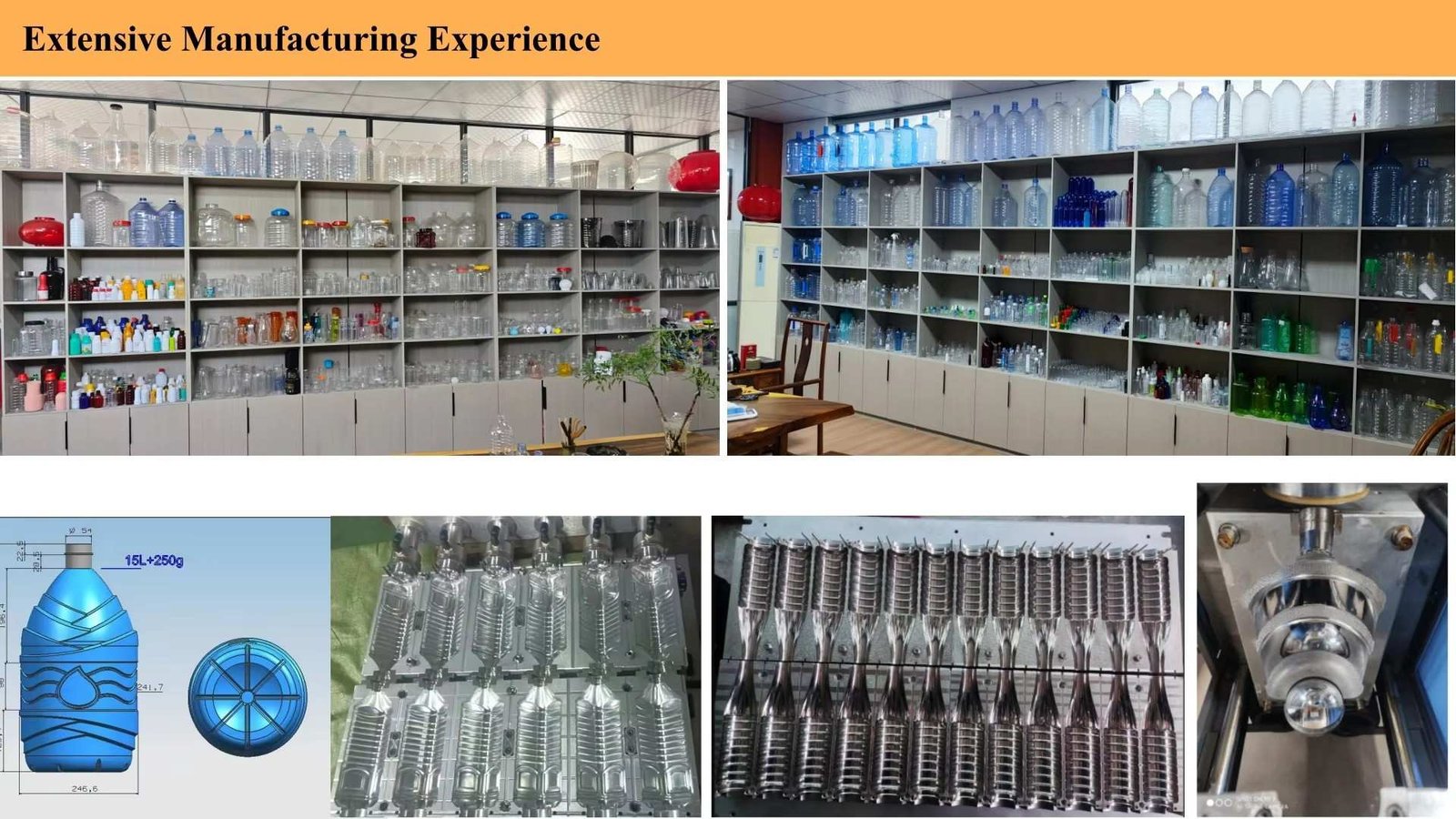
Sailwin petaloid base molds are CNC-machined from certified aircraft aluminum 7075 or hardened S136 stainless steel. The five spherical feet absorb downward vertical packaging loads, while the deeply recessed central clearance dome (the valley) isolates the gate sprue from floor contact. When carbonated liquid is filled at 4°C and subsequently warms to 35°C during summer distribution, the internal pressure pushes against the dome, which flexes elastically without bulging outward past the plane of the feet.
Check out complete machinery capabilities on our PET blow molding machine catalog, or review high-pressure air requirements in our air compressor sizing guide.
Need custom petaloid base mold inserts for high-pressure blowers?
Sailwin delivers CNC-machined 7075 aluminum CSD molds with rapid international dispatch.
2. Sailwin Case Study: Soft Drink Bottler Eliminates Base Inversion Failures
A regional cola brand in Egypt eliminated 4.5% warehouse bottle toppling by replacing aging blow molds with Sailwin 4-cavity high-pressure petaloid tooling and 36-bar servo blowing.
- Client: Regional soft drink bottler packaging 500ml and 1.5L carbonated sodas at 4.2 volumes of dissolved CO2.
- Problem: 4.5% of bottles developed convex base bulging (rocker bottoms) during 42°C summer warehouse storage, toppling on shelves.
- Failure Cause: Base mold water channels were scaled and blow pressure was limited to 26 bar, leaving thick unoriented base plastic.
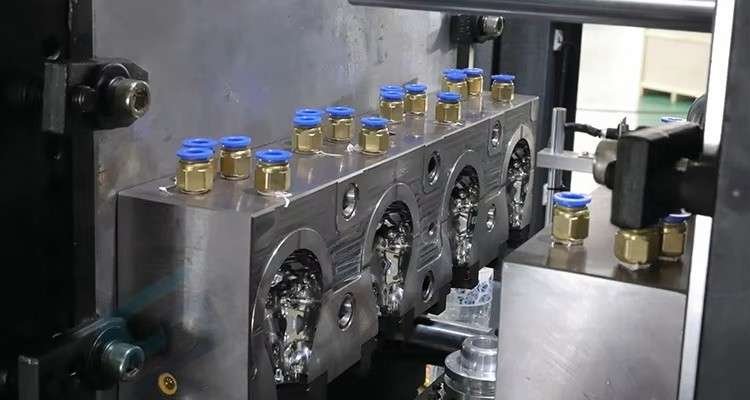
- Tooling Upgrade: Commissioned Sailwin 4-cavity 7075-T6 aluminum CSD molds with optimized 5-point petaloid inserts.
- Pneumatic Booster: Upgraded high-pressure air supply to 36 bar using a Sailwin integrated screw-booster system.
- Base Cooling Enhancement: Integrated dedicated 8°C chilled water lines directly through the petaloid mold cores.
- Zero Base Inversion: 100% of bottles passed 45°C 7-day thermal stability testing with zero base bulging.
- Burst Strength: Hydrostatic burst pressure increased from 7.8 bar to 12.4 bar (58.9% structural strength increase).
- Line Efficiency: Conveyor bottle tipping dropped to zero, increasing packaging filler efficiency to 99.4%.
Data source: Sailwin Customer Field Report #EGY-2025-06. Equipment: SW-4AS High-Pressure CSD Stretch Blow Molder.
Planning a carbonated beverage or sparkling water bottling line?
Connect directly with Sailwin’s high-pressure packaging engineers on WhatsApp for turnkey line quotes.
3. Frequently Asked Questions: CSD Petaloid Base Blow Molding
Have questions about petaloid base mold design or CSD preform weights?
Connect directly with Sailwin’s technical tooling engineers on WhatsApp for instant CAD reviews.
4. Summary: High-Pressure Carbonated Packaging Mastery
Manufacturing carbonated beverage containers requires high-precision petaloid tooling, 36-bar pressure delivery, and intensive chilled water base cooling. Sailwin machinery provides the structural integrity and speed required to produce defect-free carbonated bottles.
- Specify 35+ bar blow pressure to force heavy preform polymer completely into petaloid feet.
- Maintain direct 8°C water chilling through the bottom base insert to eliminate rocker bottoms.
- Partner with Sailwin for turnkey CSD blow molders, compressors, petaloid molds, and complete packaging engineering.
SAILWIN MACHINERY · CSD BLOWING EXCELLENCE
Ready to Upgrade Your Carbonated Beverage Packaging?
Send us your bottle drawings and carbonation pressure targets. Our technical team will prepare an engineered high-pressure blow molding proposal and layout drawing within 24 hours.
Explore Complete PET Packaging Solutions:
• PET blow molding machine – Comprehensive catalogue of linear and rotary stretch blowers.
• pet blow molding machine cost guide – Complete 2026 pricing and auxiliary breakdown.
• air compressor for blow molding machine – High-pressure 30-40 bar pneumatic sizing.
• contact our engineering team – Request customized machinery blueprints and quotations.
• Need dedicated technical advice? Contact our machinery specialists for a 1-on-1 equipment evaluation.