Sanitary design is usually treated as a cleaning problem until the first inspection, at which point it becomes clear it is a procurement problem. By then the frame is welded, the pipework is installed and someone is standing in front of a product contact surface pointing at a crevice that cannot be cleaned in place. A design decision that would have cost a small amount of drawing time now costs either a modification or a permanent operational restriction.
The cost of getting it wrong is paid three times over. Capital cost rises because remediation is always more expensive than design. Operating cost rises because equipment that cannot be cleaned in place has to be partially dismantled on every changeover, and cleaning time is production time. And commercial risk rises because a single failed audit can stop a product from being shipped, whatever the equipment actually does when it runs.
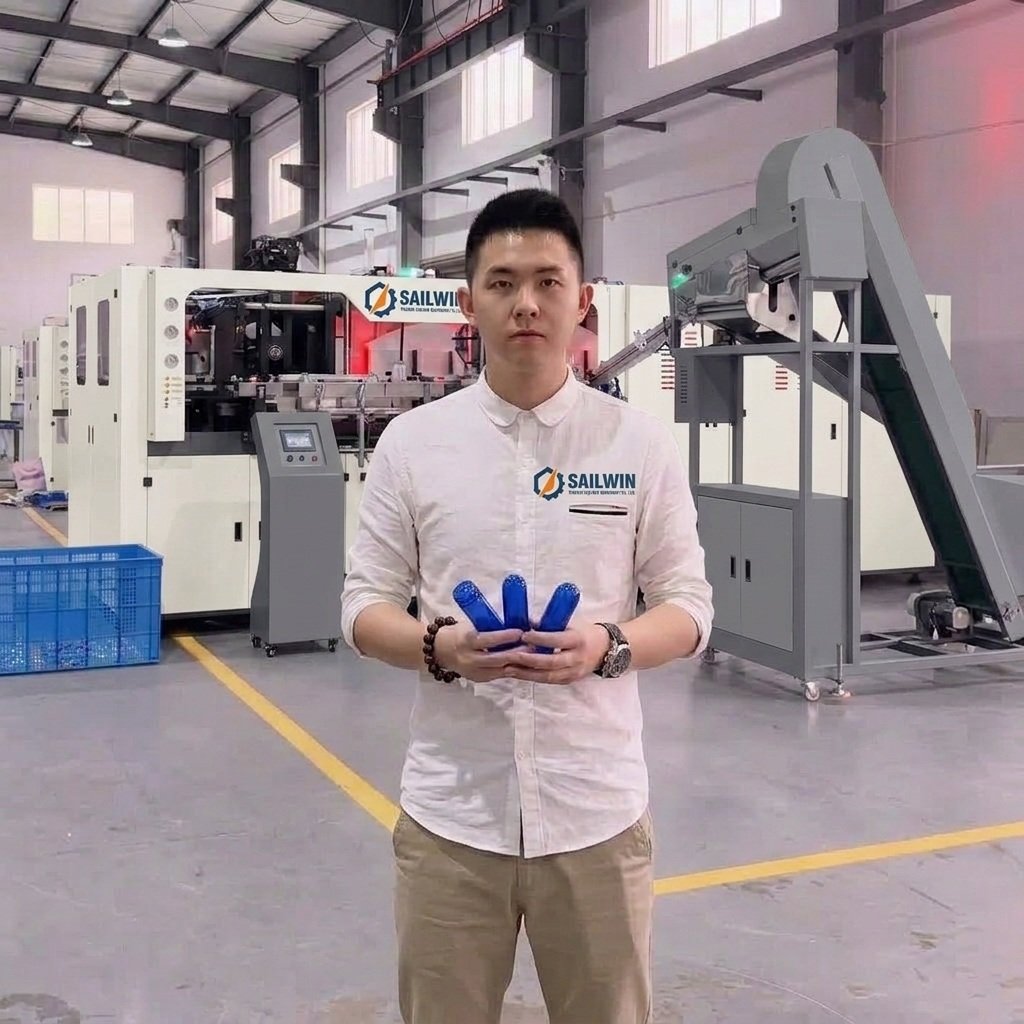
Sailwin has built filling equipment for 15+ years, with 500+ machines delivered into 60+ countries, CE marking, ISO 9001:2015 manufacturing and a 2-year whole-machine warranty. Our filling lines use SUS304 and SUS316L construction, 3-in-1 rinse-fill-cap monoblocs with 180° flip grippers, laminar flow filling valves, constant magnetic torque capping, and isobaric or hot fill configurations as the product requires, tested at full load for 24 hours before shipment. This article sets out the design rules that most often fail inspection, how the required standard changes with the product being filled, and what documentation buyers should demand before equipment is accepted.
Key Takeaways
- Design for the inspector, then for the operator. Cleanability is decided on the drawing: surface finish, drainage, crevices and elastomer choice cannot be corrected later without cost.
- The required standard follows the product, not the machine. A dry-fill line and a dairy line can use the same frame steel but not the same finish grade, drainage rules or documentation.
- Ask for the paperwork before the FAT, not after. Material certificates, finish records and elastomer compliance declarations are cheap to produce at build time and awkward to reconstruct afterwards.
Send Your Product and Line Data for a Sanitary Design Review
Share the product type, cleaning method and target market — Sailwin engineers return the required finish grade, elastomer selection and documentation pack.
1. Why Sanitary Design Is a Procurement Decision
A filling machine is inspected on four things that are all fixed at the design stage: how smooth the product contact surfaces are, whether the equipment drains, whether there are places where product or cleaning liquid can be trapped, and whether the materials in contact with the product are declared suitable. None of those four can be retrofitted cheaply. Adding a drain hole to a fabricated frame after installation is a fabrication job; replacing an elastomer that cannot be cleaned in place may require dismantling the machine.
This is why the useful time to discuss sanitary design is during specification, alongside output, bottle format and filling accuracy. The design intent should also be explicit rather than implied. Saying a machine is “hygienic” means nothing in an audit; stating that product contact surfaces are finished to a defined roughness, that all surfaces drain, that pipework has no dead legs beyond a defined limit, and that elastomers are covered by a food contact declaration means something that can be verified.
There is also a commercial argument that procurement teams understand better than regulators. Equipment designed for cleaning in place is cleaned without disassembly, which means changeovers and sanitation shifts take less time, and less time spent cleaning is output recovered every working day. Sanitary design is not a compliance overhead; it is a throughput decision that happens to also satisfy inspectors.
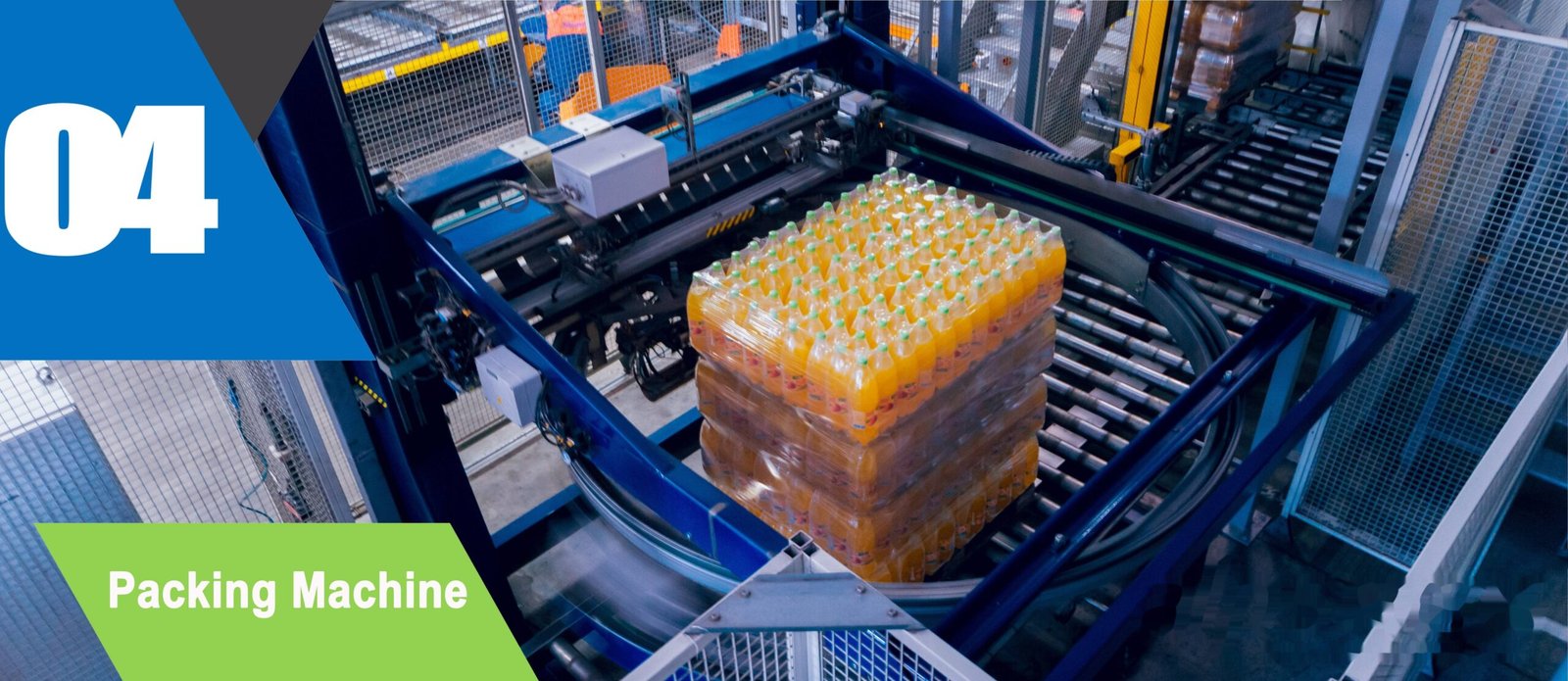
Precision Engineering & Core Components: turnkey bottling line step 04 shrink wrapping packing machine
2. The Four Design Rules That Fail Inspection Most Often
Most findings trace back to the same four areas. They are not exotic requirements; they are the classical hygienic design principles that European and US guidance converge on, and they are worth checking line by line against a drawing before the machine is built.
| Design rule | What good looks like | How it fails in practice |
|---|---|---|
| Surface finish | Product contact surfaces machined and polished to a declared roughness; industry-typical specifications for food contact sit at Ra ≤ 0.8 µm, with tighter values for dairy and similar applications | A finish claimed on a datasheet but not measured; scratches from handling that create harbourage |
| Drainage | Self-draining surfaces, open frames, no horizontal ledges, no puddles after cleaning | Box-section frames with no drain path; flat covers; water sitting under the machine |
| Crevices and dead legs | Continuous welds where required, radiused internal corners, and dead legs kept short — a widely used rule of thumb limits dead-leg length to roughly twice its diameter, though the authoritative figure depends on the standard being designed to | Tack-welded frames, exposed threads, blind sensor pockets, unused branches capped and forgotten |
| Elastomers and seals | Seal materials declared suitable for food contact and for the cleaning chemistry, with conformity documentation held | General-purpose rubber fitted because it was available; seals that swell, crack or discolour within a month |
Two of these four are decided entirely on the drawing, one is decided by material selection, and one — drainage — is decided by how seriously the fabricator treats the topic. Drainage failures are usually visible on a general arrangement drawing long before the first puddle appears on the factory floor, which is why a drawing review is a faster form of audit than an inspection.
3. Matching the Sanitary Standard to the Product
There is no single sanitary standard, and specifying the highest one available for every product wastes money while specifying a low one for a high-risk product creates a compliance problem that cannot be engineered away. The driver is the product: what it supports microbiologically, what cleaning chemistry it demands, and what the destination market expects to see in documentation.
| Product category | Main risk driver | Design expectation |
|---|---|---|
| Non-food liquids (auto care, lubricants, technical fluids) | Chemical compatibility, operator safety, spill control | SUS304 or equivalent, drainage and containment, no food contact declaration required |
| Still water and CSD | Microbiological growth, plus pressure control for carbonated products | SUS304/316L, CIP circuits, isobaric filling valves, hygienic bearings and seals |
| Hot fill juice and tea | Microbiological control at elevated temperature | Hot fill capable valves, CIP/SIP, stable temperature control on product lines |
| Dairy and similar | Highest microbiological risk, protein and fat residue | SUS316L, tighter finish grade, fully sanitary pipework, complete documentation package |
| 5-gallon and large-format water | Container handling hygiene plus internal cleaning of the bottle | SUS304/316L, effective internal rinse or wash, hygienic capping and transfer |
Two practical notes. First, a plant filling both food and non-food products on the same line should design to the food requirement, because the line will be inspected against the most sensitive product it touches. Second, the destination market matters: if product is exported, the documentation that satisfies one market may not satisfy another, and it is far easier to build a documentation pack once than to reconstruct it years later.
4. Documentation Buyers Should Ask For Before Acceptance
In the European Union, food contact materials are governed by the framework Regulation (EC) No 1935/2004, with specific measures such as Regulation (EU) No 10/2011 applying to plastics. In the United States, food manufacturing equipment is assessed against current good manufacturing practice and preventive controls requirements under 21 CFR Part 117, with 3-A Sanitary Standards widely used in dairy and EHEDG guidance widely referenced in Europe for hygienic design. You do not need to become a regulatory specialist to buy equipment well; you need to ask for the specific documents that make compliance demonstrable.
- Material certificates for product contact parts. Stainless grade and heat number traceable to the certificate, not a general statement that the machine is stainless steel.
- Surface finish records. Measured roughness values for product contact surfaces, with the measurement instrument and location recorded.
- Elastomer conformity declarations. Seal materials declared suitable for food contact and for the cleaning chemicals and temperatures actually used.
- Weld and fabrication records for product contact areas. Whether welds are continuous, ground and inspected, and who inspected them.
- As-built drawings and a cleaning validation reference. Drainage paths, spray coverage, and the seal replacement schedule in one document, so the equipment can be maintained to the standard it was designed to.
A supplier that can produce finish measurements, material certificates and seal declarations during the build is not doing anything unusual. It is simply easier to do it then than to argue about it afterwards.
5. Case Study: Sanitary Design Across Two Product Families
A plant filling both a beverage product and an automotive care fluid on parallel lines found that its documentation could not support the beverage side of the business, even though the equipment ran reliably.
- Food-contact declaration existed for the machine frame grade, but not for seals or for finish
- A water trap found under a transfer section that no drawing had shown
- Cleanability of one product circuit depended on partial disassembly at every changeover
- Sanitary design review of the beverage line against the four design rules, drawing by drawing
- Documentation pack assembled: material certificates, seal declarations, finish records, as-built drawings
- Drainage corrected at the transfer section and CIP coverage reviewed on the affected circuit
- Sanitary requirements specified per product family instead of assumed to be equal
- Changeover cleaning moved to clean-in-place on the circuit that previously needed stripping
- Audit responses supported with records produced at build time rather than reconstructed
Scenario based on a Sailwin customer project; site-specific figures available on request during engineering review.
6. Specifying and Accepting Sanitary Equipment
The specification should be short and verifiable. State the product, the cleaning method, the market you ship to, and the finish grade you require; then require evidence for each. Sailwin filling lines are built in SUS304 and SUS316L with 3-in-1 monobloc configurations, laminar flow filling valves and constant magnetic torque capping, and every machine is tested at full load for 24 hours before shipment — which is the point at which drainage, CIP coverage and seal behaviour can actually be observed rather than assumed.
- Review the general arrangement drawing for drainage first. Look for horizontal surfaces, closed sections and anything that will hold liquid after cleaning.
- Name the elastomers explicitly in the purchase order. Seal material, hardness and the cleaning chemistry it must survive, not just “food grade”.
- Require finish measurement, not finish claims. A measured value at a stated location on a stated surface is verifiable; a catalogue statement is not.
- Witness a drain and CIP test at the FAT. A full-load test with the cleaning cycle demonstrated is the most efficient acceptance test available.
- Get the seal replacement schedule into the manual. Sanitary performance degrades with maintenance practice, so the standard has to survive the first seal change.
Installation and commissioning for a Sailwin line is normally completed in 3–7 days on site, with remote engineering support at 7×24 and common wear parts shipped within 48 hours. Sanitary equipment deserves the same operational discipline: once the design is right, keeping it right is a matter of using the documentation that came with it.
Specify Sanitary Design Before the Machine Is Built
Send the product type, cleaning method, target market and container format — we return the design requirements and the documentation pack you should expect.
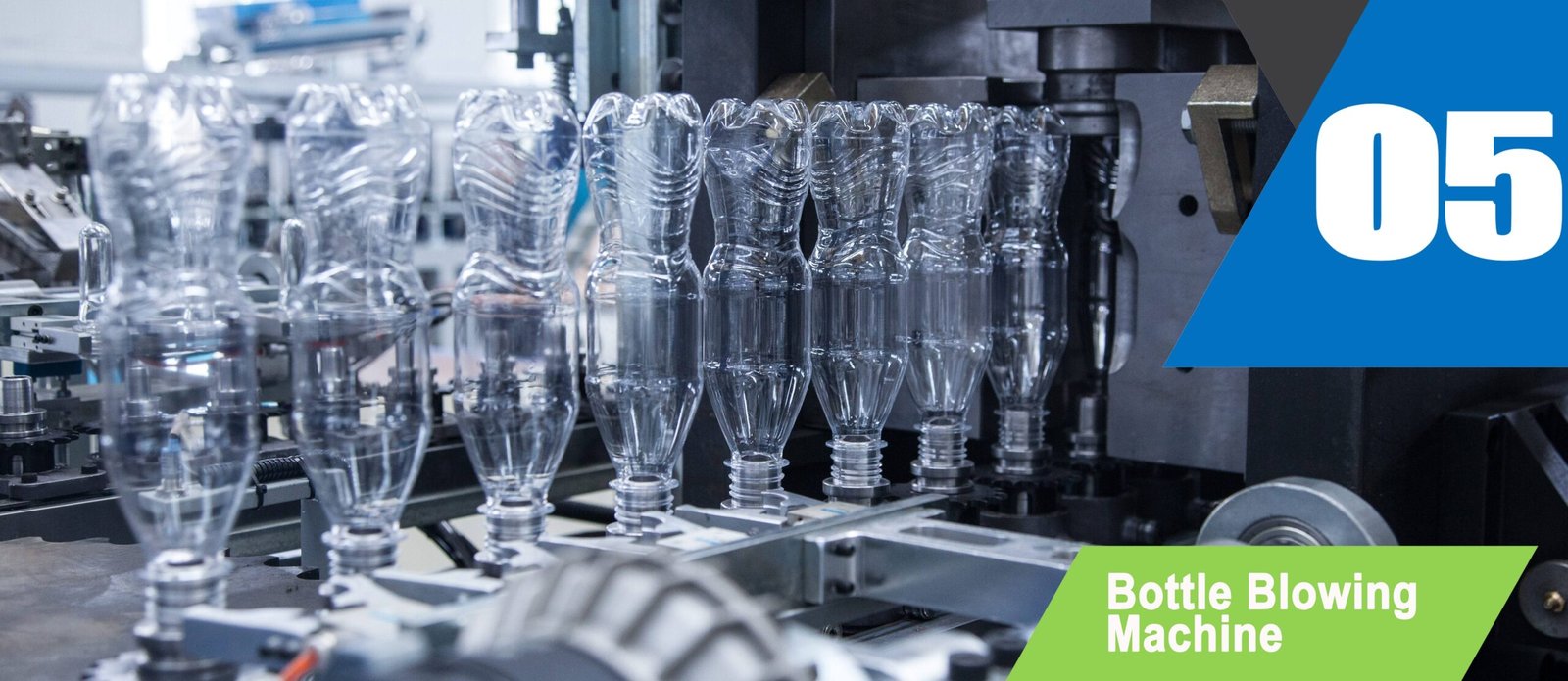
Industrial Machinery Assembly & Workshop: turnkey bottling line step 05 automatic bottle blowing machine
7. Frequently Asked Questions
Design for the Inspection, Not Just for the Production Run
Send your bottle drawing, container sample or target output. Our engineering team replies with a machine recommendation, mould assessment and factory-direct quotation within 24 hours.
Related Reading:
• Filling Machines: Monobloc, Isobaric, Hot Fill and 5-Gallon Lines
• CIP Cleaning on Filling Machines
• 3-in-1 Monobloc Rinse-Fill-Cap Machines
• Hot Fill Juice and Tea Filling
• Isobaric Filling for Carbonated Soft Drinks
• 5-Gallon Water Filling Lines