Updated: 2026 Engineering Standard · By Sailwin Technical Team
PET Preform Injection Molding Process: Step-by-Step Temperature, Pressure & Cycle Time Guide
In industrial bottle manufacturing, the optical clarity, mechanical drop strength, and sealing integrity of a finished container are determined before the preform ever reaches a stretch blow molder. If the plastic injection molding process in the preform stage suffers from incorrect barrel thermal profiling or inadequate pack pressure, the preforms will develop high acetaldehyde (AA) contamination, gate brittleness, and uneven crystallization that compromise final bottle blow ratios.
Unlike commodity plastics like PP or PE, PET (Polyethylene Terephthalate) has a narrow processing window. It requires dedicated dehumidifying drying below 50 ppm moisture, low-shear barrier screw plasticizing, and precision multi-stage injection profiles.
This comprehensive engineering manual deconstructs the PET preform molding sequence step-by-step, providing exact operational parameters for commercial bottling operations running on Sailwin SW-P series injection molding machines.
Key Engineering Takeaways
- Resin Moisture Critical Threshold: PET resin must be dried to less than 0.005% (50 ppm) moisture at 165°C–175°C for 4 to 6 hours before processing to prevent hydrolytic degradation and brittleness.
- Barrel Temperature Progression: Optimum barrel profile ranges from 265°C at the feed throat up to 285°C–295°C at the nozzle, minimizing acetaldehyde (AA) values for drinking water compliance.
- Multi-Stage Injection Profiling: Fast initial injection (80% of stroke) prevents gate freeze-off, followed by a smooth velocity deceleration and multi-stage holding pressure (600–900 bar) to eliminate sink marks.
Need Machine Optimization or Preform Mold Commissioning?
Contact Sailwin senior process engineers for customized barrel thermal profiles and mold cycle time optimization.
1. Standard PET Preform Process Parameters & Temperature Profiles
Thermal Processing Law: Overheating PET generates excessive Acetaldehyde (taste contamination); underheating causes unmelted unplasticized gels. Maintain barrel temperatures between 270°C and 290°C.
Proper barrel zone setup on Sailwin SW-P injection machines ensures complete polymer melt homogeneity while suppressing thermal oxidation:
| Barrel Zone | Target Temp (°C) | Function & Polymer Behavior | Common Pitfalls |
|---|---|---|---|
| Feed Throat Zone 1 | 260°C – 270°C | Preheating granules without premature melting | Too hot causes feed bridging; too cold causes screw overload. |
| Compression Zone 2-3 | 275°C – 285°C | Solid bed melting and air bubble displacement | Excessive screw speed induces severe shear degradation. |
| Metering Zone 4 | 280°C – 290°C | Pumping homogenized melt toward check ring | Maintain gentle backpressure (5–12 bar) for density. |
| Nozzle & Hot Runner | 285°C – 295°C | Direct injection into valve-gate cavities | Nozzle drool if decompression suck-back is insufficient. |
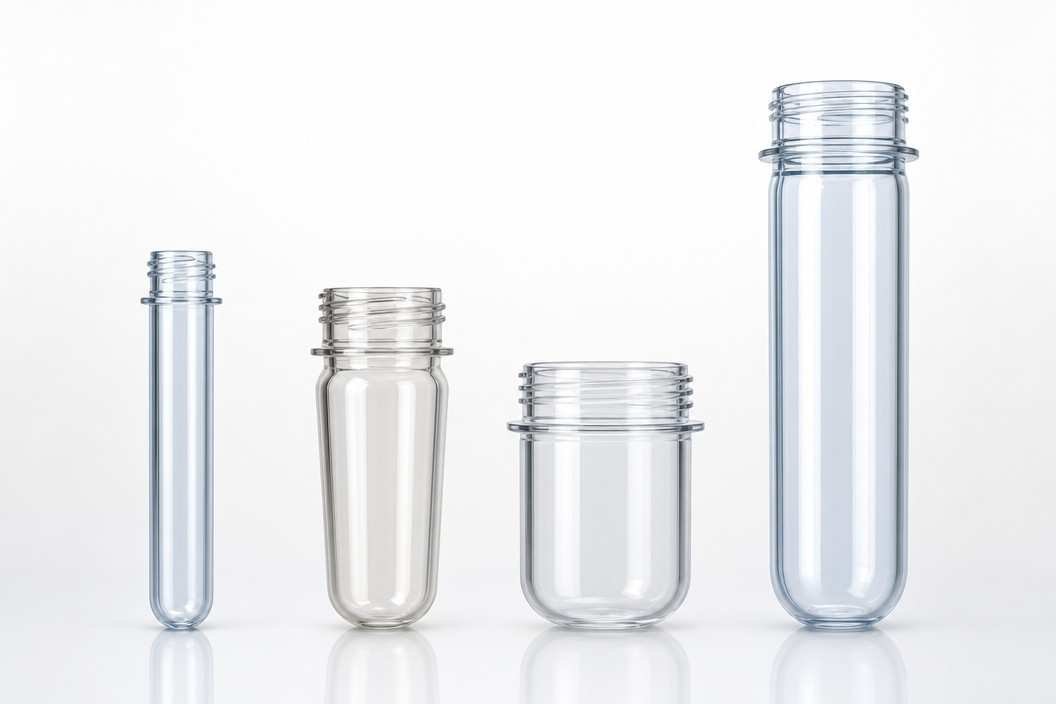
Sailwin Customer Case Study: Beverage Plant Lowers AA Value from 5.2 ppm to 1.8 ppm
How a commercial drinking water producer in Africa upgraded to Sailwin low-shear screw technology to pass international bottling quality audits.
- Water bottled in PET containers developed an unpleasant sweet off-taste due to high Acetaldehyde (AA > 5.0 ppm).
- Old injection press had severe screw shear hotspots, burning resin additives.
- High preform rejection rate during hot summer months.
- Supplied Sailwin SW-P170 (170T) with dedicated low-shear PET barrier screw (L/D 25:1).
- Installed PID-controlled ceramic far-infrared nano heaters with uniform radial heating.
- Optimized backpressure and reduced melt temperature by 14°C.
- Preform AA level plummeted to 1.8 ppm, easily passing strict Coca-Cola and PepsiCo sensory standards.
- Cycle time reduced from 14.8s to 11.2s.
- Zero gate stringing or brittleness during cold bottle blowing tests.
Data source: Sailwin Engineering Commissioning Log & Gas Chromatography Lab Report, 2026.
Frequently Asked Questions
SAILWIN MACHINERY · FACTORY-DIRECT PACKAGING SYSTEMS
Upgrade Your PET Preform Production Efficiency
Sailwin manufactures high-speed servo-driven PET preform injection systems delivering sub-11s cycles with minimum AA generation. Request plant consultation today.
Explore Integrated Packaging Machinery on Sailwin:
• PET Preform Injection Molding Machine – High-speed 140T to 550T systems for multi-cavity bottle preform lines.
• PET Water Bottle Blowing Machine – Linear automatic servo stretch blow molding equipment.
• Liquid Filling Machine & Bottling Line – 3-in-1 rotary monoblocs for drinking water and beverage factories.
• HDPE Extrusion Blow Molding Machine – Industrial continuous blow molding systems for jerrycans and drums.
• Need technical plant advice? Contact our engineering team for free turnkey consultation.