Updated: 2026 Engineering Guide · By Sailwin Tooling & Design Group
Custom PET Bottle Design: From 3D CAD to Finished Blow Samples
Developing a signature container geometry is one of the most powerful marketing assets a beverage, cosmetic, or household chemical brand can create. However, turning an imaginative creative rendering into a mass-producible plastic bottle often turns into an engineering quagmire: bottles crumple under vertical capping loads, vacuum panels buckle under temperature fluctuations, or sharp corners tear during high-speed blowing. Investing in a professional pet bottle design service bridges the gap between artistic vision and industrial feasibility.
Sailwin provides complete turnkey container engineering under one roof. Combining industrial design ergonomics, finite element analysis (FEA) structural simulations, preform stretch ratio matching, and rapid prototype CNC mold machining, we transform packaging concepts into certified production-ready bottles in under two weeks.
This comprehensive guide outlines the step-by-step bottle development lifecycle, detailing DFM guidelines, structural FEA load modeling, and prototype sampling validation procedures.
Key Takeaways
- 24-Hour DFM Feasibility Review: Every container concept is evaluated for preform stretch ratios, draft angles, parting line placement, and blowing pressure feasibility within 24 hours.
- FEA Structural Simulation: Digital top-load crush and vacuum pressure simulations eliminate costly mold recutting before steel is cut.
- 10-Day Prototype Sampling: Precision CNC single-cavity prototype molds produce physical blown samples for laboratory certification in just 10 days.
Have a new bottle concept or CAD drawing ready for engineering review?
Upload your 3D CAD models (STEP / IGS) or sketches for an immediate DFM moldflow and top-load evaluation.
1. The 4-Phase Container Engineering Lifecycle
Industrial bottle design requires balancing aesthetic styling, consumer ergonomics, filling line high-speed handling, and structural resin efficiency. Sailwin executes container development across four disciplined engineering phases:
| Development Phase | Core Engineering Deliverables | Lead Time | Key Validation Metric |
|---|---|---|---|
| Phase 1: Concept & 3D CAD | Industrial styling sketches, 3D parametric surface modeling, label panel sizing | 2 – 3 Days | Brimful overflow volume calibration (+/-1.5ml) |
| Phase 2: DFM & FEA Simulation | Preform stretch ratio matching, top-load compression simulation, vacuum rib optimization | 1 – 2 Days | Top-load strength > 250N; zero localized wall thinning |
| Phase 3: Pilot Prototype Tooling | CNC high-speed milling of aluminum 7075 single-cavity test mold with cooling channels | 5 – 7 Days | Mold cavity surface roughness Ra < 0.2um; shrink allowance |
| Phase 4: Physical Sampling | Machine pilot blow trials, optical dimensional scanning, laboratory crush & drop testing | 2 – 3 Days | Physical samples delivered to client with inspection report |
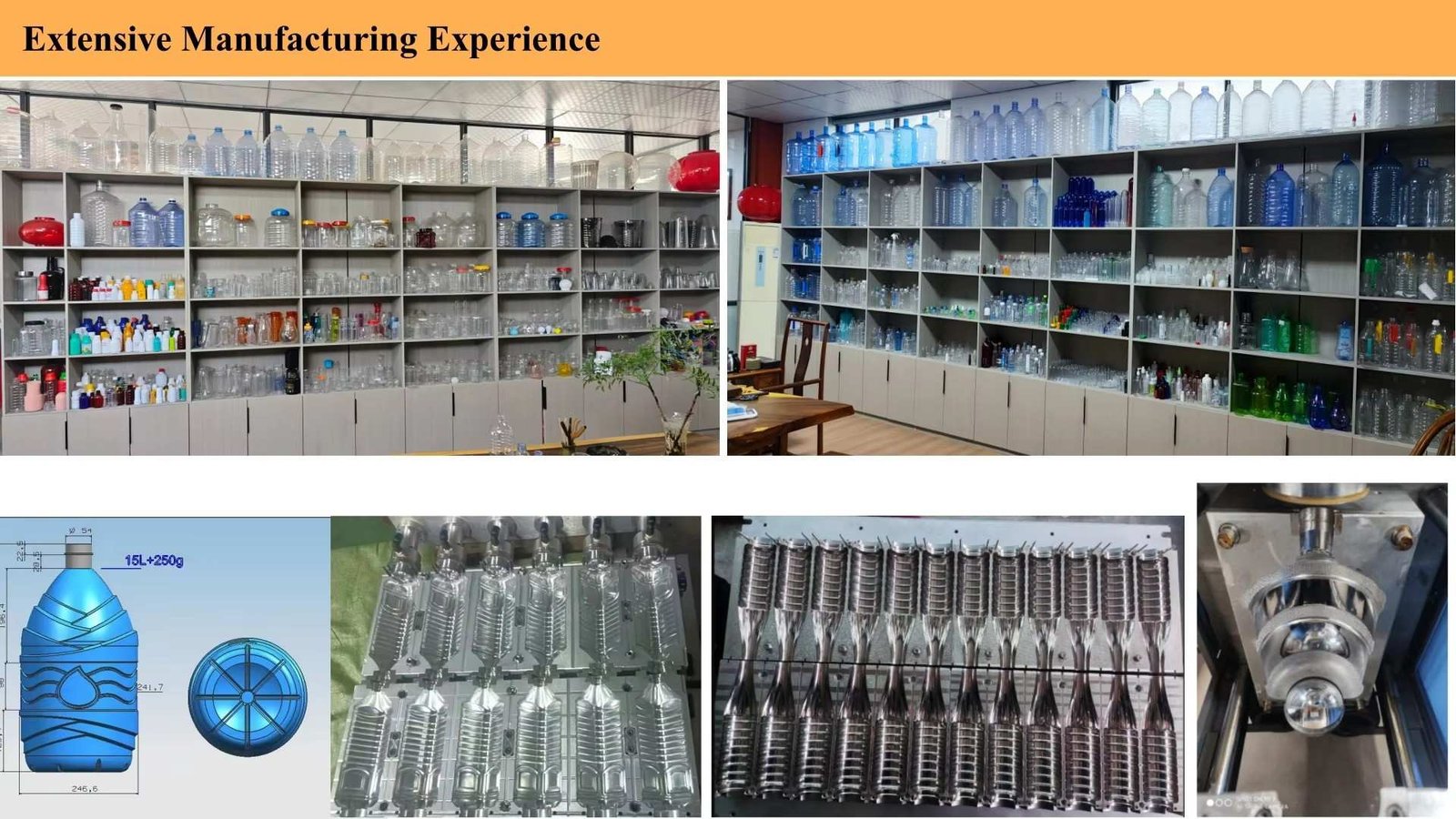
Figure 1: Custom container geometries developed by Sailwin, spanning sparkling beverages, wide-mouth jars, and hot-fill edible oil bottles.
2. Design for Manufacturability (DFM): Crucial PET Guidelines
Unlike injection molding where resin flows into a closed steel gap, stretch blow molding relies on free-air inflation. Designers must adhere to core DFM principles to prevent production blowouts:
- Corner Radius Constraints: Avoid sharp 90-degree internal or external corners. Maintain a minimum corner radius of 3.0mm (ideally 5.0mm) to allow natural PET biaxial elongation without localized stress tears.
- Draft Angles for Mold Release: Provide at least 1.5 degrees of draft angle along vertical sidewalls to ensure rapid, scratch-free bottle ejection upon mold opening.
- Structural Vacuum Ribs: For hot-fill juices or lightweight containers subject to pallet stacking, integrate horizontal hoop ribs or geometric vacuum panels that absorb ambient pressure variations without unsightly body ovalization.
- Base Geometry Selection: Match container base design to beverage carbonation: five-lobe petaloid bases for carbonated soft drinks (withstanding 8 bar), or champagne concave push-up bases for still water and edible oils.
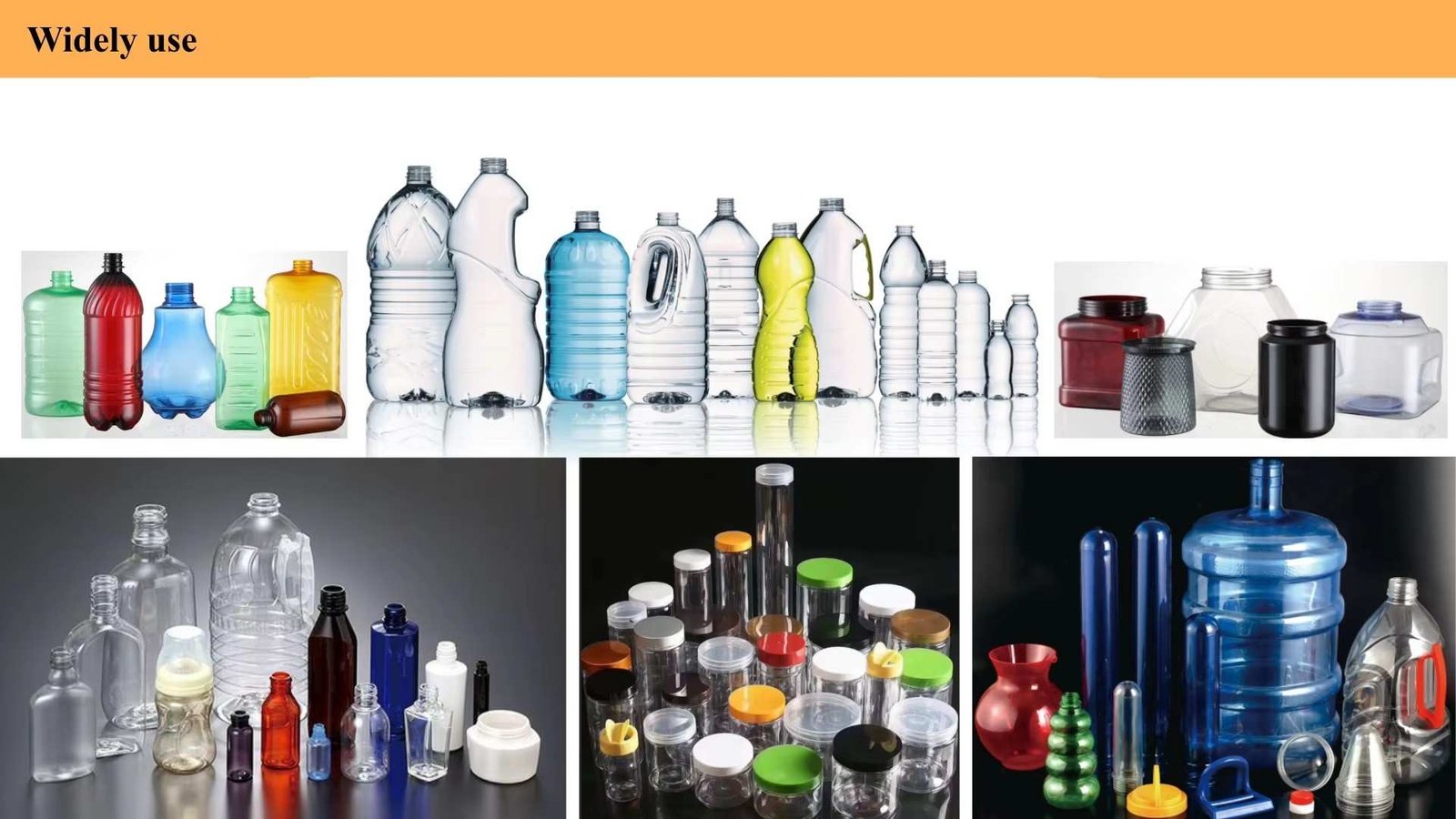
Figure 2: Finished custom containers showcasing sharp embossing, proprietary base ribs, and high-clarity cosmetic aesthetics.
3. Case Study: Functional Sports Drink Brand Cuts Container Development Time by 55%
An emerging functional beverage producer in Melbourne, Australia, achieved retail shelf launch four weeks ahead of schedule through Sailwin’s 10-day prototype sampling and FEA structural engineering.
- Target: 700ml high-energy sports beverage requiring 280N vertical top-load strength for high-speed automated capper handling.
- Challenge: The client’s initial graphic agency CAD failed FEA testing, buckling at 145N due to unreinforced ergonomic finger grooves.
- Timeline: The brand had a scheduled retail launch in 8 weeks with major supermarket distributors.
- Parametric Redesign: Sailwin engineering reworked the ergonomic grip profiles into arched structural load-bearing pillars within 24 hours.
- FEA Load Optimization: Simulated axial compression in ANSYS, boosting simulated top-load capacity to 310N without adding preform resin weight (maintained 26.5g).
- Rapid Pilot Sampling: CNC machined a single-cavity prototype mold in aircraft aluminum 7075 and blew 50 certified samples on our test bench in 9 days.
- Development Time: Total concept-to-physical-bottle time collapsed from 12 weeks to just 13 days (55% acceleration).
- Top-Load Validation: Laboratory crush testing certified 315N average top-load strength, completely eliminating capping line crushed-neck defects.
- Multi-Cavity Rollout: Scaled into an 8-cavity production mold running on a Sailwin automatic blow molder at 12,000 BPH.
Data source: Sailwin Customer Case Archive #AUS-2026-02. Equipment: Custom 8-Cavity Blow Mold & SW-F8 Blower.
4. Laboratory Physical Verification Standards
Before dispatching physical pilot samples to packaging brand owners, Sailwin subjects blown containers to stringent laboratory quality verification protocols:
- Top-Load Compression Testing: Certified according to ASTM D2659 standards, measuring peak axial load resistance prior to sidewall buckling.
- Sectional Weight & Wall Thickness Mapping: Hot-wire bottle cutters slice containers into finish, shoulder, body, and base sections to verify weight distribution matches CAD specifications to +/-0.3g.
- Optical Clarity & Haze Inspection: Spectrophotometer verification ensuring haze values remain under 1.5% across all visible sidewalls.
- Drop Impact Resistance: 1.5-meter vertical and 45-degree angle drop tests onto flat concrete surfaces to guarantee zero split seams.
Frequently Asked Questions
Ready to turn your signature bottle concept into reality?
Connect directly with Sailwin’s packaging industrial design engineers on WhatsApp for rapid feedback.
4. Summary: Accelerating Time-to-Market for New Packaging
Developing high-performance, aesthetically stunning PET containers requires the seamless integration of industrial design, FEA structural physics, precision CNC mold machining, and blow molding process science. Sailwin Machinery’s integrated engineering services take your container from napkin sketch to certified physical blow samples in days, ensuring seamless production scale-up.
- Validate top-load and vacuum strength using FEA digital simulation before cutting mold metal.
- Produce single-cavity prototype molds in 7-10 days to certify physical container performance.
- Partner with Sailwin for turnkey bottle design, blow molds, and high-speed blowing machinery.
SAILWIN MACHINERY · CONTAINER DESIGN EXCELLENCE
Ready to Engineer Your Next Iconic Bottle?
Send us your brand styling references, target bottle volume, and filling requirements. Our packaging design team will prepare a preliminary 3D concept drawing and DFM analysis within 24 hours.
Explore Complete PET Packaging Solutions:
• PET blow molding machine – Comprehensive catalogue of linear and rotary stretch blowers.
• pet blow molding machine cost guide – Complete 2026 pricing and auxiliary breakdown.
• quick mold change blow molding – SMED quick mold changeover systems.
• rPET bottle blow molding – Processing 100% recycled resin containers.
• Need dedicated technical advice? Contact our machinery specialists for a 1-on-1 equipment evaluation.