Updated: 2026 Production Guide · By Sailwin Process Engineering Team
Pre-Blow Timing & Stretch Rod Speed Calibration in PET Blow Molding
In two-stage PET stretch blow molding, achieving uniform wall thickness across complex bottle geometries is a delicate physical balancing act. When containers exhibit off-center injection gates, localized wall thinning, or milky white pearlescence, packaging technicians often rush to adjust infrared oven lamp voltages. However, over 70% of dimensional bottle defects stem from uncalibrated pre blow timing stretch blow molding dynamics and erratic stretch rod speed.
Sailwin engineers precision servo stretching assemblies and high-speed pneumatic valve manifolds across our automatic blowing machinery lineup. By coordinating servo descent velocity with millisecond-accurate pre-blow pilot valves, our blow molders deliver repeatable biaxial molecular orientation and exceptional container clarity.
This technical handbook examines the mechanics of longitudinal versus radial PET orientation, establishes calibration curves for pre-blow pressure and delay, and provides troubleshooting protocols for high-speed bottle production.
Key Takeaways
- Biaxial Orientation Window: Pre-blow pressure (6-10 bar) must initiate when the stretch rod penetrates 20% to 35% of total preform depth to maintain bubble stability.
- Servo Velocity Profiling: Multi-stage servo stretch rods moving at 1.2 to 2.0 m/s prevent pneumatic bounce, maintaining gate centering within +/-0.8mm.
- Defect Elimination: Proper pre-blow calibration prevents bottom gate puncture, panel thin-spots, and pearlescence caused by micro-void crazing.
Struggling with inconsistent bottle wall thickness or gate off-centering?
Submit your preform specs and container drawings for a comprehensive blowing process evaluation.
1. Physics of Biaxial Orientation: Balancing Axial and Radial Strain
PET (polyethylene terephthalate) is a semi-crystalline thermoplastic whose mechanical strength, barrier performance, and optical clarity depend upon strain-induced crystallization. In stretch blow molding, preforms heated to their rubbery elastic state (98°C to 118°C) undergo simultaneous biaxial stretching:
- Axial (Longitudinal) Orientation: The mechanical stretch rod drives downward along the vertical center axis, elongating polymer chains lengthwise. Typical axial stretch ratios range from 2.0:1 to 3.2:1.
- Radial (Hoop) Orientation: Pre-blow air pressure inflates the preform outward toward mold cavity walls. Typical hoop stretch ratios range from 3.0:1 to 4.5:1.
If pre-blow air triggers too early, the preform expands radially before sufficient axial elongation occurs, resulting in excessive resin pooling in the bottle base and frail, ultra-thin shoulders. Conversely, if pre-blow starts too late, the descending stretch rod cools the gate tip through thermal conduction, stretching the cold base resin into opaque white streaks (pearlescence) or puncturing the preform floor.
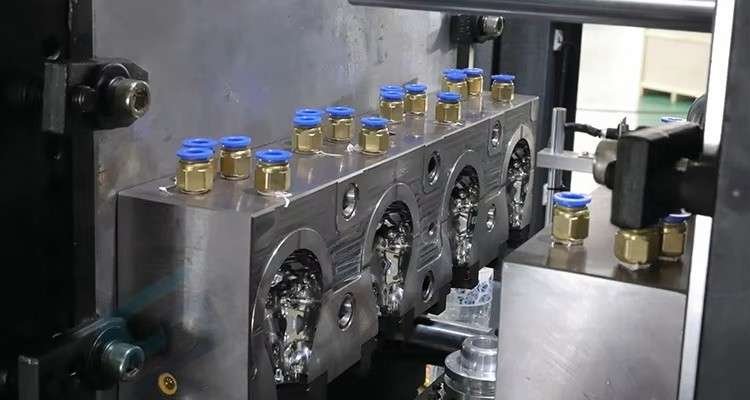
Figure 1: High-response pre-blow and high-pressure blowing valve manifold assembly on a Sailwin automatic stretch blow molding machine.
2. Calibrating Pre-Blow Timing, Pressure, and Flow Rate
Optimizing pre-blow parameters requires calibrating three interconnected variables: trigger position (or delay time), operating air pressure, and throttling flow rate. The table below outlines standard calibration benchmarks across common container categories:
| Container Type | Pre-Blow Pressure | Trigger Point (% Stroke) | Stretch Rod Speed | Critical Process Focus |
|---|---|---|---|---|
| 500ml Water (11g) | 6.5 – 8.0 bar | 20% – 28% | 1.6 – 2.0 m/s | Ultra-thin wall stability; avoid shoulder blowout |
| 1.5L CSD Bottle (36g) | 8.5 – 10.5 bar | 30% – 38% | 1.3 – 1.6 m/s | Petaloid base material distribution; burst pressure |
| 1.0L Hot-Fill (28g) | 7.5 – 9.0 bar | 25% – 32% | 1.4 – 1.8 m/s | Vacuum panel definition & thermal crystallinity |
| 5L Edible Oil (95g) | 9.0 – 12.0 bar | 35% – 45% | 0.9 – 1.3 m/s | Corner thickness in rectangular geometry; carry handle |
Modern digital blow molders utilize proportional throttle flow control valves. By tuning the air inflow ramp rate rather than opening full bore instantaneously, the inflating preform forms a gentle balloon that moves in harmony with the descending stretch rod tip, preventing turbulent fluttering and off-axis drift.
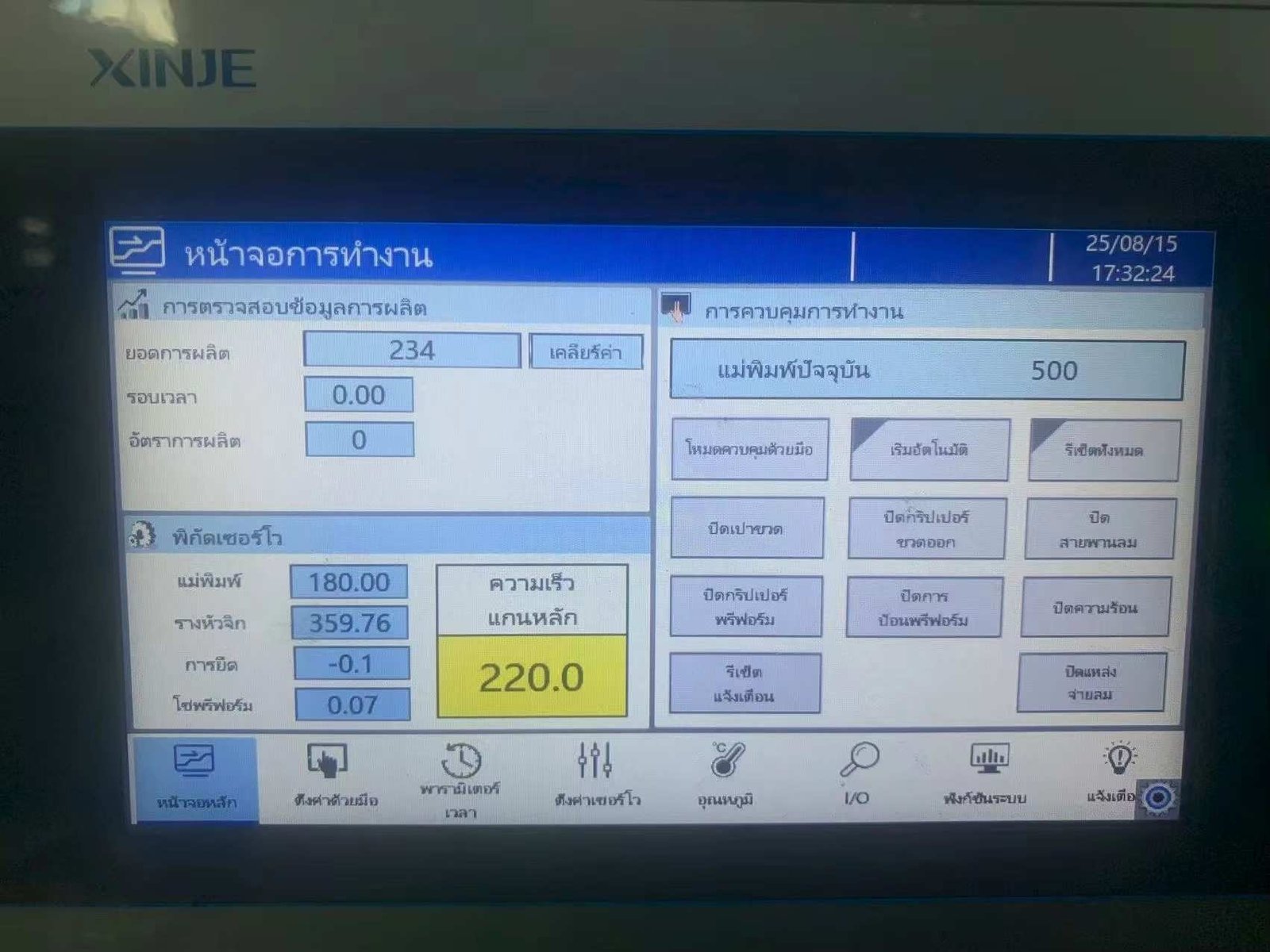
Figure 2: Multi-axis servo recipe interface on Sailwin blow molding machine allowing independent pre-blow timing calibration.
3. Case Study: Carbonated Beverage Bottler Eliminates 6.8% Gate Off-Center Scrap
A major regional soft drink packaging facility in Guadalajara, Mexico, operating 6-cavity linear blow molders, eliminated bottom gate drift and recovered 1,440 BPH in lost output through precision servo stretch and pre-blow recalibration.
- Product: 500ml sparkling flavored water blown from 21.5g PCO1881 preforms.
- Defect: 6.8% scrap rate due to injection gates drifting 2.5mm to 4.2mm off-center, causing petaloid feet to buckle under 7.5 bar internal pressure.
- Limitation: Legacy pneumatic stretch cylinders suffered from pressure drops during high-speed cycling, causing unpredictable stretch rod deceleration.
- Servo Retrofit: Upgraded to Sailwin multi-axis synchronized electric servo stretch drive with digital speed ramp profiling.
- Pre-Blow Recalibration: Shifted pre-blow trigger point from 15% stroke to 28% stroke, with pre-blow pressure regulated at 8.2 bar via fast-acting proportional valves.
- Stretch Rod Profiling: Configured two-stage stretch velocity: 1.8 m/s during initial axial elongation slowing to 0.9 m/s at the final 15mm approach to the mold base.
- Gate Centering: Gate displacement brought within +/-0.6mm across all cavities.
- Scrap Reduction: Scrap rate plummeted from 6.8% to 0.12%, saving $36,000 in monthly resin waste.
- Cycle Time Gain: Cycle time accelerated from 4.2s to 3.5s per cycle, yielding an extra 1,440 BPH.
Data source: Sailwin Customer Plant Performance Log #MEX-CSD-2026. Equipment: 6-Cavity Linear Blower with Servo Retrofit.
4. Troubleshooting Matrix: Pre-Blow and Stretch Defects
When bottle defects appear on the packing outfeed conveyor, use the following engineering troubleshooting matrix to quickly isolate pre-blow and stretch rod root causes:
| Observed Defect | Primary Root Cause | Corrective Action |
|---|---|---|
| Gate Puncture / Hole in Base | Pre-blow delayed too long; stretch rod pierces cold resin. | Advance pre-blow trigger timing; increase preform bottom heating zone. |
| Thin Shoulder / Thick Base | Pre-blow initiates prematurely or pressure is too aggressive. | Retard pre-blow start point; reduce pre-blow pressure by 1.0 to 1.5 bar. |
| Milky Pearlescence in Body | PET stretched below natural orientation temperature window. | Increase overall oven lamp voltage; verify infrared lamp ventilation. |
| Off-Center Injection Gate | Asymmetric preform heating or stretch rod mechanical misalignment. | Align stretch rod concentricity to +/-0.1mm; check preform mandrel rotation. |
Frequently Asked Questions
Have complex bottle designs requiring precise pre-blow profiling?
Connect directly with Sailwin’s process engineering department on WhatsApp for technical support.
4. Summary: Mastering Process Control for Flawless Bottle Quality
Achieving high-speed PET bottle blowing efficiency requires rigorous control over both axial stretch mechanical velocity and radial pre-blow pneumatic flow. By pairing precision servo actuators with digital touchscreen timing controls, Sailwin blow molding machines deliver stable, scrap-free bottle production across millions of cycles.
- Maintain pre-blow initiation between 20% and 35% of stretch rod downward stroke.
- Deploy all-electric servo stretching drives to ensure +/-0.05mm stroke repeatability.
- Partner with Sailwin Machinery for high-precision blow molding equipment, molds, and process support.
SAILWIN MACHINERY · BLOW PROCESS EXCELLENCE
Ready to Eliminate Blowing Defects and Scrap?
Send us your preform weights, bottle 3D designs, and existing scrap rates. Our engineering team will analyze your process dynamics and deliver an optimized machinery calibration blueprint within 24 hours.
Explore Complete PET Packaging Solutions:
• PET blow molding machine – Comprehensive catalogue of linear and rotary stretch blowers.
• servo driven pet stretch blow molding machine – Advanced all-electric servo stretch and clamp technology.
• high pressure air compressor for pet blowing – Sizing 30-40 bar pneumatic systems.
• infrared preform heating oven for pet bottles – Multi-zone temperature profiling guide.
• Need dedicated technical advice? Contact our machinery specialists for a 1-on-1 equipment evaluation.