In high-speed PET bottle packaging, the margin between commercial profitability and recurring operational loss is defined in fractions of a second. A high speed PET blow molding machine rated at 10,000 to 12,000 bottles per hour (BPH) generates enormous revenue potential — but only when thermal efficiency, mechanical cycle times, pneumatic recovery, and downstream synchronization operate without bottleneck. When an improperly configured line drops from 95% to 78% operational efficiency (OEE), the accumulated cost in wasted electrical power, thermal scrap, and unscheduled downtime can easily exceed $65,000 per year.
This comprehensive technical and commercial guide delivers an actionable engineering framework for evaluating, sizing, and operating high speed PET blow molding machinery. Whether you are scaling an existing bottled water facility, upgrading a carbonated soft drink (CSD) bottling plant, or commissioning a high-output edible oil container line, this analysis details real BPH benchmarks, electrical cost calculations per bottle, servo versus pneumatic actuation economics, and preventative maintenance schedules required to sustain peak throughput.
| Specification Parameter | Standard Automatic Line | High-Speed Linear Servo System | Ultra-Speed Rotary Platform |
| Output Capacity (500ml Water) | 2,000 – 4,000 BPH | 6,000 – 12,000 BPH | 14,000 – 36,000+ BPH |
| Output Per Cavity / Hour | 800 – 1,100 BPH/cavity | 1,500 – 2,000 BPH/cavity | 2,000 – 2,400 BPH/cavity |
| Drive Mechanism | Pneumatic + Hydraulic Clamping | Full Servo Electric Clamping & Stretch | Continuous Rotary Cam / Direct Servo |
| Electrical Energy Consumption | 0.022 – 0.028 kWh / bottle | 0.014 – 0.018 kWh / bottle (30% savings) | 0.012 – 0.015 kWh / bottle |
| High-Pressure Air Recycling | Optional / Non-standard (15% recovery) | Standard Integrated ARS (40–45% recovery) | Multi-stage Integrated Recovery (50%+) |
| Scrap Rate Benchmark (OEE > 92%) | < 0.8% standard startup | < 0.2% continuous operational run | < 0.15% commercial production |
What Qualifies as “High Speed”? Defining the BPH Threshold in Modern Packaging
In container blow molding procurement, the designation “high speed” is frequently misapplied by equipment brokers. Slower linear pneumatic machines operating between 1,000 and 3,000 BPH are standard utility machines. True modern high speed bottle blow molding begins at the verified threshold of 1,500 to 2,000 bottles per cavity per hour, translating to total line outputs of 6,000 BPH for compact 4-cavity configurations, 9,000 to 12,000 BPH on 6 cavity blow molding machine systems, and upwards of 24,000 BPH on industrial rotary configurations.
Understanding this threshold is vital because high-speed operation fundamentally alters machine physics. At cycle speeds below 2.5 seconds per mold stroke, conventional pneumatic actuation degrades rapidly: air cylinder seal friction introduces micro-delays, valve response hysteresis causes uneven stretch rod penetration, and mechanical toggle linkages experience premature fatigue. Equipment engineered specifically for high speed PET blow molding machine applications eliminates pneumatic dependency across critical motion axes, replacing mechanical stops with synchronized AC servo positioning encoders that maintain 0.02mm repeatability at 45 strokes per minute.
5 Critical Engineering Factors That Determine Real-World High-Speed Output
Nominal nameplate capacity is rarely achieved in day-to-day operation without engineering optimization across the complete production cell. Factory managers frequently find that a machine marketed at 10,000 BPH delivers only 7,500 BPH on the factory floor. Five interrelated mechanical and thermodynamic factors govern actual sustained throughput:
1. Infrared Heating Penetration and Thermal Profiling
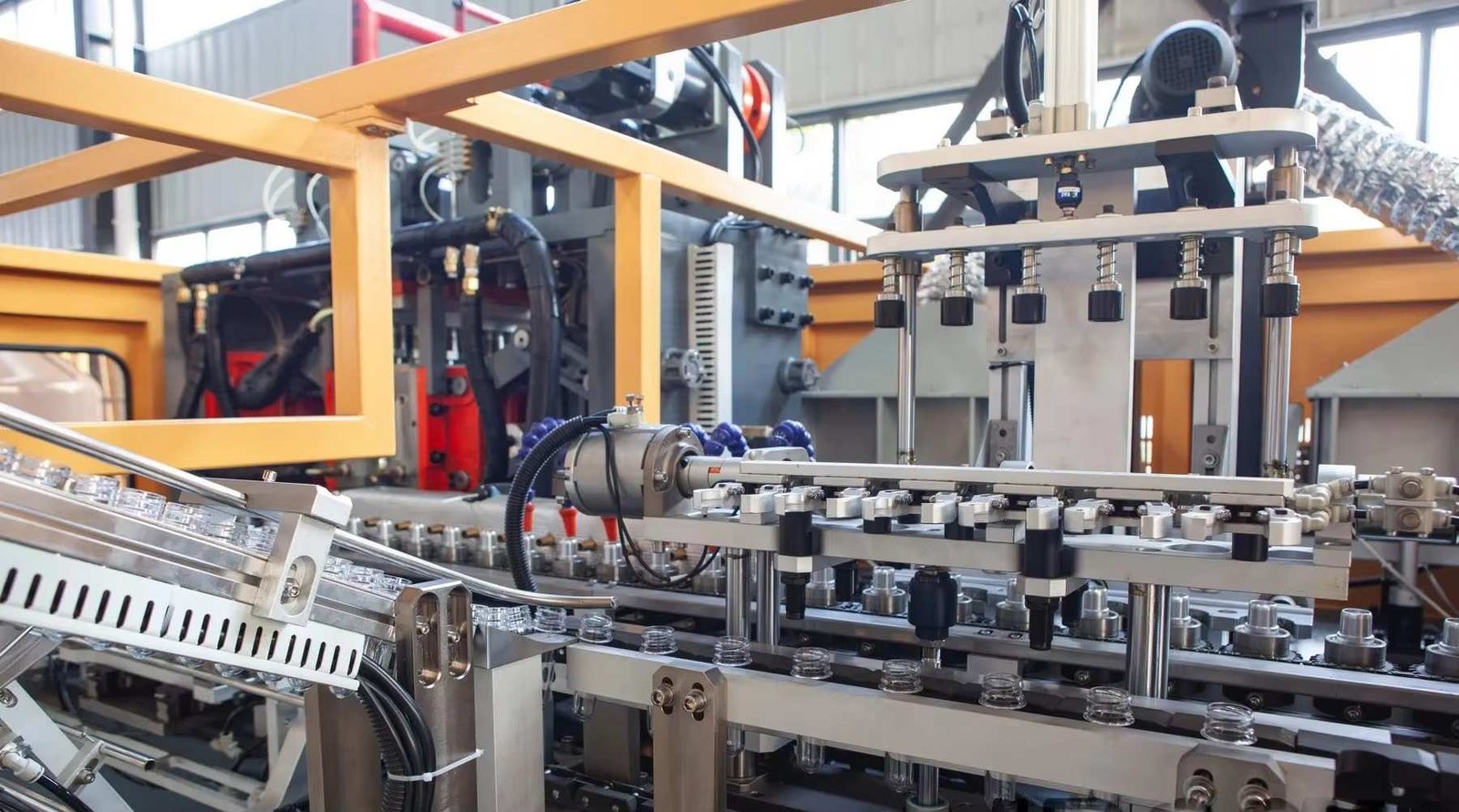
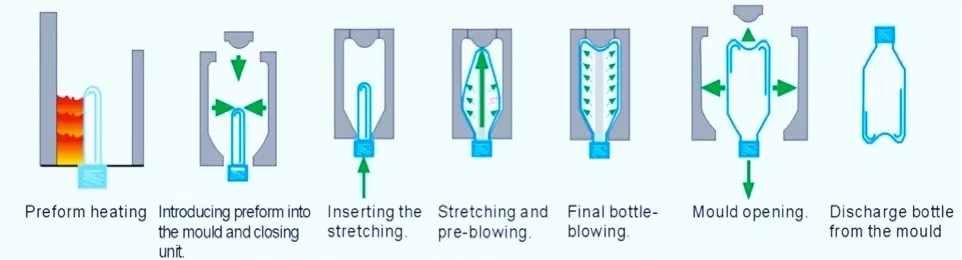
Heating is the primary thermodynamic governor of stretch blow molding speed. As preforms enter the heating tunnel at rates exceeding 2.5 units per second, standard quartz lamps cannot transfer sufficient radiant thermal energy to the inner core of thick-walled preforms without blistering the outer surface. High-efficiency high-speed ovens utilize short-wave infrared (SWIR) lamps arranged in 8 to 10 independent vertical zones, combined with high-velocity air cooling directed exclusively at the preform neck finishes.
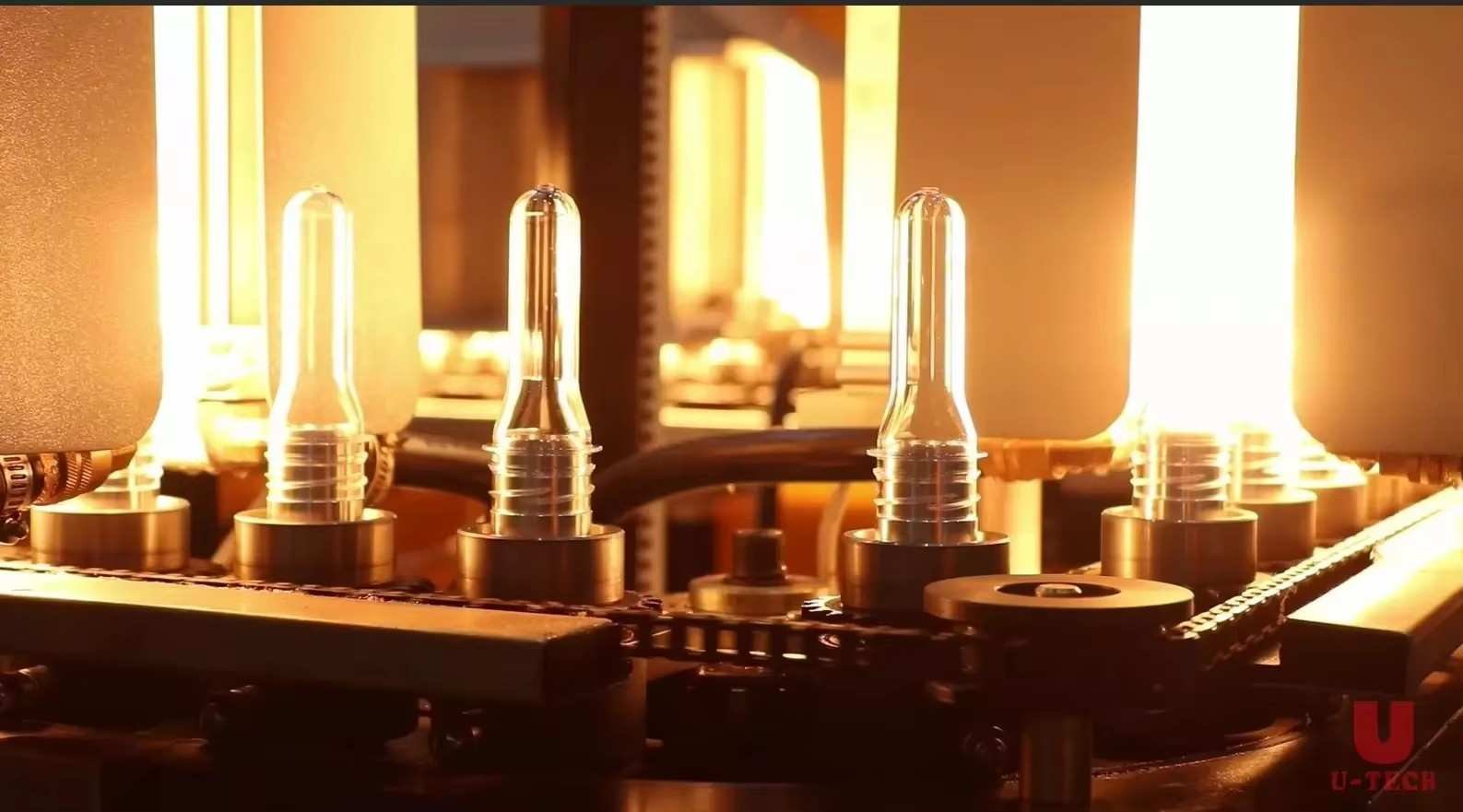
Uniform spindle rotation ensures circumferential temperature variance remains under ±1.5°C. Without this strict thermal profile, the preform stretches eccentrically during high-speed expansion, resulting in localized thin spots, pearlescence, and structural collapse under top-load testing.
2. Clamping Force Rigidity and Mold Parting Line Integrity
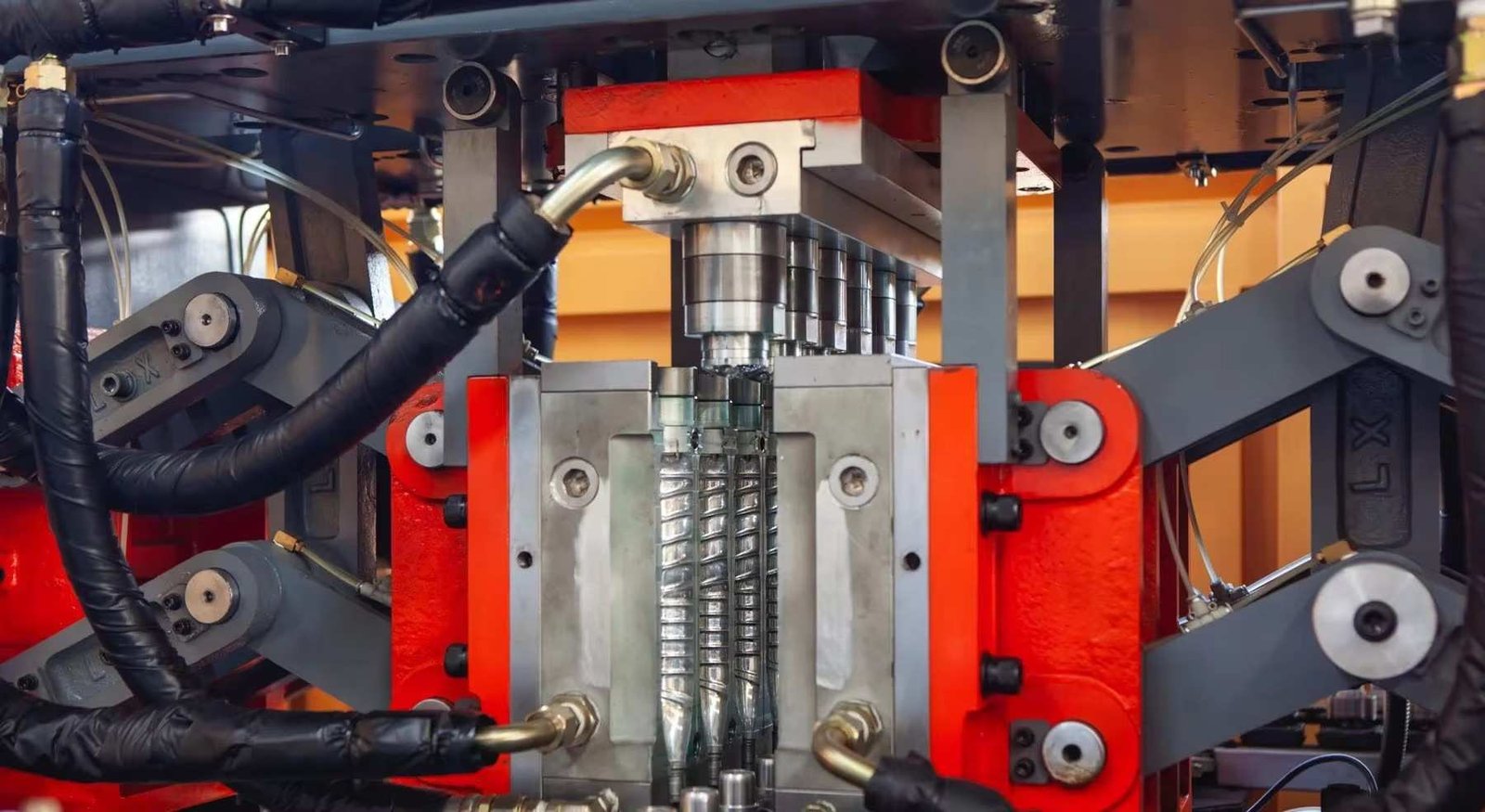
During the final high-pressure blowing phase (32 to 38 bar), the outward hydrostatic pressure acting across a 6-cavity mold exceeds 180 kN of opening force. On conventional machines, frame deflection allows the mold halves to separate by as little as 0.08mm, causing heavy parting line flash and bottle dimensional rejects. Industrial high-speed units utilize high-tensile nodular cast iron platens driven by rigid four-bar toggle linkages or direct dual-cylinder servo hydraulic clamping that completely eliminates platen breathing at maximum pressure.
3. Two-Stage Pressure Profiling and Air Exhaust Speed
High-speed blowing requires instant, millisecond-controlled pneumatic transitions. The pre-blow phase (6 to 12 bar) guides axial stretch rod orientation, followed immediately by high-pressure expansion (30 to 35 bar) for mold cavity wall contact. However, the bottleneck on cycle time is frequently exhaust speed. Trapped high-pressure air must be vented completely before the mold can unlock. High-speed systems employ large-orifice high-speed pilot exhaust valves that evacuate cavity pressure in less than 0.18 seconds, reclaiming cycle overhead on every stroke.
4. Servo-Driven Bi-Axial Stretch Rod Kinematics
In standard machinery, pneumatic cylinders drive stretch rods downward at fixed velocities. At high outputs, mechanical bounce and deceleration shocks deform the bottom gate of the bottle. Fully electric servo stretch systems allow variable velocity profiling: the stretch rod accelerates rapidly through the unformed preform body, decelerates slightly upon approaching the bottom petaloid base mold, and retracts instantaneously with electronic synchronization. This precise velocity profile produces optimum biaxial molecular orientation, increasing container sidewall stiffness while permitting a 5% to 8% preform resin grammage reduction.
5. Downstream Bottle Handling and Air Conveyor Integration
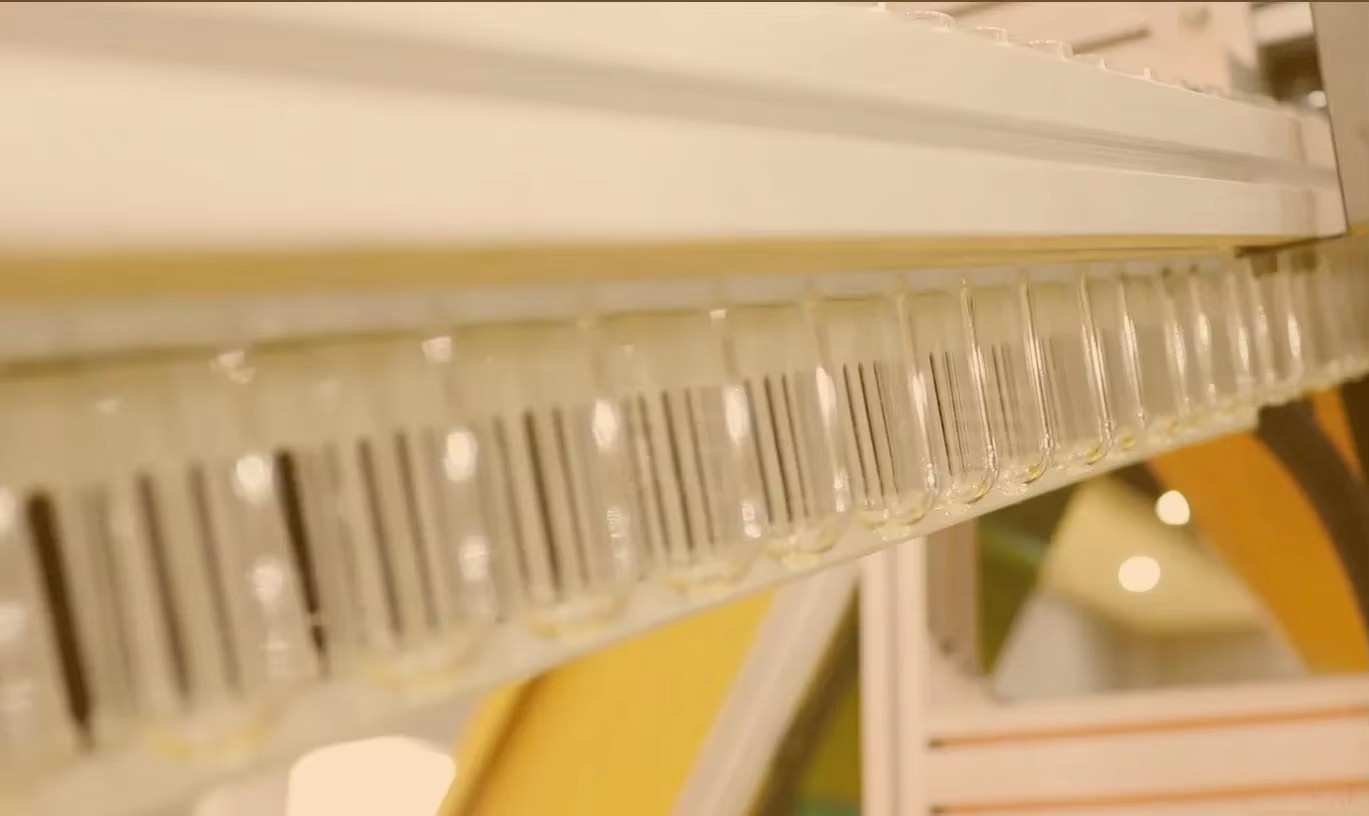
Discharging 10,000 lightweight empty bottles per hour into a production hall requires synchronized pneumatic handling. Mechanical gripper arms transferring bottles to flat belt conveyors inevitably result in fallen bottles, line jamming, and emergency machine stops. Modern turnkey lines integrate direct air conveyor tracks with high-efficiency centrifugal blowers, smoothly capturing bottles at the neck ring and transferring them directly to rotary rinsers and fillers without surface scratching or tipping.
Evaluating a High-Speed PET Bottling Line Upgrade?
Our packaging systems engineers calculate exact cycle times, pneumatic requirements, and electrical savings based on your specific bottle drawing and target BPH.
Preform Quality Consistency: The Hidden High-Speed Bottleneck
On semi-automatic or low-speed linear machines producing 1,500 BPH, operators can visually detect preform wall variation, and minor dimensional discrepancies are compensated by extended heating times. In high-speed production operating at 10,000 BPH, a single out-of-tolerance preform will jam the unscrambler chute or blow out inside the mold, causing an automatic emergency line stop that costs 20 minutes of downtime (equivalent to 3,300 unproduced bottles).
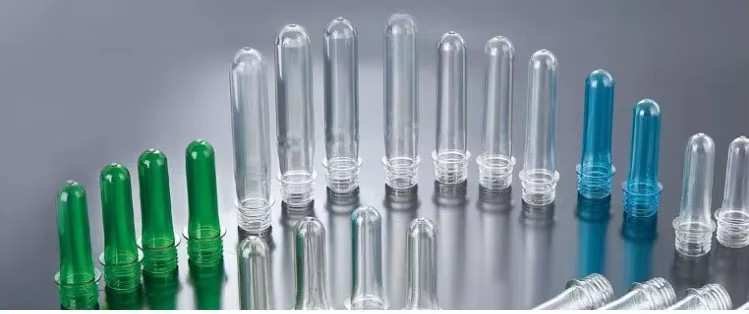
To sustain continuous maximum output, preforms must adhere to stringent quality thresholds:
- Neck Finish Ovality: Total runout must not exceed ±0.12mm to guarantee frictionless feeding through gravity slide rails and mandrels.
- Intrinsic Viscosity (IV) Stability: Preform resin IV must remain within a narrow band of 0.80 ± 0.02 dL/g for standard water and 0.84 ± 0.02 dL/g for carbonated soft drinks to ensure predictable high-pressure blow expansion.
- Acetaldehyde (AA) Content: For premium bottled water, AA levels must remain below 1.5 ppm, preventing chemical off-tastes caused by thermal degradation during preform injection molding.
- Eccentricity and Wall Thickness Variation: Circumferential wall variation must remain below 0.05mm; otherwise, the thinner sector overheats rapidly and bursts under 35-bar blow pressure.
Mold Engineering & Lightweighting: Maximizing Speed with Minimal Resin
Modern high-speed bottle production is inseparable from container lightweighting. Reducing a 500ml water bottle from 16.5g to 11.2g represents a direct 32% raw resin savings — which, across a 10,000 BPH plant running two shifts, saves over $180,000 in annual raw material costs. However, blowing a super-lightweight bottle at high speed demands extreme mold manufacturing precision.
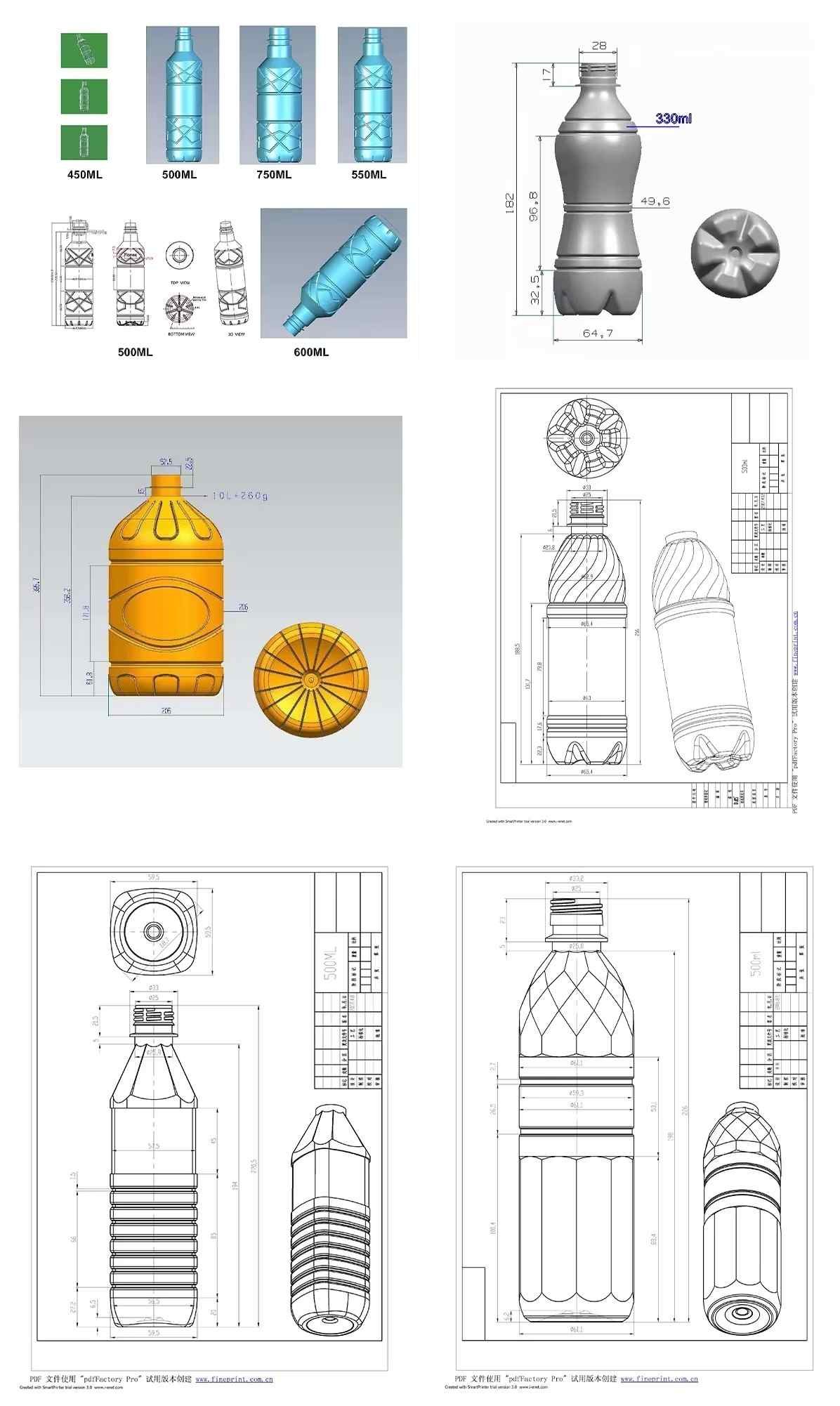
High-speed molds are precision-machined from aviation-grade 7075-T6 aluminum or high-thermal-conductivity copper alloy inserts. Aluminum provides triple the thermal heat dissipation rate of standard steel molds, allowing circulating chilled water (6°C to 10°C) to freeze the newly blown bottle shape in under 0.6 seconds. Deep internal conformal cooling channels ensure consistent bottom petaloid crystallization, preventing bottom sagging when bottles are stacked on secondary transport pallets.
Energy Cost per Bottle: Calculating Your True Production Cost
When comparing machine purchase proposals, equipment buyers frequently focus solely on initial capital expenditure. However, over a 5-year operating horizon, electrical energy consumption represents 45% to 55% of the total cost of ownership of a high-speed blow molding system. A machine with inefficient heating lamps and unrecovered high-pressure air quietly drains operational margins month after month.
The total electrical operating cost per bottle is governed by the following engineering equation:
| System Configuration Component | Conventional Pneumatic Line (8,000 BPH) | Sailwin High-Speed Servo Line with ARS (10,000 BPH) | Operational Impact |
| Blow Molding Machine Power Draw | 75 kW (Quartz lamps + hydraulic) | 54 kW (Shortwave IR + full electric servo) | 28% direct machine power savings |
| High-Pressure Compressor Power | 90 kW (Standard 35 bar screw compressor) | 55 kW (With 45% High-Pressure Air Recovery) | 35 kW continuous compressor reduction |
| Chiller and Water Circulation | 18 kW | 15 kW (Optimized heat exchanger channels) | Lower thermal loss overhead |
| Total System Power Demand | 183 kW | 124 kW | 59 kW net continuous reduction |
| Electricity Cost / 1,000 Bottles ($0.12/kWh) | $2.745 per 1,000 bottles | $1.488 per 1,000 bottles | 45.8% lower power cost per bottle |
| Annual Electricity Cost (5,000 hrs/yr) | $109,800 | $74,400 | $35,400 saved annually on power alone |
Over a standard 7-year service lifespan, the electrical savings from servo motors and high-pressure air recycling ($247,800) completely offsets the purchase cost of the blow molding equipment itself.
Curious How Much Electrical Power Your Current Line Is Wasting?
Send us your current bottle grammage and monthly power bill. Our engineering team will run a side-by-side power audit comparing your configuration against an integrated servo system.
Production Scope: From Standard Bottles to High-Speed Custom Containers
While high-speed machinery is predominantly associated with standard packaged mineral water and CSD beverage bottles, modern linear servo blow molding technology accommodates a wider spectrum of commercial packaging formats without sacrificing speed efficiency:
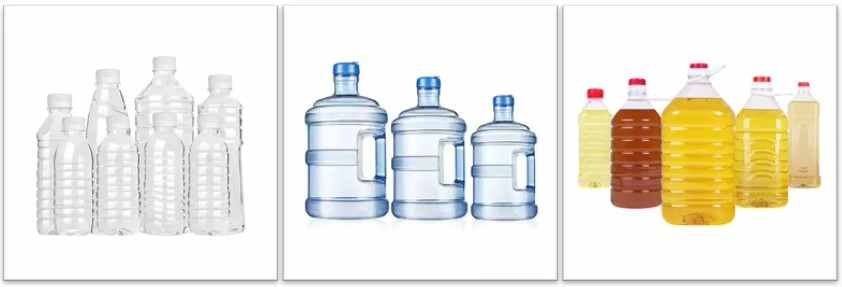
- Packaged Water Bottles (250ml – 1500ml): Ultra-lightweight bottles running at peak ratings between 1,800 and 2,000 BPH per cavity on 28mm/3025 neck standards.
- Carbonated Soft Drinks (CSD): Thicker-walled containers blown at 35 bar with reinforced petaloid bases to withstand internal carbonation pressures of 4.0 to 5.5 bar.
- Edible Oil Bottles (500ml – 2000ml): Square and oval container geometries utilizing preferential heating tunnels to distribute plastic evenly into sharp corner radiuses.
- Personal Care & Cosmetics: High-clarity, thick-wall PET containers requiring slow-cycle optical crystallization control for luxury packaging appeal.
For operations focused specifically on large-format containers such as water dispenser bottles, explore our dedicated 5 gallon PET blow molding machine engineering guide. For wide-mouth food containers and cosmetic cream jars, review our specialized wide neck PET jar blow molding machine specifications.
Preventative Maintenance Schedule to Sustain Maximum Output
Operating machinery at 40+ cycles per minute exerts continuous mechanical and thermal stresses. The difference between a high-speed machine that runs trouble-free for 10 years and one plagued by intermittent breakdown is strict adherence to preventative maintenance protocols:
| Maintenance Frequency | Critical Inspection Tasks | Target Tolerance / Verification Standard |
| Daily (Every Shift / 8 hrs) | Clean preform unscrambler rollers; inspect mold parting line faces for dust; check pneumatic line pressure gauges; verify IR lamp integrity. | No visual particulate build-up; high blow pressure stable at ±0.5 bar; all quartz lamps fully illuminated. |
| Weekly (50 Operating hrs) | Inspect linear guide rails and automatic central lubrication oil levels; inspect air recycling check valves; check mold cooling water inlet/outlet temperatures. | Water temperature delta (ΔT) between mold supply and return ≤ 2.5°C; zero lubricant dripping onto bottle discharge chutes. |
| Monthly (200 Operating hrs) | Torque check mold platen mounting bolts; inspect stretch rod tip alignment; recalibrate infrared optical pyrometer sensors; clean electrical cabinet ventilation filters. | Stretch rod centered to mold gate within ±0.2mm; electrical enclosure internal temperature maintained under 35°C. |
| Quarterly (600 Operating hrs) | Replace high-pressure valve dynamic seals; inspect servo motor drive timing belts for tension and tooth wear; test emergency stop safety circuits. | Zero high-pressure air bypass leakage; timing belt deflection within ±1.0mm under calibrated spring gauge load. |
Engineering Case Study: Bottled Water Producer Reaching 11,800 BPH with 40% Power Cut
Client Profile: A regional spring water bottler in Southeast Asia operated two older 4-cavity pneumatic linear blow molders, generating a combined 5,500 BPH. Due to rising utility tariffs and expanding supermarket distribution contracts, the plant faced severe margins compression and frequent peak-summer supply shortages.
Engineering Challenge: The existing facility was capped by an incoming transformer rating of 315 kVA. Expanding output to 12,000 BPH using conventional pneumatic machinery would have required a costly utility transformer upgrade ($45,000) and an additional 110 kW high-pressure compressor.
Sailwin Turnkey Solution:
- Replaced both older pneumatic machines with a single Sailwin 6-cavity high-speed linear servo blow molding machine rated at 12,000 BPH for 500ml containers.
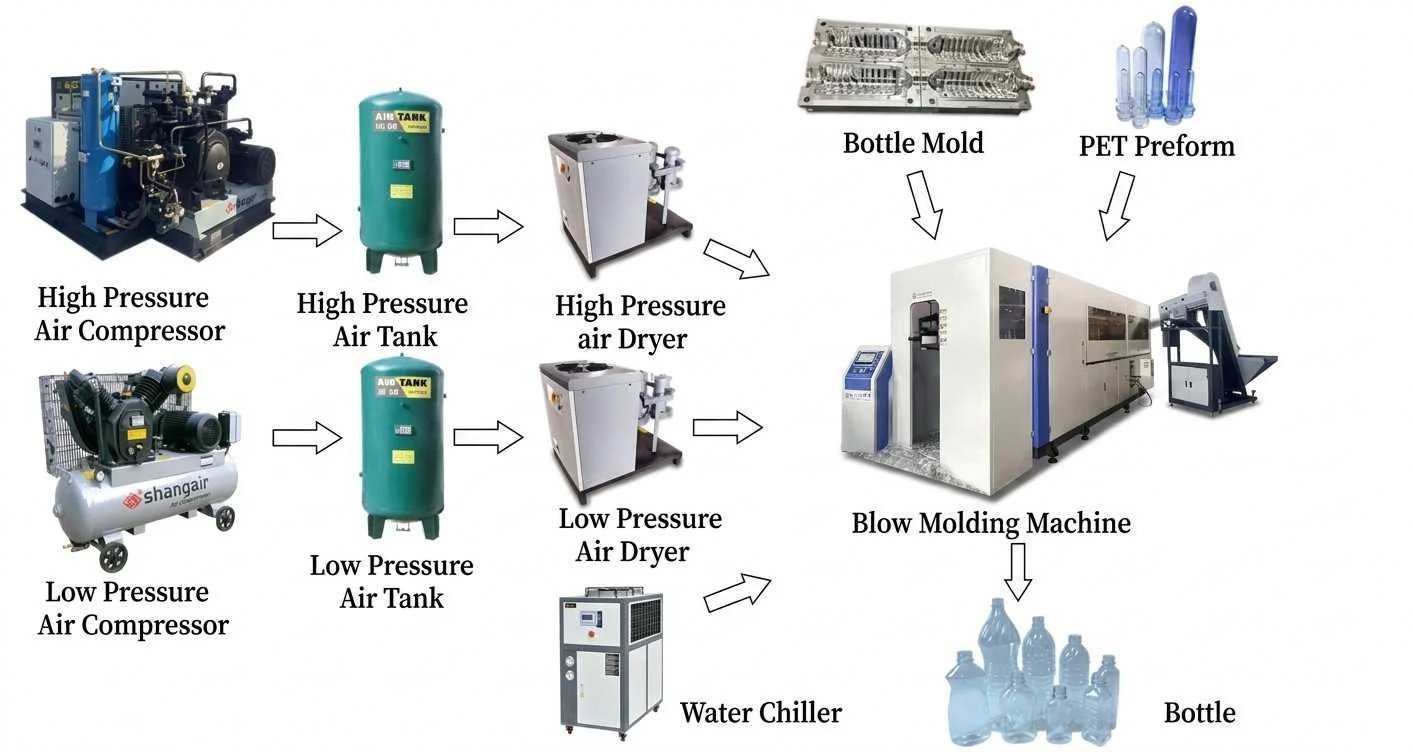
- Integrated an automated High-Pressure Air Recycling System (ARS) redirecting exhaust gas back into low-pressure pneumatic cylinders and pre-blow loops.
- Equipped the heating tunnel with precision internal ventilation fans, lowering radiant oven power demand from 68 kW to 46 kW.
- Connected the discharge directly into an automated neck-suspension air conveyor feeding a 36-valve monobloc rotary filler.
Quantifiable Production Results:
| Performance Metric | Before Upgrade (2 × 4-Cavity Pneumatic) | After Sailwin Upgrade (1 × 6-Cavity Servo) | Net Operational Gain |
| Sustained Output (500ml) | 5,500 BPH | 11,800 BPH | +114% production capacity |
| Total System Connected Load | 210 kW (Near transformer limit) | 132 kW | 78 kW load released (Transformer upgrade avoided) |
| Operating Crew per Shift | 4 Operators (Manual preform loading) | 1 Operator (Full automatic hopper elevator) | 75% direct labor reduction |
| Scrap Rate on Production Run | 1.4% | 0.18% | 87% reduction in defective bottles |
| Capital Payback Period | — | 11.4 Months | Full capital amortization under 1 year |
Facing Production Bottlenecks in Your Bottling Plant?
Whether you are transitioning from 3,000 BPH to 10,000+ BPH or looking to cut electrical expenditure on an existing line, Sailwin’s engineering specialists deliver guaranteed speed and utility specifications backed by real factory trials.
Frequently Asked Questions: High-Speed PET Blow Molding
What is the minimum hourly output to justify a high-speed PET blow molding machine?
Generally, operations producing more than 25,000 bottles per day (or operating more than 8 hours daily at 4,000+ BPH) achieve rapid capital amortization on high-speed equipment. Below this threshold, a standard automatic PET blow molding machine or a multi-cavity semi-automatic configuration offers lower initial capital overhead.
How much electrical power can an Air Recovery System (ARS) actually save?
An integrated High-Pressure Air Recycling System collects exhaust air at approximately 15 bar during mold decompression. This reclaimed air is filtered and piped directly to low-pressure cylinder actuators and pneumatic conveyor ejectors, reducing high-pressure compressor electrical load by 35% to 45%, saving between $15,000 and $38,000 annually in industrial power charges.
Can one high-speed machine blow both 500ml water bottles and 2-liter soft drink bottles?
Yes, provided the machine’s maximum mold clamping stroke, platen dimensions, and heating pitch accommodate the larger preform diameter. However, maximum output (BPH) scales down on 2-liter containers (typically from 2,000 BPH/cavity down to 1,200 BPH/cavity) because the thicker preform wall requires longer radiant oven exposure and cooling times.
What is the typical mold changeover time on a high-speed linear blow molder?
Modern linear machines equipped with quick-clamping mold locks and quick-disconnect water couplings allow a trained two-person team to complete a full 6-cavity mold and mandrel changeover in 45 to 60 minutes. Older bolt-fastened platen systems require 2.5 to 4 hours.
Why are servo electric stretch systems preferred over pneumatic stretch cylinders?
Servo motors provide absolute position feedback through high-resolution encoders. This eliminates mechanical bounce at the bottom gate, allows variable velocity acceleration through the bottle sidewall, and ensures identical bi-axial orientation across all mold cavities simultaneously, reducing bottom blowout failures to virtually zero.
Does Sailwin test client molds at full rated speed prior to overseas shipment?
Yes. Every Sailwin high-speed blow molding system undergoes a continuous 72-hour factory acceptance test (FAT) running the client’s actual preforms and production molds. Full-speed cycle verification, infrared thermal imaging, container top-load testing, and optical wall thickness validation reports are completed and verified according to ISO 9001 quality management protocols prior to shipping.
Summary & Related Equipment Guides
Achieving maximum throughput at minimum operational cost on a high speed PET blow molding machine is not a matter of luck — it is the result of deliberate mechanical sizing, servo-driven kinematic precision, multi-zone thermal profiling, and integrated air recycling. Investing in high-speed capability transforms your manufacturing margin from thin commodity conversion into an efficient, low-overhead packaging powerhouse.
To further explore specific machine capacities and technology alternatives, review our detailed engineering analyses:
- 4 Cavity PET Blow Molding Machine: Cost, Output & ROI Comparison — Sizing linear capacity for medium volume lines.
- 2-Stage PET Stretch Blow Molding Machine: Complete Technical & Buyer Guide — Deep technical dive into two-stage stretch mechanics.
- How to Start a PET Bottle Manufacturing Business: Equipment & Cost Guide — Turnkey plant budgeting and factory infrastructure planning.
- Blow Molding Machine Knowledge Center — Comprehensive hub covering extrusion blow molding (EBM) and stretch blow molding (SBM) systems.
Ready to Engineer Your High-Speed PET Production Line?
Contact Sailwin’s application specialists today for comprehensive turnkey line proposals, bottle design reviews, mold specifications, and factory-direct quotations.